Don’t be a Stranger

The green and yellow bus lurches to a stop, the doors swing open with a whoosh of air. “Good morning!” I beam at my usual driver as I step on the bus, monthly pass in hand. The doors close behind me. “You know, I think you’re the only person on my route who looks like they might actually like mornings,” he says shaking his head in amusement.

As the bus lunges forward I walk down the aisle with one hand over my head as I lightly finger the bar overhead. After several years as a proud strap-hanging public-transit-riding commuter I’ve earned my sea legs; the jerking and swaying doesn’t faze me as I make my way to my usual squeaky leather seat. I always sit where the rows of bus benches face each other because it provides the best view of the entire bus.

A few sleepy heads look up long enough to acknowledge me but not long enough to say anything.

The woman directly across from me is reading a well-highlighted leather Bible. Once, when she wasn’t reading she told me she worked at the Starbucks headquarters; she’ll get off at the transit station in order to transfer to the northbound commuter train. The preteen girl sitting next to her with her earbuds in—the universal bus sign for “No, I do not want to make small talk actually”— is clutching a pink backpack on her lap; she’ll get off at the middle school. Several other students are also lugging around heavy, bulky backpacks on their way to high school or the local community college. Sometimes they read their textbooks or flip through flashcards, always with their earbuds in.

The man next to me is sipping his regular morning coffee, obviously still trying to wake up. Sometimes he’ll nod a “G’mornin'” but that’s about the extent of his 6:30 am socialness. Several riders are slumped up against the windows, likely still dreaming of the pillows they had to leave too hastily. The only sounds are the creaking and whooshing of the bus doors and the occasional contagious line of yawns.

When an older gentleman steps on the regular riders audibly groan. He’s hauling his weekly recycling: a giant neon-orange cloth bag with pictures of jack-o-lanterns all over it. The person next to me mumbles, “Better pull your legs in,” as the man walks down the aisle with his scary Santa sized bag bumping along behind him. It barely squeezes down the aisle and when it gets stuck he gives it a tug, which elicits more moans from his fellow riders as the can-filled bag has a run in with several people’s knees. He sits down, and then the bus is quiet again.

I pull my black Beatle’s tote bag, complete with Bob Marley pins, onto my lap to make room for other passengers. A man in his late thirties slips a CD into my hand as he walks past. “I burned it for you because I saw your bag,” he says shyly before continuing down the aisle. The CD reads in blue hand-written ink: The Moondoggies. I’ll later find out they’re a local Seattle band. The album is entitled “Don’t be a Stranger.” (The title likely isn’t ironic because the next several times I’ll run into him on the bus he’ll ask for a date.)

As I slip my new CD in my tote bag everyone else is still slowly waking up. They read, catch up on podcasts or listen to their favorite songs, drink their coffee, and stare out the windows as the sun is just beginning to yawn and stretch right along with them.
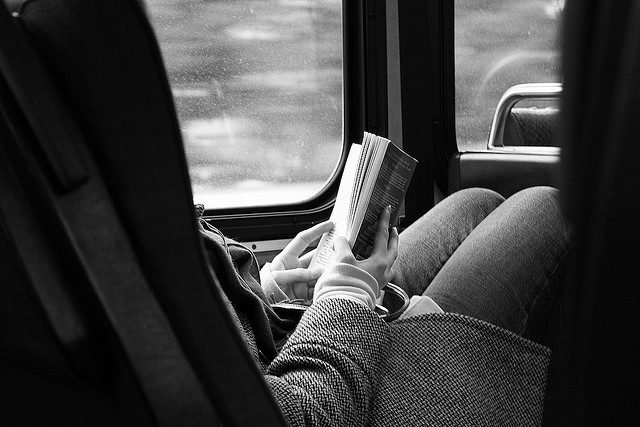
3135087774_f3fa09289f_z (1)They are close enough that I could touch them, but they are always in their own little worlds. So many potential acquaintances, friends, and lovers just within their reach. And they never know. I’m surrounded by people—sometimes uncomfortably close to people—but alone just the same.

As the bus rolls on I continue people watching and when I happen to chance on someone who is awake enough to visit, encourage them to not be a stranger.

* * * * *

Picture of Kelsey“Don’t be a Stranger” was written by Kelsey L. Munger. Kelsey is a sixth generation Pacific Northwest native. Aside from three and a half months spent living in a very tiny town in Hungary among the sunflower fields, she has always lived in or just outside beautiful, rainy (sometimes a little moldy) Seattle, WA. Despite having to give up public transportation due to health issues, her memories of riding the city bus will always be special.    Kelsey blogs at KelseyMunger.com and can be found on Twitter at @KelseyLMunger.

Bus photo by aditya on Creative Commons. 
Choose Your Own Isolation

It was January in London. The damp hung in the air, seeping into my lungs and up the legs of my flared jeans, as I walked the streets each day for hours, along with the rest of my contingent, students on a month-long study abroad.

I’d always loved the idea of studying abroad, and I’d always wanted to return to England after living there for a few short months as a four-year-old. My memories were hazy, but they were present. I wanted to return to a place I’d been happy, feeding cows in the afternoons at a nearby dairy, watching them slowly envelop my small handfuls of grass, looking at me with large, soulful eyes.

Our professor was very tall, and I found my five-foot-two self falling further and further behind as he gestured to the objects and sites of interest as we passed. I couldn’t hear a word. Frequently, I would break into a run, so that I didn’t start to panic about losing sight of the last member of the group and truly being as alone as I felt.

At the end of each long day, we would return to our hotel, a few blocks from Queen’s Way. My roommate was often ready to go out to a show on the West End, but I was usually spent, my feet aching from all of the walking, feeling so far away from everyone I loved. I had signed up for the trip without knowing anyone well, and I found it difficult to break into the groups which had formed long before the trip had started.

Choose Your Own IsolationAlthough I didn’t venture out on my own at first, soon I grew a bit more brave (or perhaps just desperate). Although I worried about getting lost, I walked the blocks to Queen’s Way, slipping into a Spar I’d visited earlier in the trip with fellow students. I purchased a samosa, some decaf PG Tips (the tea my mother drank at home on special occasions) and a single piece of baklava.

I walked back to the hotel with my simple meal, and waited until the kettle had come to a boil. Slowly, I poured the hot water over the tea bag in my cup, watching the deep brown fingers curl into the water. I added some powdered soy milk, brought from home, and a swizzle of honey, before taking my first sip. To this day, when I drink PG tips in the evening, I am back in that spare hotel room, and I start to crave baklava.

This ritual became my sanity. My feet learned the way to the Spar, and I slowly stopped shaking on the way. Sometimes I even ventured away from my usual samosa, and tried one of the other interesting Indian delicacies in the hot case.

But I always got baklava. It was soggy, and left my fingers sticky, but it comforted me still, a sweet spot in a winter evening, the perfect companion to a cup of tea. It was the last thing I ate, and I waited as long as I could before consuming it, not wanting the experience to end, to be left alone in the hotel.

I’ve always been frugal, and this trip was no exception. I tried to avoid eating out, buying cress sandwiches at Tesco as I passed by, and storing packaged pasta salad on my hotel windowsill to keep it cool, hoping that housekeeping wouldn’t see it and throw it away.

I’m sure that this was a large part of the isolation I felt. Instead of bonding with my traveling companions over hot bowls of soup, I snuck into tiny grocery stores and ate on the run. During one such transaction, I must have betrayed something of my loneliness. “Are you happy?” the cashier asked me. She looked concerned, and genuine. I was surprised by the directness of the question, and by being seen in that anonymous place, so far from home. I can’t remember what I said, but I couldn’t forget it.

I started looking over my finances, gradually loosening my grip on my money. One day I found an Indian buffet with two other girls. I ate hot chicken soup at Stonehenge. I purchased greasy fish and chips in Canterbury and mushroom risotto at the Eagle and Child, while toasting C.S. Lewis and all that his words had meant to me.

The knot in my chest finally started to untangle. My phone calls home became less desperate. I started to reach out, just a little. I stood closer to the group, and chatted with some of them. I joined them for shopping trips to H&M (which seemed so exotic in those days). I’d written off these people in the early days of the trip, but as I made slow steps in their direction, they responded. I didn’t meet a lifelong best friend on that trip, but I did learn that I wasn’t as alone as I felt. I was the instigator of my own isolation. I had the power to connect all along.

The Weight (A Balancing Act)

westchester lagoon

I wake up Monday morning, head in a fog and the sky a heavy gray. Maybe I need to pick up the pace on our Lord of the Rings bedtime reading, finish the series and find something lighter to read to the boys: This morning’s gray resembles a specter, a phantom seeping through the windows.

There is light, too. It’s April in Alaska. We wake to light now, but today it’s muted by the undeniable presence of sagging clouds gathered and draped across the Chugach mountains, shrouding them from view. But at 7a.m. in April, the dance between light and dark in Anchorage feels, for my East coast origins and conditioning, properly balanced, stable, “normal.”

“Be grateful,” I growl to no one but me.

Still, I hesitate to rise, to sit up. I rub my hand around my face, press my fingers into my eyes.

I was up till midnight grading papers, a task that segued into restlessly mulling over a number of personal matters while I thrashed around under the covers. At 3 a.m., my seven-year-old, Matt, leapt into bed with me on the heels of a bad dream. Once asleep, he proceeded to kick me through the night – an unintended reminder he was close.

I hear Matt sifting through his Lego drawers in his room across the hall.

Over a swift and admittedly pouty, self-pitying moment, I envy my sister in Virginia, who lives across the street from my parents and can frequently ask them to assist with carpooling or hosting her three daughters.

I also think of my married friends. Envy tag-team parenting for the “bazillionth” time since my boys’ mom and I split in 2011.

“Stop,” I growl. Remember: We’re here. Here and nowhere else. And we’re doing our best.

Aren’t we?

Some days, it’s hard to know.

I swing my legs over the bed.

I’m reminded of a montage scene set to feel-good music in Judd Apatow’s This is Forty, where Paul Rudd adoringly wakes his daughters for school – affectionately tousling one’s hair, canoodling the other, and playfully rubbing his hand around his teenage daughter’s face.

So, I “Power Up” – I motivate, inhale some of whatever so enviably possesses Paul Rudd characters. I breeze into the boys room and cheerily declare a robust, “Good morning! Good morning! Good morning!”

Matt, from his place on the floor, amidst the rubble of his Legos, looks up at me doe-eyed and crestfallen and meekly whimpers, “Pop? Do we have to go to school today?”

He’s still in his pajamas and between his strawberry-blonde bedhead and the spaceship designs stretching across his rail thin limbs, and his childhood-specific pot-belly rounding through his top, I am utterly smitten and vulnerably open to complying with anything he wants.IMG_5937

No! I want to tell him. No, we don’t! No school today! No work! Today we’re building forts in the living room and watching all the Star Wars movies! While eating Pirate’s Booty and ice cream and PB&J! I’ll tell work we took a, a, a Family Care Day, because our “us” is more important than desk work, than paper pushing and Microsoft Outlook; more important than racing you guys to school and then racing to grab you at after care, and then slogging through rush hour traffic and trying to make and eat dinner before 7pm and then bathe and read LOTR at a sane hour so that we can rise rested to start the whole rat race all over again tomorrow!

Instead, I sigh and tell him, “Oh, buddy, I know. I know. I used to want to skip school so many times when I was a boy.” He limply groans and sighs.

Sam’s body shifts under his blankets. Limbs akimbo, he slowly snakes them towards himself and then out again, stretching awake. He blinks a few times and sits up. He rubs his eyes and smiles.

Sam, for all eleven of his years, has possessed the magical ability to welcome each day the way you can imagine the Dalai Lama does. Or Mary Oliver. His waking hours are one long embrace of everything and anything around him, so much so that I’ve often wondered where he really came from, if the stork accidentally brought his mom and me a congenial ambassador or motivational speaker’s child. Never mind getting Sam into commercials or acting, as some have suggested: I often think he’s on the verge of presenting a viral TED talk, or might go solve the world’s problems with Bono.

Today, as with every day, Sam looks around, all smiles and sparkle.

“Good morning,” he sighs, standing.

“It’s dark out there,” he notes peering through his window, “do you think it’s going to rain today?”

“Might,” I reply. “Looks like it.”

Sam stretches once more and bounds to his dresser and pulls out some clothes.

“Wow,” he sighs, “I am so tired.”

Just say the word, I clamor inside. Say it. Say something like, “Can we not do this today, Pop? The weekday runaway train thing we do?”

I stand thoroughly poised to call a sick day, to announce “Fort Building Day.”

He turns and proceeds towards the bathroom.

“Take a load off, Fanny!” he sings.

Ok, wait. No fair. He’s boldly singing the chorus to my favorite pick-me-up song. The one I play on the stereo the way others take a daily vitamin.

“…Take a load off, Fanny!” he continues, running the bathroom faucet, “Annnnnnnnnnddd!…Put the load right on meeee!!!”

I look at Matt.

“Ok, buddy. Time to get dressed.”

mattMatt sighs and groans, pouts. I want to tell him, as Sam’s dutifully reminding me only by the way he embraces a day, something about how we’re in this together, that we can do this, and that every day is somehow always in some way infused with surprising moments of joy, of grace. I want to tell him all that, but he’s seven, and I can’t expect him to agree or understand now.

I pat the top of his head, and he leans his head on my knee. I tell him only, “I know. I know.” Because I do.

There’s a balance to strike somewhere in all of this, adrift as I often feel we are, alone together and striving to keep up with the pace of things in the terrifying, stark, and beautiful spaces we find ourselves. Rather, I imagine, or I hope there is.

I lean one way and then the other, stroking Matt’s hair, wobbly and wavering.

IMG_8784


He’s My Partner 

When we’re young, labeling relationships is easy. This person is my friend, this person is my best friend, this person is my BEST best friend. When it’s a romantic relationship, it’s the same. You can be dating or going out. Someone is your boyfriend or girlfriend. When you’re young, finding a handy title for the people in your life isn’t that complicated.

But then  I became old and began a new romantic relationship. One day, I was on the phone, adding Rich to my car insurance. I finished updating the information that they already had on file about my vehicle, and then said that I needed to add another driver to the account.

“What’s his relationship to you?” the woman on the line asked.

And I froze.

When you’re nearing forty and you’re in a new romantic relationship, there aren’t any good terms for it. Calling him my boyfriend felt a little bit too infantile and flippant. Even though we knew that we would be married at the earliest possible time, calling him my fiancé felt too formal for the relationship that we were in right at that moment. I figured calling him my lover would probably be a little too much information for an insurance customer service rep, so I just blurted out, “He’s my partner!”

I had no idea how much that title would come to mean to me.

For much of my adult life, I had certain ideas about what marriage meant based on my first marriage, and most of them boiled down to each person having a role in the relationship. I didn’t believe that there were gender roles that only men or women were designed to have, but I did see marriage as a division of labor where each person had their job to do. It was never stated explicitly that anyone was completely bound to their job, but it was very rare that help was offered beyond the scope of our regular roles. There was always a sense of equality, but never one of togetherness.

11044523_10153016493296236_3952428309709335846_nIn this second round of marriage, both my husband and I are making a concerted effort to practice more togetherness. In some regards, this is easy. Rich works from home while I write and work around the house, and when we leave, we both work at the same music store giving private lessons. We attend church together, we eat meals together, we go to the gym together. It is rare that we have more than a few hours apart in a given week. Being physically together is something that happens most of every day.

But beyond that, we have built in the idea of partnership in our marriage. We have tried to eliminate the idea that there are his and her jobs at our house. There may be things that one of us does more often than the other, but we make it a point to make sure that no one feels like they are letting down the other, because we both do all of the chores at least occasionally.

I may prepare most of the meals because of the way our schedule works, but almost no weeks go by when Rich doesn’t order me to sit and relax while he cooks. Rich may be the one to do most of the trash removal, but if the garbage can is full and he’s busy, I take it out. When one of us wants to take a risk, we evaluate it together, and as often as we’re able, we encourage the other to leap.

Sometimes it can be trying, and old thought patterns can creep in. We will not trust that the other can handle our discomfort, so we stuff our feelings away rather than talking through our questions or sadness. Sometimes we’re just selfish and act out of our own self interests rather than striving to put the other first. But when that happens, we try to recognize the negative behaviors and work toward restoring the togetherness that is so important to us.

Some lists telling people how to have happy marriages will include items like, “Surprise your wife with a home cooked meal!” or “Treat your husband like he’s the king of the castle!” Those things can certainly be helpful when your life falls into a rut, when you are living parallel lives. But I’m finding more and more that the idea of having someone partner with you in all of your endeavors allows for greater creativity in the ways that you can exhibit generosity in your marriage. Togetherness can be manufactured, but it’s nice when it doesn’t have to be.

These days I have the nice, neat label of “husband” for Rich. But if you asked me, I’d still tell you that he’s my partner.

*   *   *   *   *

424033_10151308414006236_662319879_n“He’s My Partner” is by Alise Chaffins. Alise is a wife, a mother, an eater of soup, and a lover of Oxford commas. You can generally find her sitting behind a keyboard of some kind: playing or teaching the piano, writing at her laptop, or texting her friends a random movie quote. Alise lives in West Virginia and blogs at knittingsoul.com


Unstoppable

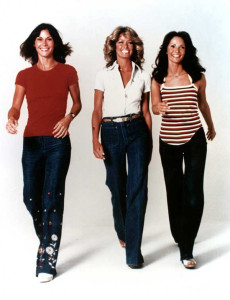
Camera pans out.charlie's angels

Music begins.

With long-legged strides, a group of beautiful woman strut with deliberate confidence, their hair pushed back by wind and the sheer intensity of their motion.

They have a common mission.

They are…unstoppable.


This image has nothing to do with my current reality. I am bit prone to the slow stroll and my intensity comes out in awkward spurts and fits rather than anything resembling grace. My confidence has been shot to pieces. I’m trying ride out this season of transition until I figure out where I am going. My hair is more likely to be tangled in my necklace than flowing gracefully in the breeze.

But once.

Once upon a time.

Once upon a time, I resonated with the image of fierce, determined women moving with certainty, surrounded by beauty.

In my early 20s, friends and I joined together in a common mission to serve pregnant women who found themselves on the streets. With a bit of luck, a ton of grace, and the available elbow grease, we created a home that drew women into a safe place and a loving community. I call that season: “the Holy Spirit light show.” There were some really challenging aspects, of course, but, it just felt special. All around us, people were being zapped by grace and drawn into the project. Things fell into place; the right people showed up; donations arrived at the perfect time. We were movin’ and jivvin’ in the blessing groove, filled with gratitude and awe at what was happening around us.

It was incredible to be a part of and it taught me that anything is possible. Having known the bewildering presence of God in this season of creation, I was forever changed.

I remained in the work for 15 years, joining together with many mighty souls to create a place. A place of healing, a place of love, a place where motherhood was preserved.

I never felt the glamour and attraction of the long-legged women with hair blowing in the breeze. But I felt the unity of purpose, the strength of common work. I felt a part of something strong.

And now.

Now.

Now, I am no longer one of the “Maggie’s Place girls,” at least in the same way. I don’t have to think in terms of community. I’m on a solo mission, completing my graduate work and listening carefully to the echos of my heart.

And yet, we remain bound together. I am tied to those whom I shared my life with–in our common memories and experiences and more so, in that sense of love that made us a community.

Several of prayed alongside Angie last week as she mourned the death of her son.  I spent a wonderful evening discussing feminist theories with Dayna over a margarita and queso dip.   Christy’s good news–she is moving back to her beloved Arizona!–made my day and Chariti will join me next week to celebrate my graduation.  Jana called just to check in and see how I am doing; I have coffee with Lynda on my calendar; Miranda’s wedding invitation sits on my desk.  Emails and posts, little signs of the bonds that were build, of the connection that remains.

The love is alive, not merely a memory of the past, but a present reality on which to draw strength.


I am road weary and limping a bit.  I could use a haircut and there isn’t much of a breeze.

But, I’m walking, facing head-on.

And, if my footing falters, someone will be there.

And, that makes me strong.

Pull Yourself Together

It was well into summer when I started to lose my grasp on the splintering pieces. On my lunch break, I would drive to a large parking lot for a big box store and cry until I thought I might throw up, and I couldn’t breathe. Even then, I used a wet wipe to compose my features. “Get it together,” I said to my reflection in the visor mirror. Then I would drive back to work, heavy in the knowledge that things might never change.

I’d always prided myself on my ability to hold it together. “You can’t change your circumstances,” my mother would say, “but you can change your attitude.” My six year old self drank in those words, and didn’t realize that certain circumstances were not okay, no matter my attitude.

So I tried to change my attitude, using all of my tricks. I went to yoga at lunch and bought scented candles for my office. I read books instead of talking with my co-workers. But the days continued to roll over me, crushing my spirit a little more every day. My job was slowly killing me.

It started subtly. On the way to work I wondered what it might be like to drive off the ridge near my house. One small movement of the steering wheel, one gentle push over the edge. Or perhaps I could drive into the median. Nothing serious, just an accident. If I was in the hospital, I couldn’t go to work, right?

I’ll never forget where I was and how it felt. I was in my office, at my desk, the one right next to the window that looked over the parking lot. It was hot in the building, and my fan was on, pointed at my hands, hovering over the keyboard. An image entered my mind unexpectedly. I pictured myself walking into the kitchen and opening the drawer where we kept the knives, selecting one, and plunging it into my chest.

The room began to close in and I began to shake. I couldn’t breathe. I couldn’t focus. I’m not sure how I made it through the rest of that day and home. I’m even less sure how I made it to the home of my small group leader.

Pull Yourself Together by Cara Strickland | You Are Here All through the evening, as the other members of my group discussed the Bible in that small, cozy home to a single mother and three foster kids, I stayed silent. I was afraid to move or speak, because I knew that I could no longer keep it together. My next move would be the end, I would fall apart. I waited as long as I could.

After group was over and we continued to talk, I raised a timid voice. “Can I ask for prayer?” I said.

I sat on the large ottoman in the center of the room, legs crossed. I wasn’t sure how to begin. How do you fracture the image of togetherness? How do you admit that you want to die, and that you are terrified?

It wasn’t the sort of small group that talked about personal struggle. All the prayer requests around the circle were about other people, and physical health. I wasn’t sure if it was a safe place to fall apart, even as I shattered. But I couldn’t hold it in any longer.

There was silence for a time, after my flood of broken words. I waited for the clatter. Hugging my knees into my chest. But it didn’t come.

“Let’s start with therapy,” one of the women said.

“I can call and get you a doctor’s appointment,” said another.

I’ll have lunch with you tomorrow,” said another voice. “I’ll come get you at work.”

“You can quit your job,” said the single mom with the three foster kids.

In the days and weeks that followed that night, I began therapy, went to the doctor, quit my job, and almost jumped out a window high above downtown Denver. Often, after I stopped working and began to heal, I would stare at the wall, trying to muster the energy to drink the tea after I’d made it.

But I returned often to that tiny house, and that warm living room, even to that large, cushy ottoman. I awoke my memories of that circle of people around me, reminding me that I wasn’t alone, even if I wasn’t together.

Talking on the Train

I had lunch with a stranger once in the crowded food court of Union Station in D.C. There were no empty tables and only a few empty seats. When I saw a woman sitting by herself at a table, I asked if I could join her. She readily agreed.

I was in between trains, a Chicago-to-D.C. leg behind me and the rest of the journey home to Philadelphia ahead. Asking to join a stranger at their table is not within my standard mode of operation. Perhaps it was the 17 hours I had just spent on the train that inspired my unusual behavior.

On long-haul trains, if you go to the dining car you sit with people. And if, like me, you enjoy passing the hours of train travel in the observation car watching the country roll by, then you sit with people there too. On a long-haul train, you chat and really listen to the answers because you have all of the time and none of the cell signal. This slow-paced, low-pressure atmosphere makes my people-loving introvert-self bloom.

Between the trip out to Chicago and the ride back East, I spent almost 40 hours there-and-back talking to strangers. I met a man in the midst of his journey home from Thailand. He told me about an ex-wife and a child in Peru—how his world travels introduced him to people, but pulled them away too. He bought me a drink and we talked for hours as the view of the countryside gave way to midnight blackness. Eventually he asked me, “Are you happy?” I told him I was, mostly. He nodded, leaned back in his chair, and stared off into the darkness outside. His eyes had said more: that being happy was something he didn’t quite understand.

One morning after a few bumpy hours of sleep as the train chugged through Ohio and into Pennsylvania, I went to breakfast and was seated at a table with a woman. She asked me about my life. I asked her about hers. We lingered over our coffee as she told me about working with Catholic Social Justice groups in her teens, trying to end capital punishment. The fact that people still fight for the same thing today gave her mixed emotions. I told her about my Christian Social Ethics coursework—what I was learning about inequality and how the church participates. I told her it was encouraging to meet her. She said the same of meeting me.

Amtrak observationSeven-hundred miles of steel track is enough space for strangers to share many years of memories. You can settle in with wine or coffee. You can relax into the seat. The scenery of fields and small towns is buffer enough for the natural pauses. There is no hurry; your stop is likely states away.

After joining fellow travelers for those many miles, to join a woman sitting at a table alone in a crowded food court seemed natural. As she told me about how she spends her days, the realization that she was homeless began to dawn on me. I took a second look at the food she had in front of her—one small order of fries. I told her I was finished eating and asked if she would like any of my leftovers. I think if I had thought about that a bit more, I would not have asked for fear of insulting her. She took my offer though and gladly ate what I did not. I eventually wished her a good day and a safe walk back to her night shelter, thanked her for allowing me to join her table, and went to board my train to Philadelphia.

This second-to-last last part of my journey was on a regional Amtrak train, which means smaller seats and less room to move about. My seat-mate told me about his job in the banking industry, seeming proud of his achievements as a district manager. Before long he had his laptop out, taking advantage of the Wi-Fi.

In Philadelphia, I switched from Amtrak to regional rail for the journey out to the suburbs, choosing a seat next to a woman who had on head-phones. The train car was silent but for the noise of the tracks and the intermittent stop announcements.

The transition was stark. Our day-to-day lives are not built for long chats and shared meals with strangers. Yet, people’s complicated lives exist even when we are just commuting home to the suburbs. Homeless people, lonely people, overlooked people. People who are on a journey to somewhere—people who fight for equality and people who wonder if it’s really possible to be happy—these people are always next to me.

It is of course easier to say that I want to engage than to actually engage. The meeting and eating and talking together requires intentionality on the part of all the participants. When I can remember that the people around me have stories of lives lived full of heartbreak and hope, then I am more willing to keep my eyes open for ways I can give. Even if what I have to give in the moment is only a listening ear or my not-yet-finished lunch.

*    *    *    *    *

fall“Talking on the Train” was written by Nicole Morgan. Nicole’s first long-distance train trip involved Thanksgiving dinner with a dining-car table full of strangers. She booked a sleeper-car once and loved it for all its nostalgic charm, but much prefers coach class where there’s plenty of time and room to meet her traveling neighbors. Nicole writes about bodies, theology, and community at jnicolemorgan.com  and tweets away @jnicolemorgan


Life Together: The Gift of Family

We often express brokenness in our lives to share in each other’s suffering. This vulnerability about the hard things in our lives seems to be an essential element of building community. However, I wonder sometimes if we know what kind of community we are hoping to build. Too few of us have experienced the sweet gift of an unconditionally loving community. Many of our homes seem to be hodge-podges of love and hatred, and the hope we may have of building our own homes seems to be more of a prayer or a stab in the dark than a definite, intentional progression.

I teach many students who have never seen a father and a mother love each other. They have so many broken relationships around them that they have no idea what a right relationship is, and I wonder: what do I have to give them? I have a lot of brokenness, but they see that every day. Do I have any true goodness in my brokenness to leave with them?

Any goodness, any hope, any true light I have to give I owe almost exclusively to my family.

Let me explain:

Continue reading

Alone in the Light; Together in Darkness

The lights suddenly flipped on. The bells started ringing. A young altar boy rushed to light the candles. Black robes began flying into the air and then were caught and flung again, straight up in the highest part of the vaulted ceiling of the church.

The moment had arrived.

It was one of the most beautiful things I’ve ever seen.

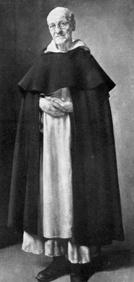
Dominican priests typically wear a white robe with a large cowl neck collar and long piece of vincent-mcnabbfabric down the front. All those things have fancy names, but I will spare you the lesson in monk fashion. For special occasions, like the days of Holy Week, Dominicans add a long black cape that covers over the white robe. It is a solemn gesture, a gesture of reverence for the solemn events that are being remembered. To my eyes, it is a shroud of darkness, of mystery. The cape always draws my attention, and something in me wishes I could wear a cape without being thought of as a Lord of the Rings fangirl gone wild.

Watching the black capes thrown into the air, I was standing tiptoe in the courtyard of the church, peering over the heads of hundreds of standing figures. I was in Poland as a solo personal pilgrimage to honor a saint that I hold dear and was spending the week prior to Easter making day trips and exploring Krakow.

I’ve always loved the Easter vigil, the very long liturgy of Saturday night that begins in darkness and ends in Easter joy. I didn’t understand the Polish but I understood that moment. The church was suddenly bathed in light; darkness was literally cast aside. My melancholic spirit knew: He is RISEN!


This year, I was again in the presence of the white-robed Dominicans for the days leading up to Easter. My friend had taken several courses at the Dominicans House of Studies and wished to attend the liturgies amongst the preachers and teachers whom she loved and respected.  I was up for anything and not-so-secretly hoped that cape throwing was a part of the American tradition. (It wasn’t. Only cape removal and tactful folding.)  Nonetheless, I encountered another tradition.

We attended Tenelargebrae, a candlelit chanting of the Psalms that led into the Holy Week liturgies.  A chapel full of robed religious singing Scripture in the ancient prayer of the Church put me into a reflective, quiet place.  Stillness came; silence set in.  As the chanting ending, all of the light was extinguished.

The entire church stood in pitch blackness and perfect silence.

Time passed.

My mind raced, “How long are we going to silently stand here? How are all these people going to get out of here safely?”

More time passed.  My mental soundtrack didn’t let up, “I wish I could read my program so I understood what was going on.”

And then, a moment.  A moment of standing in darkness with 200 other people. A moment of being in silent worship together; a moment of turning my attention toward Him.

Breaking into that moment, a wretched clanging of drums and cacophonous noises filled the darkened chapel.  On and on it continued, a noise that disturbed the peace of the space and the peace of the spirit.

Just as quickly as it began, the noise ended. The lights returned and the service ended.  I glanced down at my program, “All creation shudders at the death of the Lord.


In the first, I was alone and rejoiced to see the darkness cast aside.

In the second, I stood together in darkness and worshipped and trusted the chaos had meaning.

To both I answer, “Amen.

Called to be awkward together

If clichés are any indication of reality, Americans have exactly two options on Sunday mornings:

1. Stay in bed as long as you want, then put on yoga pants and a hoodie and relax for hours with your cat or dog in a sunny spot, sipping coffee while indulging in The New York Times from cover to cover.

OR

2. Get up early and rush to church (with your coffee in a travel mug), to be surrounded by dozens of people who may or may not have anything in common with you beyond your choice of how to spend Sunday mornings.

For almost my entire adult life, I have willingly gone for that second option. If the first option can be characterized as Blissful Solitude, the one I choose is Awkward Togetherness—at least at the churches I seem to gravitate toward.

There’s no telling what might happen on any given Sunday morning at my church. Drinks are spilled (well, coffee or communion juice), squealing toddlers are chased, and people are generally loud at the wrong moments. It’s like a family reunion with all your crazy relatives. Every Sunday.

I am clearly a glutton for punishment, as I head back to church week after week. But I make that choice because I am also a glutton for unexpected friendships, undeserved grace, and unconventional beauty. These are things I can’t seem to find anywhere else in the world, so each Sunday I return to church for more.

In no other realm of my life could I spend a couple of hours with such a diverse collection of people: a leading advocate for disability rights and a leading scholar of Islam; ex-convicts and an ex-prison guard; an Obstetrics nurse and newborns; homeless people and psychologists; a once-big-time blues drummer with a grey beard down to his belt, his teenage drum student, and a toddler who idolizes them both.

Church is the place I go to be in community—not with the mainstream, middleclass, upstanding Christian crowd, but with the ones Jesus gravitated toward: the misfits, the broken, and all those who don’t always “fit.”

Many Sunday mornings, as any illusion of well-rehearsed order dissolves, I sit in church half-cringing, seeing all the chaos and mishaps through the eyes of some poor visitor who wandered in to see what we’re all about. Being in this place can be so uncomfortable and awkward, especially for those of us adept at feigning full command of ourselves and our surroundings.

But those feelings have a way of projecting back onto me, highlighting my own brokenness and discomfort in this world. Before long—during the very same worship service, even in the next breath!—my cringe transforms into a heart swell of openness and love-beyond-reason. I look around our coffee-stained sanctuary and see the stories we live together.

There is our friend who one day surprised us by returning from a visit home to India with a new bride at his side. Now they have a baby we ooh and ahh over at every opportunity.

Down the row from them is the former blues drummer. For years he spent Sunday mornings sitting behind the drum set with the worship band; now he’s recovering from cancer surgery and too weak to play a whole set. But that doesn’t stop him from pulling a tambourine out of his bag when the spirit moves him, and making music from his seat.

I watch a preschooler run up to her grandparents with smiles and hugs. As an infant, she was raised by her grandparents. Now she and her sister are the adopted children of a young couple in the church (and vessels of joy for everyone who knows them).

On the other side of the sanctuary is the woman who is always busy sewing or crocheting away on a blanket for someone’s baby, and there is the woman who regularly testifies to how Jesus has delivered her from debilitating anxiety. Behind me a hearing aid whines briefly as our “senior member,” at 90, makes an adjustment.

Then a song from the church’s “hippie days” begins, having made its way into a worship set. It is unfamiliar to me, but clearly not to everyone. A man gets off his chair and kneels right there on the carpet, while a few of the “old-timers” begin doing hand motions that seem part-sign language, part-jazz hands. A baby screeches, and we know exactly who it is, without turning our heads. A boy with autism rocks and rocks and rocks in a rocking chair in the back of the sanctuary. That is how he does church.

And I bow my head, overwhelmed by the terrifying-yet-glorious goodness of being awkward together in the presence of God.