Gentrification Conversation: Part Two

I didn’t notice any trouble until he called the police–I was too distracted by the sunlight. Our kitchen windows are six feet tall, and on sunny afternoons like this one, the yellow walls gleamed, the dirty dishes on the counter shone. Thump, thud.  It was still early spring, and the windows were closed, muffling the clanging, banging and thumping coming from across the street.

I looked out. Two men were loading our former neighbor’s belongings into a pickup truck. Her house had sat vacant for a year after she moved into a senior building, now her appliances were heading out the door. “I tried to talk to them,” my housemate said, “and they blew me off. The cops are on their way.”

“Oh,” I said, “oh, I see.” He walked out to the porch to see what would happen, and I sank down on the kitchen stool, staring at the floor. Calling the police was complicated. We couldn’t just sit by and watch while our neighbor’s house was emptied, but they would know who called–the white people, again–and what if the men were rude to the officers too? “No one get shot, no one get shot,” I prayed as I peeked out the window.

No one got shot. The police arrived, they talked, the next door neighbor came out, and soon everyone was laughing amiably. As the cops drove away, embarrassment settled in, hard. “I hate this,” I thought, “Why are we always the ones to overreact? It’s the middle of the day, of course they weren’t doing anything wrong.” My housemate came back in and noticed my discomfort.

“I’ll take care of it,” he said, and disappeared into the basement, returning a moment later with two bottles of beer. Clink, clank, he marched out the door. Peeking out the window again, I watched him approach the men, somewhat in awe at his nerve. He was talking, they were talking, he handed them the beer, and he walked back to our house. “Whew,” he shut the door, “Turned out they were family of a neighbor, everything’s alright. Glad I apologized.”

“They took the beer,” I said, still a little surprised. “Yeah,” he shrugged, grinning, “Sometimes a beer can turn an enemy into a friend. They’re good guys, just a little surly at first.”

And that was that. Two beers–the solution for all your cross-cultural tensions.

*****

With a big word like gentrification, it’s tempting to just talk about it at a macro-level. Government, development, public policy–all of this matters. But there is also the everyday reality of living in close quarters with people who are not ‘like me,’ and trying to get along.

This can be exhausting, and, like deciding whether to call the cops, more complicated than I ever imagined. But I suspect that mixed-income communities (or any communities) succeed or fail, ultimately, at the micro-level. In other words, can the people who live next door to one another learn to be neighbors?

On our block are middle-class working families–healthcare workers, retired city bus drivers, preschool teachers–and families who subsist on minimum wage jobs, food stamps and medicaid. The black folks (about three-quarters of our block) have generally lived in our neighborhood their whole lives and have family scattered about the community; the white folks are relative newcomers and have family scattered about the country.

And there are times when living together can be stressful and bumpy. There are misunderstandings and mistakes; there are awkward moments. Soon after I moved in, a well-meaning man said to me, “Don’t you worry, dear, my mother and I are glad that you’re here. We’re not like everyone else.”

And I thought, “It’s a good thing that ‘everyone else’ is too polite to say!”

However, there are also moments when I think that living where I live, and learning to get along with people who are not ‘like me’, is perhaps one of the richest experiences of my life.

One of my favorite neighbors is a grandmother who is working toward her GED while raising her grandkids. We go to church together, and her youngest loves to chase our chickens around the backyard. One day I gave her a ride to the bus stop, and as we were chatting about kids, weather, and leaking chimneys, I suddenly realized how much I needed this woman to be my neighbor.

There is a lot of talk, a lot of research, about how mixed-income communities benefit the poor–there can be increased employment opportunities, for example, and their kids tend to have higher social mobility–but what struck me in that moment, and has stayed with me since, is the sense of how much the rich (or at least the relatively rich) benefit from living near the poor.

I give my neighbor a ride, but she gives me insight I could get no other way. I watch her sacrifice for her grandkids while taking one GED class at a time, I watch her struggle, and I watch her pray. I watch her maintain faith and a sense of humor in the midst of situations that might just do me in.

She (and others) also give me financial perspective. When asked why they moved to our neighborhood, one family said, “We didn’t want our kids to think that it was normal to have a Rolex.” Having neighbors who work full time and yet struggle to buy fresh vegetables tempers my materialism. It also reminds me to be grateful at the farmer’s market. It’s not a guilt trip; it’s a reality adjustment.

Finally, speaking of reality, there is just something about living with people who freely admit they don’t have it all together. My neighbors have kids in jail, various addictions, and teenage pregnancies. While we’re all messed up in one way or another, the poor tend to wear their wounds on the outside. When I see this, and then see these same people embraced in spite of their (sometimes still oozing) wounds, something inside of me is also set free.

All this doesn’t happen in one trip to the bus stop, but over a decade or so, it begins to sink in: I need my neighbor because in the moments when I am her chauffeur, she is my teacher. This is a small step, but isn’t this the way that neighborhoods are built?

One ride,

one conversation,

one adjustment of perspective,

one mistake and one apology,

two beers at a time.

4800234604_23f50117e9_b

Photo by Wagner T. Cassimoro

Alone Together (New Wilderness)

Baby…we’ve been alone too long.
Let’s be alone together –
let’s see if we’re that strong. 

Leonard Cohen, “Waiting for the Miracle”  

IMG_6859

I forgot about Lent this year. I forgot about it even being a thing on the calendar that happens. And while I might be excused for my forgetfulness – I’m not Catholic and didn’t grow up Catholic or in a liturgical tradition – I have to admit that being oblivious to it caught me off guard.

I only remembered it when, one particular Wednesday in February, while at the supermarket – a bottle of wine in one hand and my iPhone in the other – a woman passed me with an ash cross smeared across her forehead. Hazily noting her gray smudge, I was seized by, well, not guilt (“Protestant Guilt” is a topic for another time), but a sudden burst of surprise.

I paused in the aisle, looked at the bottle of wine and a curious ambivalence surged through me. On one hand, given the pace of my life the past few months, I knew I could benefit from a contemplative period of intentional, spiritual reflection, if not also a detox and fast from you name it.

And then I decided to forego Lent. I decided not to indulge myself this year.

Right, indulge myself. I know. That seems implausible. It contradicts the spirit of the season, on one hand. But let me explain.

Ever since I first learned about Lent in my mid-to-late-twenties, I wanted on board the Lent train. Not even wanted on board. Knew I was already on board – one of its passengers.

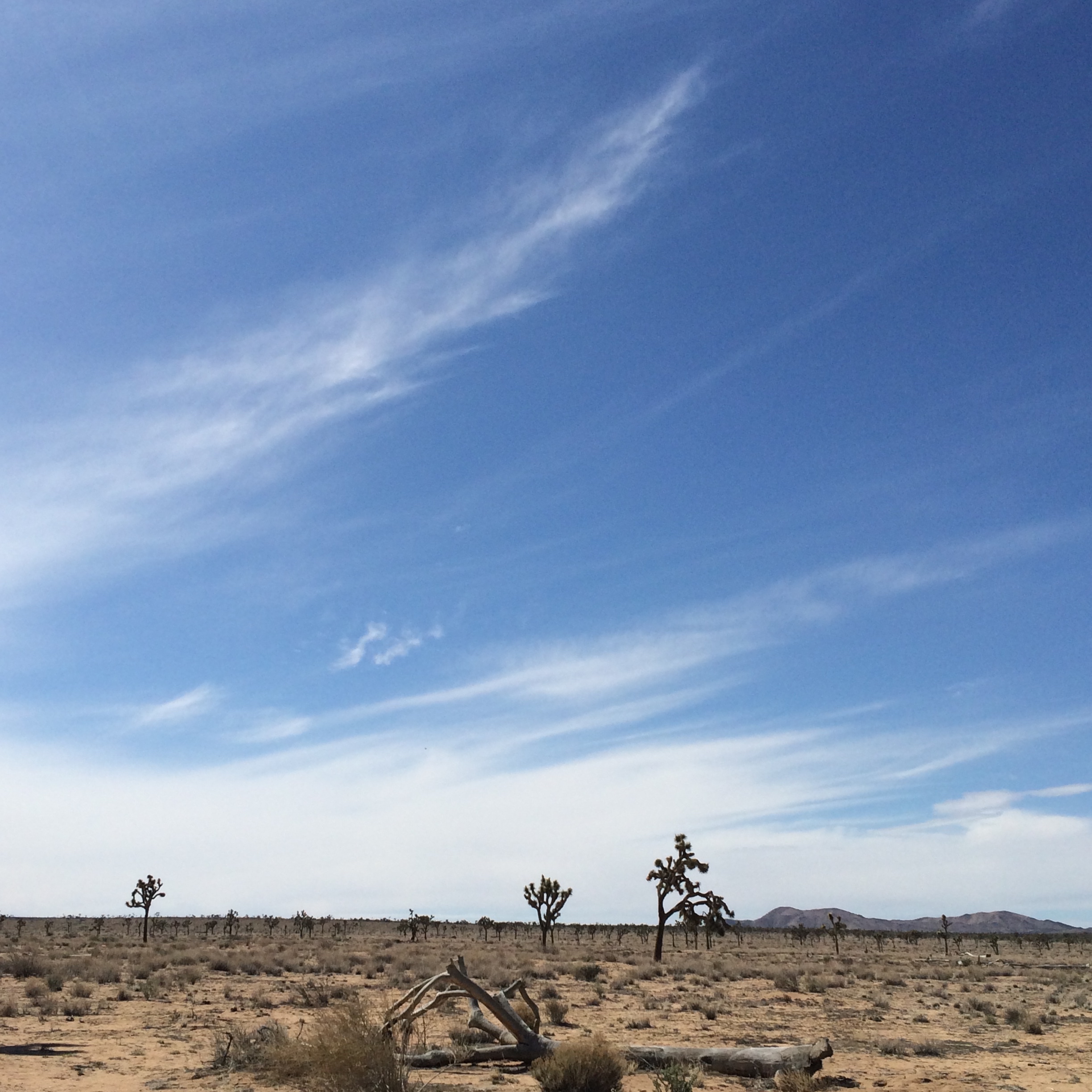
After all, for as long as I can remember, I’ve adored all the wilderness imagery evocative of the season. Whether the spare, stark pictures of U2 on its Joshua Tree album, T.S. Eliot’s “The Wasteland,” or every Tatooine scene in the Star Wars films, desert wanderings and joshua treewilderness imagery and references have always spoken to something deep at the heart of me.

For as long as I’ve known about and observed Lent, I’ve delighted, too, in its meditations on death and mortality. My lonesome inner-adolescent – still carrying a torch for the bummed out musings of The Smiths, The Cure, and Tears for Fears – can’t resist feeling an albeit maudlin affection for the overtly melancholy tone of the season.

So, for many years, I’ve anticipated – with a kind-of adult version of the excitement kids possess for Christmas – that one Wednesday towards winter’s end, when the church lights go dim and the organ inclines towards slow songs in a minor key. More than that, however, I think I’ve reveled, too, in how Lent affords me – a shy, introverted individual by nature – righteous permission to avoid the hustle of the marketplace and everyone passionately competing for attention from one or another soapbox there. While it’s certainly not written into its script, or part of The Book of Common Prayer, Lent enables a guy like me to justify stealing away into literal or metaphorical prayer closets, solely in the interests of escaping any undesirable or annoying chaos or hullabaloo that rubs me the wrong way. And always under the guise of a spiritual endeavor.

I know it must sound strange, on one hand. Many good-hearted, pure-intentioned loved ones and mentors admirably and enviably enter into this contemplative season. It’s only recently that I began sheepishly second-guessing my impulses, my fine-tuned behavioral patterns and the creature comforts these serve.

I blame happiness. Joy. Will go out on a limb and accuse Love of revealing a shortsightedness on my part. I’ll also blame an altogether bewildering and, for me, mostly uncharted territory I only know to name as Relationship.

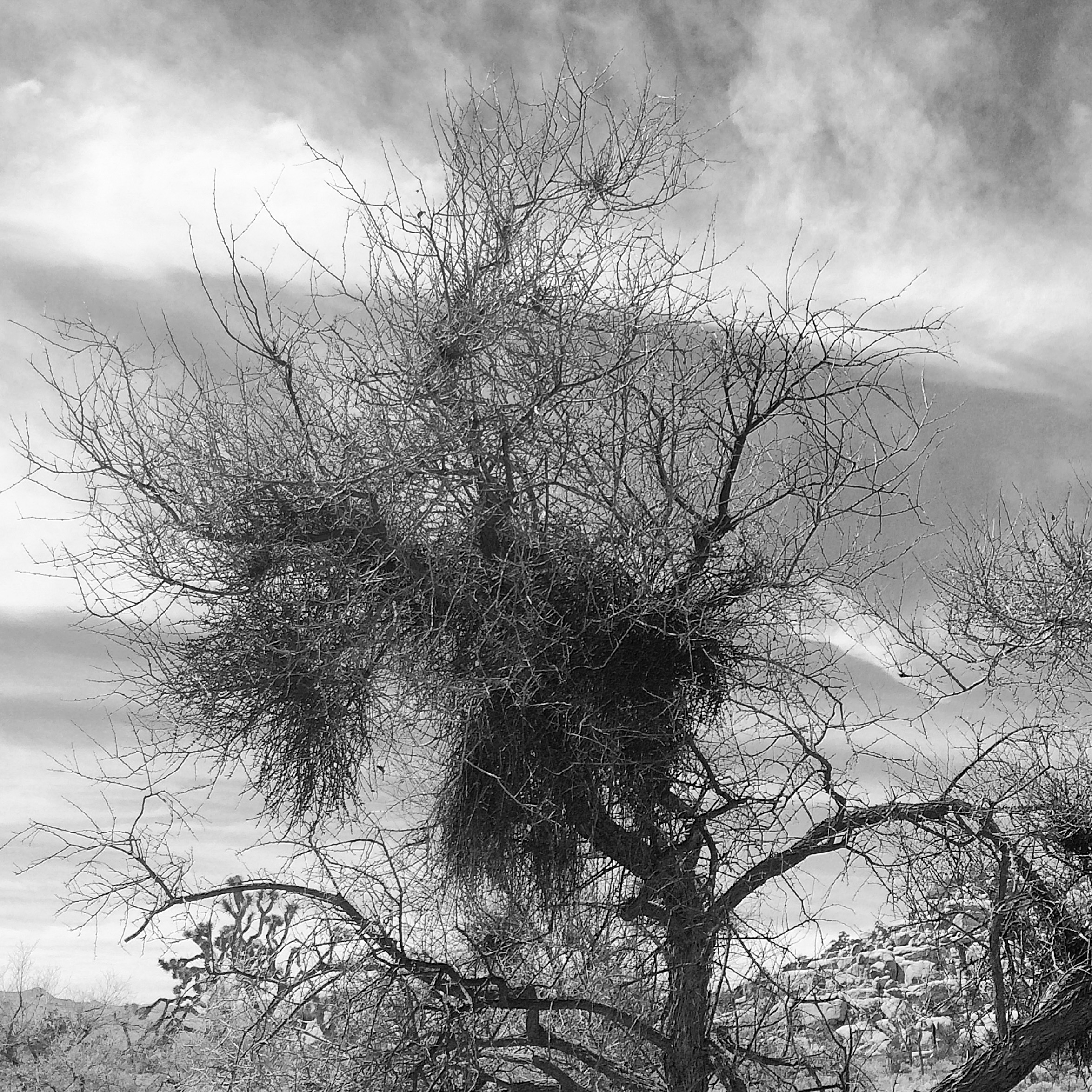
joshua tree yikesTaken together, these, for me, add up to prove an altogether different kind of wilderness. Actual wilderness, perhaps. The kind that Tolkien’s hobbits dread, that explorers for centuries have strived to tame, erase, or domesticate. Relationship, for me, has long remained a region too frightening to bravely explore – even, regrettably, while “in a relationship” with someone. Relationship too frequently proves thoroughly terrifying ground, a terrain more distressing than any postcard-esque desert landscape or overabundance of welcome monastery silence. More than any solo adventure I’ve undertaken, relationship leaves me thoroughly exposed, and so also at perpetual risk, often underdressed for its dangerous and unpredictable weather patterns, unprepared for its unexpected turns, its steep climbs, and deep, shadowy valleys.

That bottle of wine I was holding on Ash Wednesday? I was buying that for dinner later, to drink with a woman I’ve spent nearly every Wednesday with since mid-August of last year. In fact, somehow, sometime last autumn, my Wednesdays earned the status of Friday, solely given the degree of excitement with which I look forward to seeing this person.

So, you might pardon me if ashes and meditations on my mortality were the last thing on my mind this year.

When we first started talking late last summer, we certainly didn’t see landing here nearly eight months later, together, in a strange, wild place called Relationship. One evening, we simply and unsuspectingly engaged in a memorable conversation. We decided to pick up where we left off a couple weeks later. The conversation continues today.

Meanwhile, I can’t help trusting that my otherwise predictable flights into the desert – the oasis of those welcome, lush silences, and the “do-able,” time-limited fasts from whatever – can wait for now. These aren’t going anywhere. They’ll rest ready for me if I need to return to all things overly familiar down the line.

That night, as I walked towards the checkout counter, the mystifying opening lines of Mary Oliver’s “Wild Geese” poem came to mind: 

You do not have to be good.
You do not have to walk on your knees
for a hundred miles through the desert, repenting.
You only have to let the soft animal of your body
love what it loves… 

I wondered then – bottle of red wine in my hand on Ash Wednesday, longing to lean into the good evening ahead – do I have what it takes? Can I find it in me to bravely, wildly, and only love what I love?

Something unfamiliar whispers that it’s worth the risk. That the journey could prove epic.

SeasideSeward

Wherever I’m With You

My parents left Pittsburgh when I was a toddler, but family lore still recalls me pointing delightedly at its blue and white bus stop signs, imploring, “Stop, bus!” Several times a year we returned, crossing the Pennsylvania Turnpike and the Tubes to visit my Grandma, whose porch housed a galvanized dairy box, although the milkman had long since ceased service by then. On rainy Sundays, my brother and I chased pigeons outside Downtown’s gothic Presbyterian church. Inside we slid down inexplicably existent bowling lanes and sat for children’s sermons at the same poinsettia-laden altar where our parents married years before.

The Steel City coaxed me back for a longer stay the summer before my senior year of college. At the North Side’s Pittsburgh Project, I learned more about justice over three months in community than I had in all my years in the classroom or church. Daily navigating a mysterious tangle of neighborhoods, armed with plucky determination and a stack of MapQuest print outs, my teammates and I discovered how many Pittsburgh “roads” are merely stairwells and how true is the saying, “You can’t get there from here.” I savored my first cherry ice ball from Gus and Yia Yia’s historic cart and discovered the public radio gem that is WYEP.

pghMy official Pittsburgh homecoming occurred the following summer. One week before our wedding and freshly hired at a church mere blocks from the hospital where I was born, Jim and I arrived to scout any apartment within reach of our meager summer camp paychecks: decrepit student housing in Oakland, dingy curiosities in Polish Hill, and an alleged one-bedroom in Friendship consisting of a dark kitchenette and one tiny bathroom atop a stairwell. (The split landing was apparently where a mattress was to go.)

When we discovered a third floor walk-up in a brick Bloomfield row house, we knew our little family of two had come home to the East End at last. Boasting a sunny kitchen outfitted in fifties-era fixtures and compact appliances, Hobbit ceilings, and actual sleeping quarters, the apartment felt palatial at $325 a month. So what if it was accessible only by fire escape and lacked a bedroom door? The Shire was ours, and God bless the youth group parents who dropped off teenagers in the back alley for dinners and movie nights. Great is your reward and greater our memories: climbing out of Allegheny Cemetery that time we got locked in, ice skating and frisbee at Schenley, and cheering graduation at the Mellon Arena.

We owned one car, two bikes, and most everything we needed (excepting perhaps a washer-dryer or savings account). Jim still remembers bike messaging as his favorite job; I remember the way my breath caught when he said he’d been hit by a car and how nearly every dollar he earned seemed to end up at Kraynick’s Bike Shop. We slid down the icy fire escape taking out the trash, walked to Tram’s for pho, and biked downtown to see Wilco at the Point. I celebrated a series of birthdays along Forbes, marching against the Iraq war alongside aging hippies, anarchists, and once, a donkey.

In the Cultural District, we scored rush tickets to RENT, not far from Planned Parenthood where I got my annual exam. Neither Jim nor I dressed up for work, but when we scored free symphony tickets, you know we turned up in our finest at Heinz Hall. We once sat behind playwright August Wilson at a tiny Lawrenceville performance of Ma Rainey’s Black Bottom, and the only other man I ever saw naked was an actor in a cordoned-off warehouse at the edge of the Strip. The audience shivered on metal bleachers in wool coats and gloves, our breath visible beneath the heat lamps, and he took a shower right there in front of us.

Cockroaches and an absentee slumlord eventually drove us further up Liberty Avenue to an apartment atop Mariani’s Pleasure Bar, where the crashing trash pick-up woke us each morning at three, and the bells at St. Joseph’s called the faithful to prayer. I couldn’t begin to add up how much money we spent on parking tickets or tiramisu from Groceria Italiano next door. From our sticky tar roof, we hosted confirmation classes and friends for hibachi-grilled chicken, and we watched fireworks, movie crews, and bocce tournaments: broke, happy, and in love with each other and our skyline.

It’s been ten years since our exodus for pastures only literally greener, but my heart still races at the sight of yellow bridges and Rick Sebak documentaries, and the memory of rush hour bike commutes along Craig Street. There’s no place like home and no home like between the Three Rivers.

*    *    *    *    *

avi feb 2015“Wherever I’m With You” was written by Suzannah Paul. Suzannah is a Pennsylvania-based religion writer on the topics of liberation theology and embodied faith. When not squeezed into a summer camp dining hall, Suzannah and her family set extra places at their farmhouse table, and she writes love letters to the broken, beautiful Church at The Smitten Word.


Gentrification Conversation: Part One

I didn’t expect to be married to one of the bad guys, but there it is.

My husband Kendall was recently asked to lead a workshop at a seminary conference. I came along to help him keep time. While we were waiting for everyone else to arrive, I read the program. We were Track #2.

Track #2: Neighborhoods and Development. Goal: To assist churches and communities in analyzing and responding to physical, cultural, and socio-political changes within neighborhoods as a result of urban development policies and approaches.

This was a mouthful, but I knew what it meant. My husband works for a local Community Development Corporation (CDC) that has succeeded, over the past decade or two, to bring significant changes to the East Liberty neighborhood of Pittsburgh. Changes like a dramatic reduction in the crime rate; changes like an upturn in the housing market. Changes like opening (at that time) the only Whole Foods in Western Pennsylvania.

Changes like white people walking the streets with yoga mats tucked under their arms.

3936450656_1d6e343e2a_oAnd the word, the g-word, began to buzz in conversation, public and private. By the time of the conference, I was used to concerned friends asking questions like, “But what will happen to all of the residents who were already there?” or “What if rents rise and push people out?”

Kendall had answers to these questions: His organization had secured a large number of affordable units a decade earlier. More than a third of the housing in the neighborhood is subsidized long-term. The improved market could create generational wealth for current residents. The increased tax revenue benefited public schools. Turn-of-the-century houses were expensive to renovate, and without investment, they would rot and be torn down.

And finally, if our friends weren’t convinced (they usually weren’t), he would remind them that his organization had merely enacted the results of two extensive community plans, done in 1999 and 2010. These plans called for the creation of a mixed-income community, and that is what East Liberty was becoming.

“But isn’t it just being gentrified?” was the shorthand response, or, as one brave participant in the seminary workshop finally voiced, “Aren’t you just trying to get rid of all the black people?”

I checked the time; Kendall was just halfway done.

*****

This month’s theme at You Are Here is “Together in Place,” and as I have reflected on the gentrification conversations that go along with being married to my husband, I realize that a “Mixed Income Community”, however attractive in theory, is messy and frightening in practice.

Consider the alternative. Isn’t there something in us, as human beings, that is drawn to living near people who look like us, act like us, and make just about as much money as we do? Why else would we create gated communities? Why else, sixty years ago, did people flee to the suburbs? And why else, as the wealthy (in Pittsburgh, read ‘white people’) return to the cities in this decade, would there be a sense of invasion and take-over?

Take-over. This was the phrase my friend used as we sat together in the car after Kendall’s presentation. “I know that he’s got a convincing argument,” he conceded, staring out the window, “but there’s just this sense that people have, this sense that their world is being taken over, and there’s nothing they can do to stop it. It feels like a take-over, and that’s scary.”

For awhile, we sat in silence. Neither of us had any answers. There were good reasons to build a mixed-income community; there were compelling arguments for the change. The cost of doing nothing, of stagnation, of the status-quo, of ghettos and gated communities, was also high.

But living together is hard, and there’s this open question: how long will we able to keep it up? Rich, Poor, Middle-income, Black, White, Asian, Latino–all the census categories and a thousand variations–will we learn to live as neighbors? Will we attend each other’s birthday parties, bar mitzvahs and funerals? Will our children grow up together? Can our worship spaces go from being the most segregated places in America to become communities of reconciliation?

Can we live together? Or, is it inevitable that one group will take-over, one group will flee or be pushed out, and that a mixed-income community is just a stop on the way to gentrification?

I don’t know the answers to these questions. But the friend in the car was the pastor of my church, our mixed-race and mixed-income church of a hundred-or-so people who love one another, and we were determined to continue the conversation.

*****

Early this morning I was walking up the hill to my house, and I saw someone approaching, coming down the hill. The sun had not yet risen–I am on my guard in the dark–but as the figure came into focus, I relaxed. It was a middle-aged woman, vaguely familiar, dressed in hospital scrubs with an umbrella tucked under her arm. “Good morning” I chirped, perhaps a little too cheerfully, my voice loud in all that quiet morning space.

And… nothing. For a long moment, she just stared. I took in her worn brown face, cigarette in hand; she glanced at my pink cheeks and the orange yoga mat tucked under my arm.

“Good morning” she finally acknowledged, her sharp tone cutting into the air between us, her meaning clearly the opposite of her words. And just like that we passed one another, quickly, and the silence re-settled into the city streets.

What will fill this silence? This remains to be seen.

*****

Later this month, I will fill some of the silence with another post, Gentrification Conversation: Part Two. In the meantime, those of you with opinions, questions or your own experiences… please comment. I’d like to hear what you have to say.

Yoga Mat photo by Grace Commons

Together, Undefined

It was 8 pm on my daughter’s 15th birthday, and I remained a Mama on a Mission, gearing up for the home stretch.

The mission, of course, was making my daughter feel as special and loved as possible—a mission that’s more challenging, I’ve discovered, when your children are teenagers and less likely to buy into the enthusiasm in your voice as you sell them on some random idea: Bowling would be a fun birthday treat! If my daughter had her way we’d be seeing Broadway shows in New York for her birthday, but in reality I had less to work with.

By 8 pm on this particular birthday, we had already completed our typical activities: a mother-daughter outing (which in this case involved a new ear piercing); a birthday dinner at the restaurant of her choice, with the seven people who make up her immediate family (mom, dad, sister, stepmom, half-brother, stepdad, step-sister); and finally dessert and presents back at home. My now-15-year-old already had a big party with friends the night before, so now what?

“Do you want to go anywhere?” I asked.

“No, I just want to be home,” she said, smiling contentedly.

“Should we rent a movie?” I suggested. “Or play a game?” I know very well that games are not her favorite pastime, but I couldn’t help myself. In my family experience, both as a child and an adult, this is what you do when you’re together: You play games. Sitting around a table covered with the pieces of a game is my family’s quintessential definition of togetherness.

“No, I just want to be home and do whatever,” she said, a trace of exasperation edging into her voice. “I’ve had an amazing birthday! Can’t we all just be here but do our own things?”

As an extrovert, I (not for the first time) had to pause and forcibly wrap my head around this less structured version of “Together.” I could see my other daughter re-calibrating as well, as we tried to imagine that the birthday girl’s idea of a fun birthday might not look exactly like our plans for her. After all, we were there to serve! To entertain! To focus all of our time and energies on HER! And she wanted to go up to her room and try out the new guitar pedal she just unwrapped? We had to let that sink in.

“Well…OK. If you’re sure,” I said.

She was, of course, sure.

6647530355_0233217d07_zAs the sounds of reverberating electric guitar and my daughter’s pure voice serenaded us through the ceiling, the rest of us looked at each other in somewhat sheepish agreement: Let’s play a game. In her own way, she was right there with us.

*   *   *   *   *

While I probably wouldn’t choose “alone in my room” as a way to spend my birthday evening, upon a bit more reflection I realized that I know a thing or two about this desire my daughter often has: to be together yet alone.

Since February 2002, after nearly a decade of working in populated office settings, I’ve worked essentially alone, as a writer. When I was in the process of deciding whether to take the leap and start my own business, my biggest fear wasn’t Will I have enough clients? or Will I make enough money? It was this: Will I be able to work alone?

Not only am I social—someone who is energized by being in the mix, having people to go to lunch with, and feeling connected to others who are dealing with the same bosses and projects—but I’m also most creative in collaborative settings. In other words, I worried not just that I would be lonely working by myself, but also that the very skills I was selling might fall flat if there weren’t people around to bounce ideas off of and provide critique.

I decided to take the leap anyway, and was lucky enough to discover that technology was my safety net. It was the growing availability of wireless Internet, in particular, that prevented me from gradually slipping away from myself, sitting day after day at the desk in the corner of my living room. Wireless Internet meant I could take my laptop—all that really comprised my “office”—to my favorite neighborhood coffee shop, where I could be together yet alone.

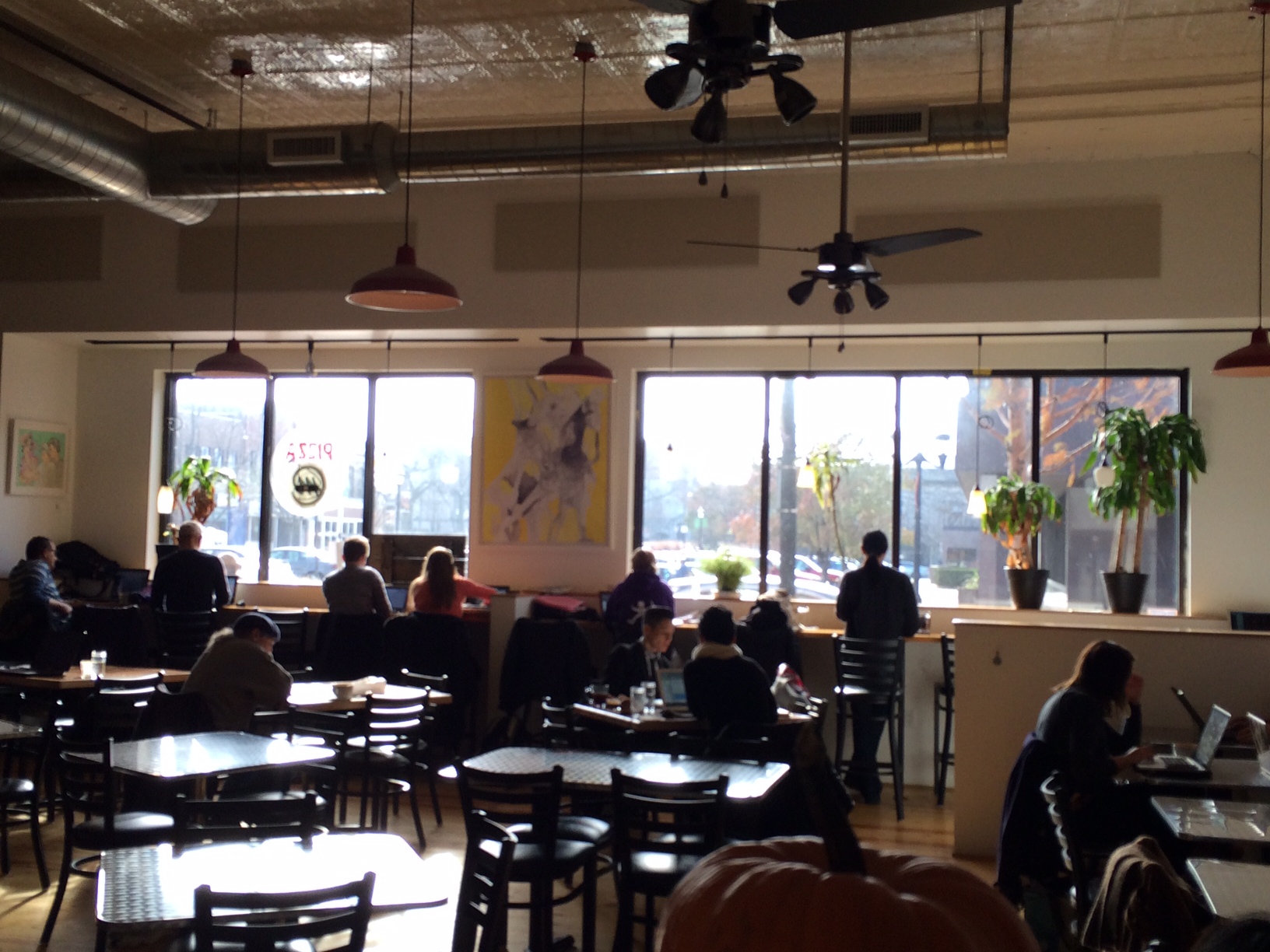
photo (3)In that coffee shop, I learned it was the mere presence of bodies and voices—being surrounded by activity and the gears of many brains thinking and creating—that I craved more than anything else. In the unnatural silence of my empty home I felt slightly on-edge and easily distractible, but the buzzing white noise of the café allowed me to dive into my work and ride a stream of creative flow for hours.

There’s simply something powerful—at once comforting and freeing—about being autonomous yet in community, whether that community is family or strangers at a café. It’s an experience that carries a certain rightness and balance: In a single moment and place, it acknowledges and respects both our “sameness” as humans and our “difference” as individuals.

Ultimately, both identity and empathy are strengthened through that single form of togetherness. When I think of it that way, I can see what a wonderful gift it was to give my teenage daughter on her birthday—and what a wonderful reminder it was for her to share with me.

*   *   *   *   *

Photo of the game “Carcassonne” by Aslakr. Coffee shop photo by Kristin Tennant.

Five Years Time

Five years ago, around this time, I was driving down a sunny Indiana road under a canopy of tree branches adorned with bright green leaves.

It was spring in Indiana, and it felt like the return of the humidity that seemed to go somewhat dormant during the winter. It looked like stepping carefully over the worms who had found their way to every sidewalk on my small college campus. It smelled a little like decay, as the leaves from the previous fall were exposed to fresh air again.

That spring, I was knee deep in a romantic relationship, the first one I’d had since my first love. I have never cried so much about anything as I did during that relationship, but when the leaves turn green and the light filters through them, I don’t think about the tears, I think about those Sundays driving home from the sweet little Episcopal church I was learning to love, listening to a mix cd he’d made for me.

There was a song we both loved by Noah and the Whale called Five Years Time. It’s about a relationship and wondering about the future.

In five years time I might not know you

In five years time we might not speak

In five years time we might not get along

In five years time you might just prove me wrong

Every time I hear that song, I think about that spring in Indiana. Part of me wanted us to find a way to make it work, just as I do with every relationship.

That spring was the beginning of many lasting love affairs for me. It was during those months that I first slipped between the pages of Harry Potter, devouring the series in just a few short weeks. I listened to the music of Over the Rhine for the first time, playing “Drunkard’s Prayer” and “Born”  on repeat through headphones in my dark dorm room, while my roommate slept. I began to practice yoga, tentatively, stretching muscles I hadn’t known existed. My crush on liturgy blossomed into a commitment.

Five years have passed and I am still wild about those things, if not about that person. The song Five Years Timeproved to be prophetic, we don’t know each other now, we haven’t spoken since that clear summer day when he called and told me he didn’t see a future for our relationship.

Recently, I was talking with someone about the way the seasons remind me of relationships. The first day of spring marks the birthday of a long lost friend who was once very close, the winter and new year remind me of a relationship I chose to end, and the freedom it brought. It seems that every season carries a context now. There are no seasons without memories, without twinges of sorrow, or joy, often intermingled. Memory triggers are everywhere, unavoidable. I’m doing my best to embrace them when they come, rather than shrinking back from the emotions they provoke.

When I graduated from college, I wanted a way to mark the occasion, to remember what it felt like to be in that moment. After doing a little research, I purchased a bottle of wine I liked a lot at the time (something I’d had on a promising first date). I wrote instructions on a sticky note, telling me to open the bottle in May of 2015. That bottle has sat in my wine rack all this time, waiting until the time is right. Soon, I will take it out and open it, allowing it to breathe in glasses before taking a sip.

I hope that five years have improved the taste of that season, but I won’t know until it’s open, sliding warmly down my throat.

How to Measure Time

On Sunday mornings, in preparation for the arrival of small band of 1st and 2nd graders, I make sure a great green felt arrow points to the right small rectangular piece of felt. There are 52 pieces of felt to represent every Sunday of the year in four colors: green, purple, white, and red. They form a circle on the wall like a two-dimensional stonehenge. The most numerous of those felt squares are great green growing Sundays. Next come purple preparation Sundays that come before the great white felt mysteries of Christmas and Easter. Easter has seven white Sundays. The mystery of Easter is such that we have to ponder it for a long time. Almost hidden, where 5:26 would be on a clock, is red hot Pentecost. Red hot Pentecost Sunday is a favorite with the 1st and 2nd graders. They all know that tongues of fire came on red hot Pentecost. We all say, “SSSS” like we’re frying bacon, when we talk about red hot Pentecost.

Even without a great circle calendar, as a preliterate kid I could recite these seasons of liturgical church life. It wasn’t too hard, usually the different colored stoles the priest wore gave it away. Pentecost happened towards the end of spring but before school got out for summer. After Pentecost, came VBS, summer camp, the choir summer musical in between swim team practices, meets, and waiting for the ice cream truck.

Soon after school started and the leaves changed to yellow, orange and red, we celebrated All Saint’s Eve. The entire church was transformed into a playhouse for kids, with crafts, cakewalks, mazes, duck ponds, and face painting. After All Saint’s Eve and its hayrides, two-pound bags of candy and glow-sticks, church entered the purple season of Advent. During Sunday school, all the kids would go to the undercroft (a large fellowship hall complete with stage) and make crafts for an “Advent Make and Take.” Leftover evergreens from trees and trimmings turned into advent wreaths. Plain candles became works of sequin, glitter, and wax stickers. Clothespins became angels with curly hair and perfectly sharpied o-shaped mouths.

The altar guild meanwhile would transform the church with festive evergreen wreaths the size of cars, neatly tied with red ribbons. The live nativity would be set up outside for the Christmas Eve service. With the brick walkways covered in hay or snow, the holy family (actors from the congregation) processed in under a tapestry canopy held by fellow acolytes in long white robes.

How To Measure TimeThe green and red of Christmas decorations would disappear as magically as they arrived, right before Epiphany. The following dreary days of winter lead into another season of purple, my favorite season: Lent. Ash Wednesday is to this day, as it was when I was a morbid nine year old, my favorite service. So solemn, so somber, so deep and beautiful. “Remember that you are dust, and to dust you will return.” The bigger youth groups kids spread rumors that the ash placed on our foreheads was last year’s Palm Sunday branches—a rumor I never confirmed, though there was a catalogue, kept in a cupboard in the sacristy, where they could order ashes, along with acolyte robes and communion wafers.

After Lent, as daylight increased and so did the temperatures, Easter arrived. My brother and sister and I would decide whether we would serve as torch bearers on Palm Sunday, or chalice-bearers at Maudy Thursday’s foot washing service. Some years we would acolyte on Easter Sunday and wear new crosses over our white robes. And every year they would nag us about wearing the proper footwear: NO FLIPFLOPS or TENNIS SHOES.

And after the white of Easter and the red of Pentecost, the church year reset. I would acolyte at weddings and at funerals. I learned by heart the prayers, scriptures, and rhythms of each rite of worship. I knew where the extra robes were for when I spilled wine down my robe in the middle of communion (or the robes of the adult lay ministers; pouring is a tricky business). I read Prayers of the People at the lectern. I taught Sunday school. I lit candles before the service and extinguished them at the end.

My family left this church when I left for college. I’ve never gone back. I’m not sure why and I’m not sure I need to. Because in a way, I don’t think I ever left. How can I leave time itself? The seasons of the church are always there, no matter where I find myself worshiping. I am always home on Sunday, in great green growing Sundays, purple preparation Sundays or the holy, mystical mysterious Sundays of Christmas and Easter. They are the only home I’ll ever need. For they are to me the liturgy of Faith, the hope and the promise of the world to come.

*   *   *   *   *

Hudspeth_Family_0018_2“How to Measure Time” is by Sarah Hudspeth. Sarah is a mom of two kids full of life and mischief, a wife of a grad student, and a middle school math teacher for students with learning needs. Coffee is her favorite, as are books, Twitter (@eviesmomhuds), and any day spent outside. Sarah lives in Durham, North Carolina and eats extremely well due to food trucks, her garden, and the eat-everything-local movement.

A Beggar in a Summer Storm

My favorite word is ‘jaded.’ I love the odd flowiness of it and its root reference to a beautiful stone. But its meaning is what really gets me. Webster defines it ‘as made dull, apathetic, or cynical by experience.’ This seems like such an apt description of myself and many others. We are thoughtlessly wasteful of the joy and wonder of the world. Even if we are aware, we are often only viewing it in reference to what it has to say about us, who we are and how we are seen. We fear the sacrifice and suffering which might end this self-centered apathy and make us humble beggars seeking a wonder we do not own. Instead, in the midst of the abrading banality of life we lose vision, we numb ourselves, and we fall asleep.

During the summer months, I am jaded. The oppressive Texas heat shuts me inside both my house and myself. I find little joy in suffering through 105 degree days. If I have to walk or work anywhere outside during the summer months, my clothes turn into wet, salty rags.

Several summers ago, I was still at Texas A&M taking the last few classes I needed before I could graduate. The whole summer I walked to all my classes. This lead to the ruining of a few shirts after dreaded 20+ minute walks across A&M’s vast campus. The summer was full of heat, humidity, and horrible cricket infestations. Nature was a dank, fecund destroyer, but there was one day from the summer that I will always remember.

It was early in the afternoon in the middle of July. I was walking back from my History of 19th Century England class where I would laugh at every other sentence my sarcastic, thickly accented British teacher would utter. As I traversed across a lonely part of the large campus hurrying to escape the numbing of another oppressively hot day, rain came pouring down on me from a sun soaked sky. I stopped, stunned… awake. I held my breath wondering at the intercession of rain. A moment passed in the brief shower before I found cover underneath a gazebo to wait for it to stop. After walking home and sitting down, I wrote the following:

The grey light sheds raindrops onto the motions of my weightless body. Falling drops tinge me with their bombardment and the sensuous smell of rain emanates a taste of life. The reigning clouds lift me out of the heavy weight of a Texas summer sun. The passing rain is not more than a breeze and a grey shadow, but swift, this life is poured into the world.

There are stories about blind men who can see the world through the echoes of pattering rainfall. The rain’s knocking on the sides of the world opens the eyes of their minds. Are we not blind souls unawake until we hear and feel a knocking on the hard surfaces of the world? Are the poignant passing of pain and bitter tastes of life a rainfall into our world? Are true moments of sorrow and joy, the depths of human experience that mingle together in the heart of the universe, not the heavy beating of a life-giving rain?

Now I sit sedately in my comforted chair and would pass this world away, but a merciful God acts sorrow and joy into my heart with cauterizing nails to awaken me to the cloud of His presence.

The thunder roams off in the distance admitting that it too is a beggar at His feet.

Eternal Summer

I was born in Eternal Summer, but after college in the early 90s, I packed up and moved to the Land of Rain. Grunge on the airwaves and flannel the style, a gray sky matched our melancholy moods. We were the newest tribe of grown-ups in the decade of Smells Like Teen Spirit.

My husband and I met in Land of Rain, just after he moved here from Midwest Farmland. We fell in love, had two kids, built a house and started to make a life. Four months after we settled into the home slated to be ours forever, a career-advancing job offer convinced us to sell and move the family back to where I spent the years of my childhood and adolescence .

Eternal summer was coming! I became giddy in anticipation of sunshine every day. I missed warmth. The damp and cold had been seeping into my bones a little too deeply. When the chance came, I wanted out.

We made the move South in January and entered Eternal Summer during one of the worst rain storms in history. Was this a sign? After a few days clouds passed. My skin received the sun’s welcome like a long, lost friend. Why did I ever leave?

Shorts and flip-flops made up our wardrobes. Our daughters, ages 5 and 3, had permanent white tattoos –  the shape of  bikinis – upon their bronzed skin. Neither left the house without sunglasses or they’d pay with headaches due to squinting out the brightness. Play-dates at amusement parks came to be as common as play-dates in the neighborhood park.

Soon though, I recalled why I left Eternal Summer in the first place.

Thousands of vehicles crowded the streets of Eternal Summer, traffic keeping you hours from your destination. Strip malls and cement lined the ten-lane freeway mazes. Hazy smog prevented pure skies and the corresponding landscape on the ground was dull, save for the well-placed palm trees spaced evenly apart.

Heading to the shore became infrequent. It came to mean loading up a day’s worth of food and toys and towels and chairs, and parking a mile away only to trudge all of said belongings to hopefully land a spot on the hot sand. This lost its appeal quickly. More days were spent at the pool, but even then for a mother it was more taxing than relaxing, ensuring offspring remained safe around the chlorinated water.

One afternoon while paying for my groceries, the clerk made small talk.

     Are you from here?

     Yes and no, I replied, I grew up here, moved North, and now we’re back.

     Aren’t you totally stoked? he asked. I could never live anywhere else.

     Where else have you been?

     Nowhere, he admitted, I’ve never been north of L.A.

I left, feeling pity for this clerk. He’d never experienced living room movie nights, family huddled together on the sofa during rainy Springs.

He’d never watched the leaves explode into brilliant colors before falling off limbs.

He never experienced the joy of waking up to a winter wonderland, hearing “School is closed for the day!” and sledding down hills in the neighborhood.

He’d never felt Summer as a gift from God, where every resident must be outdoors soaking up every bit of brightness and heat mindful this time precious. Folks living in Land of Rain do not take late-June through August for granted.

IMG_9008

And it was then I realized: I didn’t want my daughters growing up without seasons. They needed to live through the changing sky, the re-defining landscape, the emotions of dark versus light. I feared my desire for them to grow as individual and varied as Spring, Fall, and Winter would be hindered by the surrounding messages to conform as though everything needed to be Summer all of the time.

After only two years living in Eternal Summer, we returned to Land of Rain. Sometimes, I long for warmth I once knew. I wish to rid the amount of gear in which I’m clad to simply walk the dog.

However, once the mutt and I are on the trail surrounded by evergreens, small wildlife and friendly neighbors also bundled up but not too miserable for a smile and a wave, I’m filled with gratitude of all around me. For in Spring, I see new growth. In Fall, I reflect with the changing color of the leaves. In Winter, I hibernate. But in Summer, when the sun shines in the Land of Rain, I savor the orb’s rays and am reminded not to take any blessing for granted. In seasons, I can appreciate changes life brings.

* * * * *

IMG_8720 - Version 3“Eternal Summer” was written by Andee Zomerman. Andee is a teacher, minister, radio host, and writer who cannot decide what to be when she grows up. She has moved up and down the West Coast with her husband and two daughters, now making their home in Portland, OR. Andee spends her days encouraging others to volunteer in their communities via her blog, Nature of a Servant. She’s always on Facebook and tweets under @andeezomerman.

Seasons Greetings

Cookies and punch on a table across the back, folding chairs in lines across the industrial carpet, bulletin boards with flyers and happy images: I was in a church hall. SuburbiaOLYMPUS DIGITAL CAMERA USA.

I was at a talk on masculinity and femininity. The presenter was a friend of mine, a quiet soul who comes to life when giving presentations. I was the chauffeur.

I enjoyed watching her in action. She used simple, relatable ideas to talk about profound topics.  It was engaging and smart and light-hearted. As she wrapped things up, much of the group lingered. People lined up to speak with her individually or in small groups. I hovered at the back of the room and kept an eye on her book table.

I had had a long day. I was tired…even more so, exhausted. My graduate program was doing a special week of talks from visiting professors and I had just sat through hours and hours of lectures. Days and days of trying to wrap my head around challenging content had worn me out.

One of the ladies also hovering at the back of the room struck up a conversation with me.

“Ugh,” I admittedly thought.  “Just leave me alone.”

But, I was polite and put on a happy face.  Chatting began.

It didn’t take long before I realized that she wanted to get into it.  Her natural style was skeptical and she was ready for some meaty conversation.  I understood the material given in the presentation and was chest-high in studies on the topic.  My mind raced.  I opened my mouth to respond and…

I just didn’t want to.Minefield

It was too much.  I was too tired.  The topics were too sensitive.

The possibility of walking into a minefield was way too high.

I mumbled something and dodged the conversation.

I’ve thought about that moment for months.  I feel guilty for not going there, for having a good opportunity where real conversation was possible and avoiding it.  I can cut myself some slack but haven’t let it go quite yet.


By personality, I am a peacemaker….or so I’ve been told.  I would prefer to think of myself as a courageous warrior and maybe I’ve had a few quick moments of glowing bravery.  However, my day to day manner is quiet, easy-going, and eager to avoid an argument.

The challenge is that I am a peacemaker in a pluralistic culture.  And the issues of our country and our time are deeply divisive.  I am a peacemaker who has well-formed ideas that many others don’t agree with. And tragically, I am a peacemaker who feels despairing about the state of our conversations.

I’m from Arizona.  My experience of seasons is subtle: hot, super hot, super crazy hot. Looking for inspiration for this month’s theme, I googled “seasons.”  “Seasons Greetings” was near the top of the list.  (As was “Seasons of Love” which is now an earworm in my head.)  “Seasons Greetings” is tied to my story of dodging a sensitive conversation in a way that I can’t fully articulate.  It represents the “should” in the art of conversation.

There is something beautiful about the inclusivity of “Seasons Greetings”–that we’ve developed a phrase that embraces the variety of cultural traditions in our country.  I went to a Kwanzaa dance celebration last year and was aware when Hanukkah started. And, in my heart and practices, I’m a “Merry Christmas” girl.

Perhaps its just the turbulence of a cultural shift in majority and minority opinion–the burden of the “Post-Christian era” that intellectuals write about. Maybe it’s that I am a sensitive soul who would prefer that everyone got along and I live in a culture deeply divided. Perhaps all of my studies on the nature of man and of the state and of freedom and so on have made me think in a language I can’t converse in yet.  Maybe the simple fact is that I want people to like me.

Whatever may be the case, I’m unsettled.

And, frankly, a little afraid.

(I mean, I chickened out at the back of a suburban church hall!)

My warrior’s cry might simply be–

Show up.

Go there.

Have your voice tremble.

I am Mary, hear me…speak.