Moving House

Late last year, I attempted to move into a house not owned by my parents. I sat down with a potential roommate (a friend of a friend) and we established that although we were strangers, neither of us was too strange.

I began to haunt Craig’s List for homes in our price range (which was somewhere between “it has a lot of personality” and sleeping with a gun).

I fell in love with the first house we saw. It was over a hundred years old with beautiful wood floors and a mantelpiece. There was an enclosed porch on the second floor and I could just see my writing desk there with a cup of tea on it, curling steam.

“I want this little yellow house,” I said, after the current renter had left and my not-yet roommate and I were left alone in my car.

“You can’t fall in love with the first place we go,” he said.

But I did.

At my insistence, we drove to the property management company and even began to fill out applications before we realized that the numbers didn’t add up. To qualify to rent this house, we would need another roommate, at least (and it had been hard enough to find each other). Still, I kept hoping.

*   *   *   *

We walked through apartments which looked as though they hadn’t been redone since the seventies (with prices to match). We toured buildings with tiny washing machines, and pools in the complex, and the chance of a garage (if there was a vacancy).

The whole process made me tired, and I kept thinking about that little house.

*   *   *   *

“Apartments are fine,” I said. “But houses just have so much more character, don’t you think?”

We had just realized that we were truly torn over something important. I wanted wood floors, he did not. We were both convinced that the other simply didn’t understand the facts.

“Sure,” he said. “But there’s so much more to take care of in a house.”

He didn’t get it. After years of living in places I couldn’t control, I wanted someplace to care for, some place to love.

“Let’s just see,” I said. “Maybe if we find the right house.”

*   *   *   *

I went to our last showing alone. I didn’t intend to, but my would-be roommate got lost. So, I stood in another little yellow house (apparently I’m strangely drawn to yellow houses) and chatted with the representative of the management company, trying desperately to act like I knew what I was talking about as I asked questions.
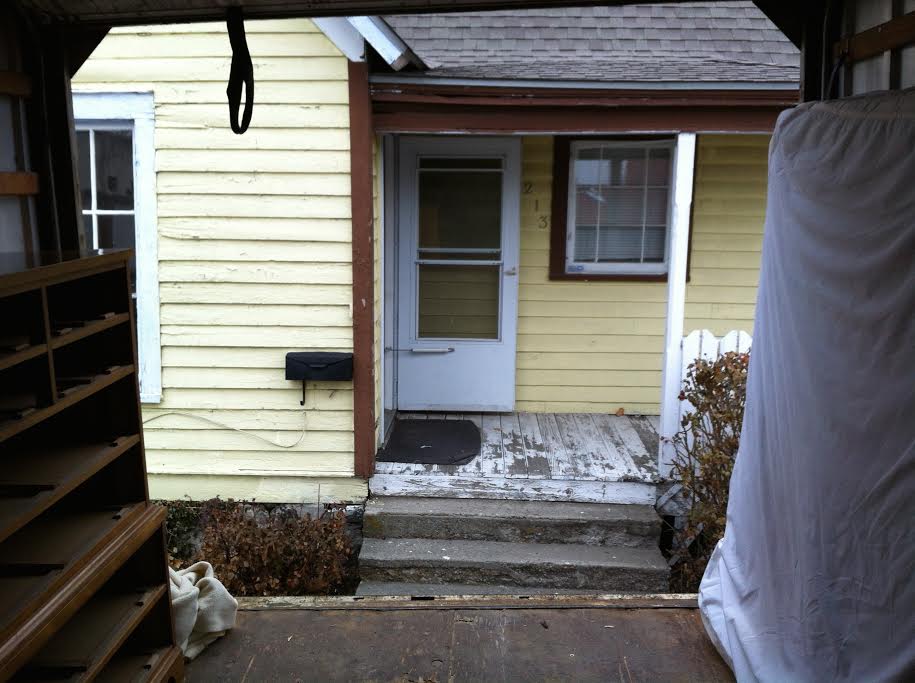
StricklandhouseThere are lots of different kinds of little yellow houses. As I think back on it now, with its empty laundry room, draped with blackout curtains and central hood location, this one would have made a good drug house.

This little yellow house, a bit worse for wear, was across the street from the Salvation Army, and two buildings in from Planned Parenthood.

There was a handy bus stop on the corner, and several inexpensive Chinese restaurants close by.

I don’t know if it was the pedestal sink in the bathroom, the bright orange bedroom (with a walk-in closet) or the wood floors, but I found myself asking about the next steps in the application process.

My roommate arrived after the agent had left, and we peeked in the windows. The paint was peeling and chipped, the interior was dark, and the windows were leaking heat faster than it could be generated.

For some reason, we decided to apply to rent it.

*   *   *   *

If warning bells were ringing then, I didn’t hear them.

This was it, we were getting our little yellow house.

We signed the papers and picked up the keys. It was the week of Christmas, and my brother was in town to help me move my belongings from one home to another.

I moved my things, but planned to stay at my parents’ through the holidays.

My roommate moved in with his brand new set of early Christmas Tupperware.

*   *   *   *

I began to unpack, a little each day, setting up my bed, and hanging my clothes in the closet. I thought I was emotional from all of the transition, but as I smoothed my duvet and placed my new set of knives on the counter, I couldn’t shake the lump in my throat. I didn’t open the knife package, I couldn’t bear to put them in the sticky, hand-painted drawer.

I was nervous about going to the house alone at night. I would reach out to my roommate, first, to make sure he was there, or take my brother with me. I would put on a record, and turn on all the lights, hoping I would get used to being on my own.

But something wasn’t right.

It wasn’t long before I started getting texts from my roommate. They were low-key at first. Don’t cook anything. There might be mice. I haven’t seen any.

But things escalated quickly, as they often do.

He called our contact at the management company. She offered to bring mouse traps.

There are mice everywhere.

I called him, after that, and he told me about the nest in the stove, the droppings all over the counters. I thought about the evidence I’d seen in my closet.

Before I knew it, we were on the phone with each other, and then the property managers, trying to break the lease we had signed days earlier.

When it was done, and we were free, my almost-roommate moved back home to another city. I sat amidst the boxes in the room that had always been mine, in my parents’ house, and cried.

 *   *   *   *   *

Strickland“Moving House” was written by Cara Strickland. Cara has lived in San Diego, California, London, England, and Upland, Indiana. Once, in college, she wrote an essay saying that she was from Narnia. She currently lives in Spokane, WA, in a wonderful little house with wood floors and a purple porch, where she is a writer, blogger, editor, and food critic.


Searching for a Home, Via Alaska (part 2)

And I would do it again, but set down
This, set down
This: were we led all that way for
Birth or Death?
– T.S. Eliot, The Journey of the Magi

Let your beauty manifest itself
Without talking and calculation
You are silent. It says for you: I am.
And comes in meaning thousandfold,
Comes at long last over everyone.
– Rilke, “Initial”
apt xmasAt the risk of proving too dim – more so than usual – how in the world do you even begin a tradition? And how do you decide which traditions to adopt or dismiss? What makes our family traditions lasting, what makes them stick?

These were and are my burning questions this holiday season, beginning – as I described in my last post – this recent Thanksgiving, accompanying me through Christmas yesterday, and traveling with me into the coming New Year. This year I admittedly found myself at a loss. Part of the reason for this conundrum was because, having just flown East for my brother’s wedding in Philadelphia this summer, there was no way to afford another trip from Alaska to the East coast this holiday season. However, I think, too, this mostly-financial matter only forced me to face a deeper, ultimately unavoidable fact of my situation as a single father up here in Alaska, far from Pennsylvania, my home place of origin:

What am I offering these boys, who, at ten and six, are rapidly passing through boyhood and coming of age in a landscape and time period so vividly and markedly different from my own? And how do I attempt or manage to shape anything resembling traditions, for now at least, mostly solo and on too-frequently-limited resources? And how can I deliver legitimate holidays to my boys that don’t blithely or solely coast along the thin surface of the media, Target, or Amazon.com versions of what the day supposedly means?

Over the nearly four years since my sons’ mother and I split up, I found familiar comfort and reliable ease in flying the three of us east to spend the holidays with my family. This effort required little to no thought in my mind, no question of the role I assume or play in the context of extended family, or what I’d be offering Sam and Matt once our plane touched down. Order the gifts early enough online that they’d be at my parent’s house before our arrival and then Sam, Matt, and I would just effortlessly slip into the stream, the flow of everything I’ve inherited throughout the all-American, uber-traditional holidays of my own childhood.

Admittedly, the traditional Bower family Christmas back east has for as long as I can remember also been defined by nothing less than a requisite degree of full blown, manic chaos. Albeit an adorable, welcome brand of chaos, largely because the holidays are perhaps the lone, annual opportunity to find every niece, nephew, sibling, cousin, aunt, uncle, and surviving grandparent reliably collected in one place, even if it is at the price of temporary insanity for all involved.

bower vile family

Jonathan’s Wannabe-Whitman/Thoreau/Teen Wolf phase circa the mid-1990’s

Though an entirely well intended, big-hearted affair replete with randomly occurring acts of familial affection – walloping to near-smothering hugs, earthquaking belly laughs, spontaneous guitar jams and more – the day is no less defined by a never long-sustainable level of noise and borderline confusion. These are riotous events that reliably tax every child’s emotions, ultimately requiring that some assortment of offspring collapse in tears before we can really determine whether the day proved successfully over-stimulating enough or not. Our gatherings have also been annually governed by the persistent din of new devices being fired up or tested, new instruments relentlessly strummed or pounded on, new stereos and/or albums blaring from multiple corners of the room. Of course, someone also always receives the one toy that will send the terrier into a yapping frenzy. It’s a brand of nuttiness that leaves the adults gleefully resigned to caffeinated autopilot from shortly after morning coffee until they can collapse for the rumored winter’s nap at night’s end. By evening, the day’s relentless barrage of good cheer and sugared, fatty foodstuffs and shiny new material possessions and the full brunt of unending social engagement finally reaches critical mass, driving a select batch of us – those too cowardly or soft to live the teetotaler lifestyle of our forebears – to covertly duck into a secret room or to launch out back to grab a nip of an adult beverage. That small band of us pauses and breathes outside, some anxiously grasping for their smokes as we attempt to sit still long enough to raise a glass in the nearest dark space we can find that will afford us a moment’s respite or silence…

Every year in Alaska’s deepest, darkest winter hours, I’ve longed for this single day of unsustainable chaos the way I imagine the polar explorers longed for the affections of their faraway wives and the comforts of home.

The question of traditions and rituals we instill among family – blood relations or adopted or “friend” families – seem to me actually part of the larger question of how you in fact make a home…which is precisely what I’ve circled the wagons trying to do since becoming a single parent a few years ago.

And so, with no ready-made or fixed traditions in place, this holiday season became a kind of riddle, a query lobbed to no one but myself, especially since both my sons, born and raised (so far, mostly) here in Alaska identify no other place they’ve visited or traveled to as home:

What if (huge gulp) we were already home for the holidays?

And, on that notion, what if we started making a day that grew (sanely, maybe even quietly) out of – in the words of Andy Williams, from a Christmas album that has since childhood marked the arrival of the holiday in my mind – “a few of [our] favorite things”? What if we dared test the waters of a new, different stream, perhaps even one that proved a little less chaotic? What then?

sam acolyte xmas eveWe attended the 11pm Christmas Eve service at the Episcopal church we frequent, because Sam was scheduled as an acolyte that evening. Afterwards, close to 12:30am, he raced up to me, bleary eyed and still in his robes, and threw his arms around me announcing, “Merry Christmas!”

I drove him to his mom’s and said I’d see him and his brother in the morning. When I woke the next morning, it was snowing. I took a short walk. As I walked through the neighborhood, muted as it was by the snowfall, I remembered out of the blue, for the first time in over twenty years, that one of my English professors once introduced our class to a recording of T.S. Eliot reading his poems. For the first time in as many years, I wanted only to hear Eliot read The Journey of the Magi.

I returned to my apartment, made tea, and found T.S. Eliot reading The Journey of the Magi at the Poetry Foundation’s website. I played it twice. A day was in motion.anchorage out back

The boys’ mother texted that the boys were awake. Good friends texted and invited me to dinner later, an offer that provided a flush of comfort I wasn’t fully aware I even needed then. I loaded the boys’ gifts into the car. It was still snowing and that hush was only periodically interrupted by the melodic trill of waxwings dashing back and forth between trees out front.

Like the snow’s steady drift and accompanying, welcome silence, and the waxwings passing to and fro briskly overhead, this day required nothing of us. That morning, the boys demanded only that I make it to their mom’s apartment with their gifts, pronto. But the day asked nothing, save perhaps only an invitation that we live into the day we were given. There was no script, no prescribed agenda, no long ago-ascribed roles, no demands to be anywhere specific. Not even any clues for how to proceed with the day. The day only unfolded. As perhaps a good and most memorable day may wont to do – “without calculation,” to borrow from Rilke.

In that way, this Christmas was a lot like writing, like starting a new story. As with composing any new story, the writer plays a critical part in its unfolding. But so much in the details and what happens is left to mystery, too. So much so that, as with any story’s beginning, you have no idea, no clear sense of how any of it will end either. Taking that plunge, then, can often prove frightening, or at least initially a little intimidating.

But in that flow, in the quiet stream of unfolding and unknowing yesterday, the whole birthing of the experience proved at moments quietly thrilling and then also terrifying. In that way, the day also resembled the landscape in which we daily find ourselves piecing together our lives, our family – a striking landscape, and a place that my sons know only as home.

ak wish you were here

Wish You Were Here xo, JJB


Out of Place

For me, it was a moment of confirmation.

We were huddled, one last time, around a table. The conference was almost over, but before we left New Mexico, we had a few decisions to make. First order of business: choose the monthly themes.

We were friends, and we were about to become colleagues. Our joint blog, You Are Here (ever heard of it?), was about our diverse places, but it was also about what we had in common. We brainstormed a list.

Food and Place. Family and Place. Work and Place. Nature and Place. Out of Place. Home and Place. Justice and Place. And many, many others… let’s just say that writers like words.

We chose six, and began assigning months to the themes. November was easy. Food and Place was a good fit for Thanksgiving stories. We moved to December, and I waited for the inevitable suggestions: Home and Place, Family and Place, Warm and Fuzzy in Place (okay, that wasn’t on the list).

There was a long pause.

“How about ‘Out of Place’?” someone asked, and there were murmurs of agreement around the table. Yes, December was the perfect month for Out of Place. It was obvious, unanimous. Mary typed it into her laptop. Without further discussion, we moved on to January.

But for a moment I stopped, surprised. I looked around the group, these writers with whom I was about to throw in my lot. No one had even suggested the more traditional themes. Out of Place for the holiday season. Perfect. I grinned and nodded, re-joining the conversation.

These were my kind of people.

****

It’s a good thing there wasn’t much discussion about December’s theme because I couldn’t have explained why Out of Place seemed so natural, so right. It was more intuitive, a sense in my gut that this theme would give us an authentic way to share during a month that is, oftentimes, full of heightened contradictions and unresolved longings.

And it has.

Scrolling through the stories I see Lisa sitting primly on her new mother-in-law’s couch, pining for the joyous festivities of her own family. I walk through the halls of the nursing home with Kristin “where nothing smells right, sounds right, or feels at peace.” I sit in an unfamiliar pew with Abby, yearning for a sense of belonging that is now past, and keep vigil with Jonathan as he cares for his sick child and tries “to navigate the terrain of single parenthood” without familiar landmarks.

And away from my computer I encounter the same tensions amid the twinkling lights and inflatable snowmen. Our housemates barely sleep, trying to finish up renovations on their almost-home down the street. Another friend, brilliant and talented, endures a seemingly-endless job search. Two of the wisest parents I know struggle to care for a six year old with an auto-immune disease. And many, many others, like Julia in her mourning house, ache for departed loved ones, “trying to find our way to another kind of home where we can co-exist with what is here and what is not.”

What is it about the month of December that makes this tension between what is here and what is not so poignant?

****

I am not one for figurines, but today I bought one that I have been thinking about for a month. Just after Thanksgiving I discovered Mary, Joseph and Baby Jesus, perched on the roof of a bus, in our local Ten Thousand Villages store.

IMG_0663

When I saw it I remembered the longest bus ride of my life. It was 1997 and I was in Haiti, traveling from Port-au-Prince to a town seven hours to the north. We were packed into seats that belonged in a school bus for kindergartners, six grown-ups across each row, the two middle passengers barely on the seats but so tightly squeezed together that they stayed upright.

These were the good seats. On the roof were those who couldn’t afford to sit inside the bus, clinging to the roof racks amid suitcases and baskets of live poultry. They were, quite literally, hanging on for dear life.

Just like Mary and Joseph with a baby.

Whatever the month of December has become in our culture, the Christian version of the season begins with poor peasants on a journey. Christmas is, at its root, an Out of Place holiday. When I look at the holy family perched on the roof I remember: it is not strange to live amid unresolved tension in the month of December.

And I remember this as well: if they keep hanging on, if they just keep going, they will find joy-and even miracles-along the way.

Out of Place in Yourself

At the time, I had no way to describe it other than, “I just don’t feel like myself.”

Feeling out of place in my own skin was new to me. I was the person who seemed comfortable almost everywhere—the one who struck up conversations with grocery store cashiers while they scanned my purchases and with other parents as we watched our children play at the park. I didn’t get nervous at job interviews or speaking in front of a group.

The world was a fairly comfortable place. I had somehow lucked into the type of personality that “fits” best in the world, a circumstance that then snowballs in the best possible way: My general comfort allowed me the luxury of assuming the best of others and believing I also had something good to share with them.

But then, that vague out-of-placeness began lingering. It was like a dark cloud just over my shoulder, gradually seeping then settling deep into my bones. At first I was able to override it, when I needed to, but eventually it took root as a feeling of insecurity—a sense that I was no longer comfortable with myself, or with others.

Rather than seeing strangers as potential friends, and seeing friends as people who were looking out for my best interest, I began seeing them all as possible agents of hurt, as people not to be trusted with my fragile being.

I also saw myself as having little to share with others. Where I had once felt powerful in my ability to enrich and brighten people’s lives, I suddenly felt sure I would do the opposite. So I did something I had never done before—I turned inward.

*   *   *   *   *

IllinoisfieldUnfortunately, this turn in me coincided with a move I did not want to make, to a place I did not want to live. My then-husband had accepted a job in the middle of Illinois, so we moved our two daughters (one still in diapers, the other a busy preschooler) away from the wooded lakeshores of West Michigan to the flat cornfields of Illinois.

But it wasn’t the landscape that left me feeling foreign—it was being surrounded by people who only knew this out-of-place version of me. My history, my core, the way I had been just a year or two before—they were all unknown to the people around me, which made those parts of who I was feel even less real. When reality is shifting, one of the only comforts is being able to look into the face of someone who sees and recognizes it too—someone who can say, “I know. You are not crazy.”

It would be months before someone knew me enough to ask—and I trusted her enough to listen—“Do you think you’re struggling with depression?”

Now, looking back at that time, I find it hard to believe that I could have been so oblivious to something so obvious. But in most cases, depression sneaks in so gradually that you don’t recognize it, and then it changes you so profoundly that, before you know it, you don’t recognize yourself. It’s disorienting in the most fundamental way. Even your own sense of who you were—who you are at your core—is distorted and suspect.

*   *   *   *   *

Thankfully, anti-depressants have been effective for me, especially paired with a whole lot of self-reflection and a determination to uncover and embrace my truest self (which in many ways I had never done, even back in those pre-depression days when my skin and the world I moved through felt so comfortable).

Now I have a decade’s worth of perspective on that time in my life, and I’m able to see this: If depression is one of the darkest of clouds a human being can try to live beneath, my experience with it has a silver lining. Not only has it allowed me to develop great compassion for others who feel out of place—whether that sense is rooted in depression or in a too-narrow set of societal expectations and norms—but it has also revealed to me what love looks and feels like: a deep desire for wholeness in another. God’s love for me is rooted in his desire for me to live fully as my true self, the person he created me to be. And likewise, that is how I am called to love others, from my husband and teenage daughters to the people in my community who rub me the wrong way: To love them is to long for them to be at home in their skin.

The Mourning House

I currently sleep in the guest room of my house. The other room I used to sleep in—which I have been calling the “hospice room”—is now a more hallowed space. That room was redesigned just prior to death of the woman who had accompanied me through life and parenting for 27 years. We’d only been married for just over six months, due to a five-hour period during which same-sex couples were allowed to marry in Michigan. The death was unanticipated; diagnosis of advanced breast cancer, just one year earlier, had led us to believe we had “years” instead of a year to share our lives together. Once a partner, spouse, and co-parent of two daughters, I must now try on the identity of widow, while existing inside of a house that no longer feels like home.

In the hospice room, the hospital bed is gone, but there are many artifacts put in place for healing purposes. A Buddha statue from Sri Lanka donated by sister for good luck; framed photos of orchids taken by our daughter when we went to the orchid show last year; a print of the magnificent sand hill cranes whose visits to the wetlands of Michigan we witnessed every October.

When I walk through that room I see not the space where my partner and I once slept together, did our nightly roundup of the days events, and watched our favorite television shows. Once I had listened to Nancy whisper “sleep with angels, darlin’” each night before we switched off the lights. Now, I see a kind of vacuous shrine that I don’t wish to disturb.

The hospice room is artful. Our antique mahogany bed is spread with a treasured cover from Nepal, and its geometric purple and green hues are echoed in the pillows and in the lilac paint on the walls. Nancy has left many objects containing memorabilia—cigar boxes, a pewter bowl, an old candy tin. When I am brave enough to look through them, I find weathered photos of her father and grandparents in sepia, small jewelry boxes containing antique rings and pearls, the invitation to her parents’ wedding in 1950, the baby shoes of our daughters. It contains remnants of a life I once was part of.

In the guest room where I sleep, I still feel like a visitor. The room remains the same as when it housed guests, not particularly inviting and disturbingly impersonal. The colors clash: pink curtains, a blue patterned quilt, walls painted a jolting lime green. A large unadorned bed dominates the smallish room. It’s not designed for comfort or charm. But in my current uncomfortable frame of mind, it seems to fit my requirements.

A perennial basket of unfolded laundry resides in the corner of the anonymous space where I now reside. My computer, my refuge, stands ready for my use, although I still can’t find a show I want to watch or a book I want to read. Scanning Facebook, reading through emails, I seek connections to fill the stillness that stretches before me.

The rest of the house is also still alien territory, transformed by the permanent vacancy of one of its occupants. My sprightly teenaged daughter, whose easy laughter hasn’t changed much since toddlerhood, begs me to go upstairs with her at night. She will not go back downstairs again without me, spooked by a house that is devoid of her other mother. She asks me to accompany her to the bathroom at night and in the early dark mornings. She fears that Nancy is somehow here in the house as a ghost, but perhaps not as much as she fears living in a house where Nancy no longer exists.

Nancy’s mother says she cannot bear to visit us in this place, not while the painful memories of her daughter seem to bounce off every surface of the house. But my daughter and I must live in this mourning house, trying to find our way to another kind of home where we can co-exist with what is here and what is not.

 *   *   *   *   *

JuliaGrant“The Mourning House” was written by Julia Grant. Julia lives, writes, and works in higher education in East Lansing, Michigan. She and her partner, Nancy, were one of the 300+ same-sex couples who were married on March 23, 2014, in Michigan.

Searching for a Home, Via Alaska (Part 1)

I know I’ll make it back
One of these days…
Where the cups are cracked and hooked
Above the sink
And a cracked door moon
Says I haven’t gone too far
– “Via Chicago,” Wilco

What is it that proves so timelessly compelling about an unknown place – and especially the distant, the faraway – the Not Here Where I Am Right Now? Maybe there’s an anthropological study or psychological classification for this phenomenon. Perhaps Lonely Planet or Rick Steeves have a term that adequately summarizes our thirst for going someplace thoroughly unfamiliar, for getting a little lost, for stumbling through a foreign anywhere with only a select handful of phrases, and eating whatever seems most intriguing or unlike the foods found in the places we’re from. “Wanderlust, dummy,” you could say, but that’s not what I’m getting at – or, it’s not only that. Wanderlust, to me, feels too temporal, too casual to properly describe the specific longing I’m describing. What do I call that spirit that comes to life when I’m huffing away on the Stairmaster at Planet Fitness and Anthony Bourdain is on TV sipping a steaming liquid from a delicate ceramic cup, or eating meat or cheese from a place where everyone’s skin is darker than his? In those moments, I want to know those people and that place, but I also know the likelihood of deeply or intimately doing so is highly unlikely.

I’m curious on one hand because I’ve recently become worried, wondering if I, over the past twenty years, unwittingly traveled and “adventured” myself into a corner. Rather, in making a lot of my life one fascinating backdrop or living experience swiftly following another, I now find myself at a bewildering impasse: This year marks my tenth as an Alaskan resident, which means I’ve lived here longer than anywhere else save for my state of origin, Pennsylvania. And despite an active engagement in Alaska over the course of that decade, I still find myself feeling oddly far-flung,JJBoutofplace a bit adrift, “a stranger in a strange land,” and frequently out of place in a location that my two sons – both born and in love with their lives here – fully consider and embrace as home.

Under my love of the wildly unknown and the thrill instilled by journeying to new places, I’m now finding another form of longing, and in recent years it’s proven a deeper, heavier pull than the passions that lured me towards a tireless series of fascinating locations and situations in previous decades. In simplest terms, I think mine proves a longing that all of us to one degree or another carry for “home.” And yet, I worry that naming it as such reduces it to a pouty, Dorothy Gale-by-way-of-Judy Garland type of pining. Either way, however, it’s perplexing that I would experience these conflicted feelings while occupying the same location on Earth where my children feel so utterly present and at home.sam and matt

Meanwhile, “home” doesn’t often seem a very “sexy” or hot topic to bridge in conversation. It’s not a subject that gets many people excited, unless you’re discussing the purchase of an actual, physical “house,” or watching a cable reality show where a couple’s house is about to be remodeled or transformed from Ordinary into a palatial estate. Otherwise, it’s probably not a topic that will really charge a conversation the way “travel” or living abroad do when you’re trying to make friends or identify yourself among new acquaintances at a party. Where we’ve been and what we’ve done or seen tells others something significant about who we are (or, who we think we are) in a way that trying to discuss remaining still or feeling content rarely, if ever, will.

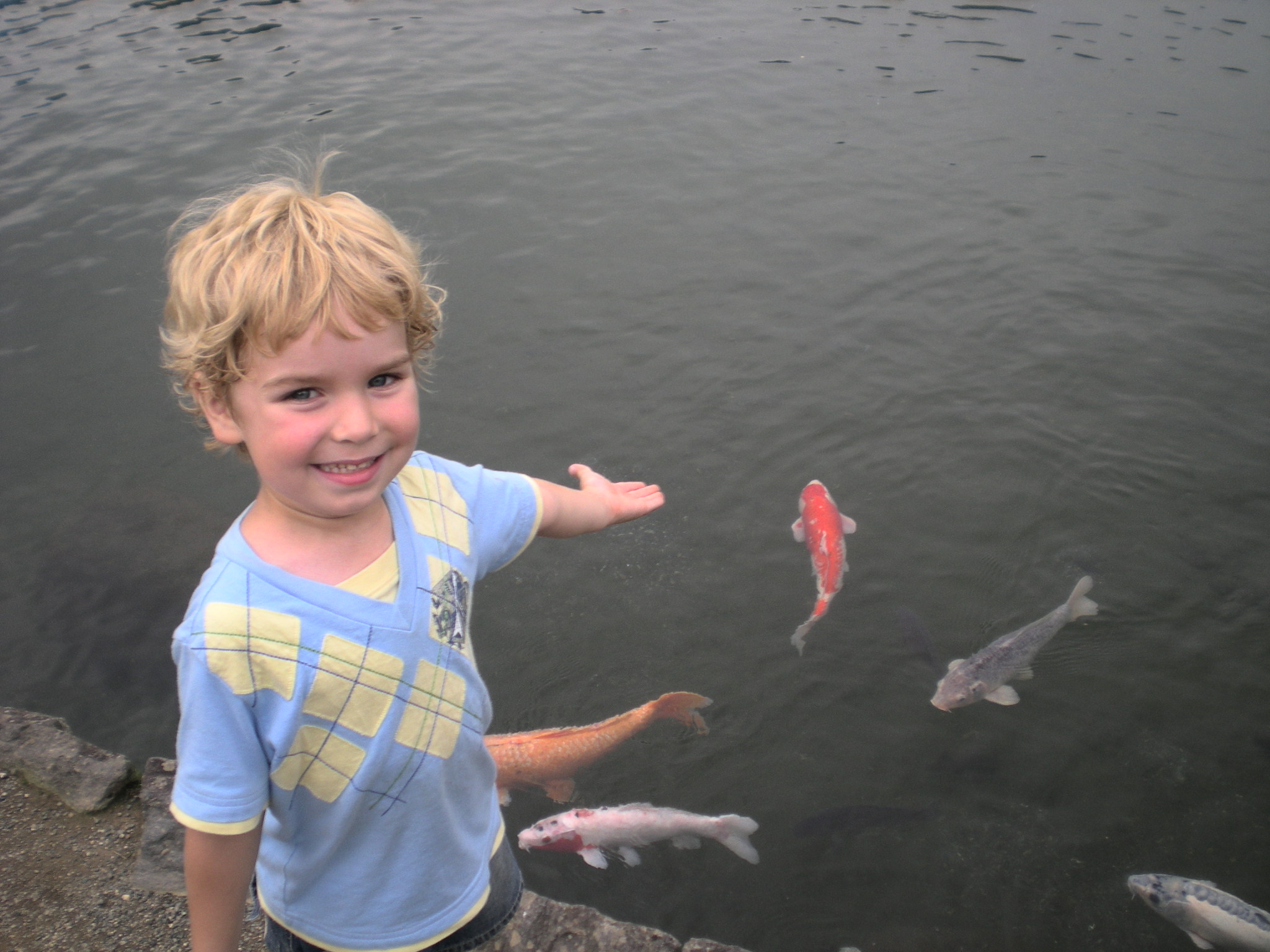
When I make a reference, for example, to “when we (my then-wife and my boys) lived in Japan,” something sparkles in the listener’s eyes, or a smile swiftly dances across his or her face. I imagine they, like I used to do, entertain a swift, thrilling montage of koi ponds, teahouses, manicured gardens, and exquisitely designed pottery and luxurious foods. At one time I strongly identified with and entertained that same montage.

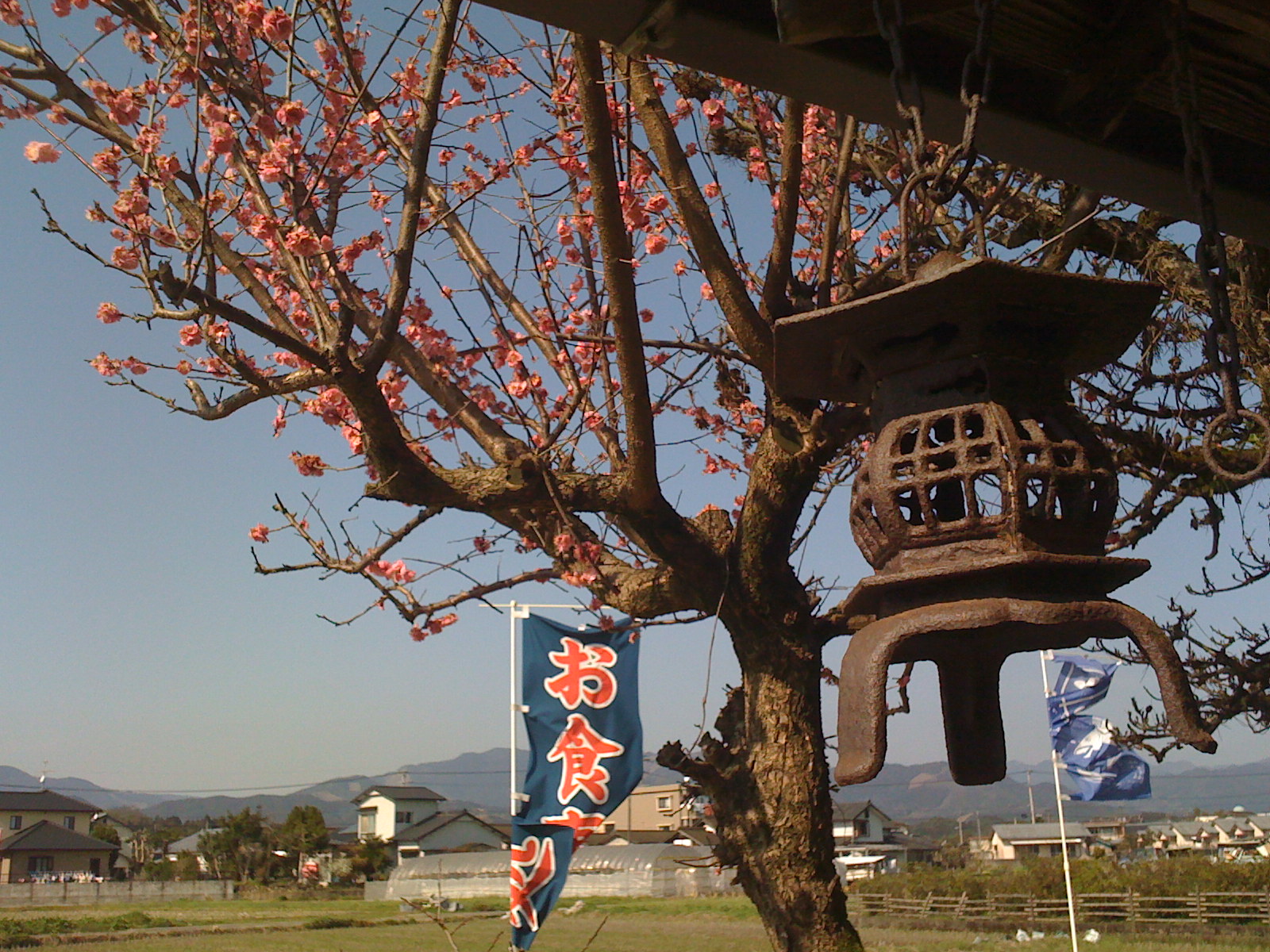
lantern

And yet, I highly doubt anyone recognizes by referencing “when we lived in Japan,” a part of me bristles inside. In fact, I sometimes feel sheepish sharing that we did – it feels rather like a misstep in the pace of a conversation. Nowadays, it’s almost as if I admit I lived there to a listener. There’s no romantic indulgence in revealing it, no bragging rights. Rather, a part of me goes a little limp inside. And oftentimes, saying I live in Alaska has felt this way, too. And I never imagined going into either of these situations that I would one day feel this way.

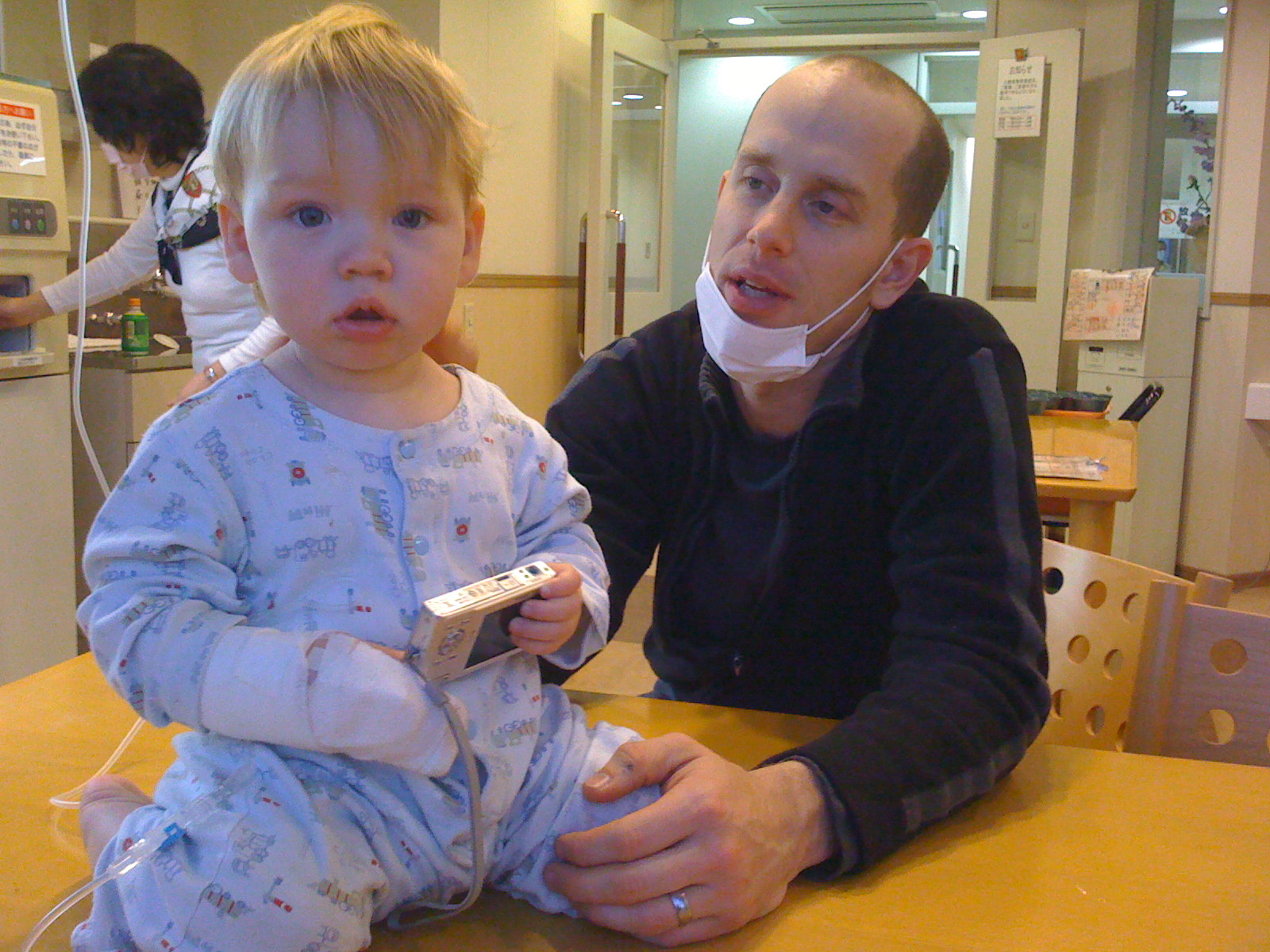
With Japan, I imagine a big part of this is that it’s the place where, over the course of a few days my sons’ mother and I briefly feared that our one-year-old might die. It’s also where his mom and I one year later realized and faced the hard cold truth and acknowledged aloud that our marriage was, in fact, dead.

Matt Hospital Japan

Rather than an exotic, storybook fantasy, our experience more closely resembled that of the characters in the film Babel, many of whom acutely wrestle with a 21st-century specific form of displacement and confusion related to being out of place, far flung from any idea or notion of home.

Babel

I was reminded of all of this the Tuesday before Thanksgiving a couple weeks ago, when my youngest, now six, received a visit from the latest flu monster currently making the rounds up here.

A friend had a week or so earlier invited us to dinner with his extended family at their log home in a town three hours north of Anchorage. I looked forward to fleeing the city for the holiday, but a restless night with a boy battling a 103F temperature in the mornings leading up to Thursday found me a little beside myself, brainstorming a possible “alternative” Thanksgiving if we were possibly stuck at home.

I had done very little shopping, which is to say none at all, aside from purchasing some odds and ends for the table of the friends’ home where we were intending to spend the holiday. I was definitely turkey-less, and I didn’t even have a single can of the gelatinous, can-shaped substance we call cranberries. I couldn’t help imagining that if Matt’s health dictated that we stay in Anchorage, this year would go down in my ten-year-old, Sam’s journal as the year we ate turkey club sandwiches at Denny’s.

In hindsight, I see that my panic was fueled by a clueless, single father’s blend of confusion and distress around both properly caring for a sick boy with the flu and a 103F fever, as well as having no grounded family traditions in place up here for possibly observing the holiday. The latter realization was compounded by the knowledge that we also have no immediate or extended relations anywhere nearby – nowhere, in fact, within a twelve-hour flight across the country. Which meant, too, that I had no family to call on for assistance for the Tylenol I was out of at 1am, or family to crash with on the holiday or to send Sam to if I were stuck home with Matt, on a holiday during which time we customarily celebrate and gratefully reflect on family and our ties that bind.

I’ve sat in a remote Japanese village after the orange harvest eating horse meat and drinking a clear liquor made from sweet potatoes that I’m sure must have shared chemical properties with space shuttle fuel, all while knowing only a handful of stock phrases you could pick up from watching Lost in Translation. sam russian marketI’ve drifted through a Russian village meat market and stood slack-jawed watching a toothless man butchering a pig – cigarette dangling from his mouth, no shirt or gloves – in a way that would no doubt cause reps from both OSHA and the FDA to collapse from aneurysms. I’ve lived five miles deep in the woods of New Hampshire without running water all winter. Stood thigh-high in steaming piles of horse manure twenty-one miles up a mountain in Oregon, holding only a shovel and longing for nothing more than to finish the job and return to my wood-heated cabin and books a stone’s throw away.

But nothing – I swear to you, nothing – in my life has felt more truly foreign or alien to me, honestly, than the terrain of single parenthood these last three years, and nowhere more so than in the helplessness that springs to life when the children are sick, or during the holidays when – minus the grounding of roots or traditions – I’ve wondered where to orient the three of us.

And don’t get me wrong – I do treasure the sum of my adventures. They make for rich memories, and mine’s proven an undeniably privileged way to spend one’s young adulthood. However, as I sat at my son’s bedside, anxiously scrolling WebMD.com on my laptop for advice on how to care for a child’s flu and fever that Tuesday evening before Thanksgiving, as he writhed and his breath scraped along his throat and through his nostrils, I also wondered about what I may have neglected or failed to consider during my years exploring distant places, gathering mostly only experiences in everywhere and anywhere entirely unfamiliar…

sam koi

In the Aching Hour, We Wait

The dying light of a sunset is an encounter with the aching beauty of the eternal. As I watch the light unfold, my heart also unfolds. Here and longing. Flashes of mystery in the familiarity of light.

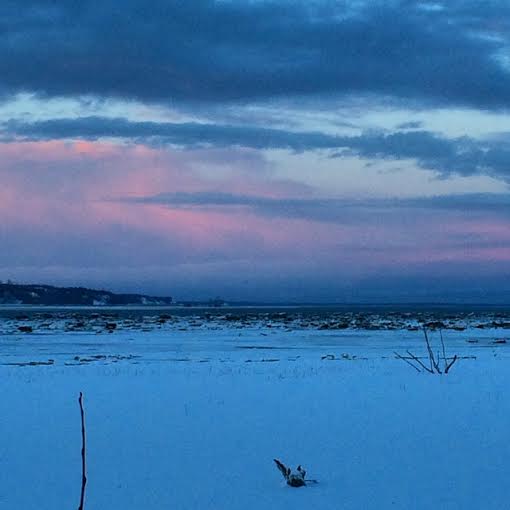
Two days ago, in the early winter hour of sunset, I drove into the southwest horizon. The crisp, yet not cold, December air felt light and clean as the sun’s horizontal shine blew the heaviness and rush of daylight away. But as the light went its silent way into the deep blue fading sky, low in my chest, something heavy grew. Sorrow and the fullness of joy were somehow interwoven in a single feeling. The black shadows of trees etching upwards like arms and fingers reaching to the sky, like black spires aching in the light, recalled something eternal, something of death in life and life in death. The aching of my heart quivered under the hope the leafless trees promised. But quickly, the image faded. Too often, beauty is a shadow passing–leaving only a thin hope, a momentary awareness of a true home. As it passed over, this thin hope found its place in my heart, a heart now missing a faraway home.

****************************************************

Deep in South Texas, my grandmother’s childhood home sits at the base of the Texas hill country and is dominated by slow rises, wide views, and red dirt. Everything about the ranch reminds me of her–rugged and beautiful in a Texas kind of way. It’s an old house complete with a 1980’s Ford pickup to drive the property.

On a visit one summer evening, the old pick-up with Texas Country playing on the radio took me to the highest point of the ranch, and I rolled the windows down to watch the sun set into the grey of a coming storm. As the clouds turned from shadows into the surface of a burning sea, the storm and its rushing glory moved towards me. The smell of rain, thick in the vital air, mingled with the vision. Far in the low sky, silent lightning struck. The coolness of the coming rain and the sedation of the setting sun spoke peace, but in the moment, there was also fury…fury in the rising storm and a wild otherness in the red dirt and fiery skies, tremors of holiness within the peace. It was a fleeting sight of a home I did not know, a place I had only sensed.


My longing for that home, only glimpsed, is often full of sorrow. I, and all those whom seek, wait. We wait for the Son in the midst of a sullied world. We wait for him to be born. We wait for him to die.

In the aching hour of the setting sun, we wait.

Yet, in the promise of his advent, our waiting is full of hope. For he said he will come again, and we, with John, say: “Even so, come, Lord Jesus.”

The Pain and Beauty in Goodbye

Now far removed from the 9th floor Korean apartment I called home for nearly two years, I’ve been reflecting on what I’ve taken away from my time in South Korea. I’ve come up with quite a list.

I’ve learned about graciousness, and about understanding. I’ve learned patience and learned to wait for the full story before casting my final judgment- there is always a reason behind even the strangest cultural customs. It’s proven true that living in another culture has become one of my life’s great teachers.

The more I worked through lessons learned, (and trust me, there were many) there was one particular lesson that separated itself from the others; my changing understanding of the beauty and importance of saying “good-bye.”

suitcaseWhile living in foreign countries, expats make friends with natives and other foreigners alike. It’s possible, or probable, that as foreigners we will become friends with people soon to leave us, and so, we say “good-bye.”

Eventually, our time will come. Whether that time is after 30 years or 30 days, we inevitably will leave and call a new place “home.”  Maybe we’re really heading home (the place of our birth), or maybe we’re starting a new chapter filled with new scenery and with new people. No matter the situation, it all ends the same way, with us saying, “good-bye.”

I, like most people, hate good-byes. Separating oneself from those who learned and grew with you is a difficult and painful event. When we leave, we are leaving behind part of our self, and with us we take a unique mark; a mark penned by the culture that took us in.

But, since my journey back west, I’ve come to a few realizations.

Good-byes force us to start a new chapter. 

Life often will take the form of a story. We live our lives in phases, or chapters. We grow during chapter 5, we fail during chapter 7, and find hard fought redemption in chapter 14. During our story we live, breathe, love and cry. The chapters of our lives are different lengths and they are filled with a wide range of emotion.

It’s important to remember one thing, though. Like the chapters in a book, our life’s chapters never last forever. We are not defined by the mistake we made in chapter 3. What defines a person is what he chose to do with the number of chapters he or she was blessed with. Do we choose to accept what happens and allow chapter 3 to propel us  into chapter 4?

Since my time in Korea, I’m learning that “good-bye” is often the final period on that final page of whatever chapter we are currently writing. The act of saying “good-bye” lets us start again. It allows us to grow. It allows us to leave unhealthy situations in search of healthy ones, or it allows us to leave healthy situations in pursuit of a dream.

Good-byes help us to realize what we had, and to appreciate it. 

I’ve got a confession. I don’t think I ever fully appreciate people or places when they are part of my life. I take them for granted. But, as soon as I am about to leave a place, the ordinary, everyday buildings that inhabited my world (buildings that I’ve passed hundreds of times without notice) are filled with color and I find them remarkable. The people are revealed for who they are, which are friends that I am going to deeply miss and who had a lasting impression on me. I think this is human nature, though. We rarely appreciate the things right in front of us. “Good-bye,” though, forces people and places back into their proper place; their place of high honor and importance. The act of saying farewell is the great equalizer.

Good-byes help us to hope that beauty is possible again. 

The fact that saying “good-bye” is so incredibly difficult speaks to what our experiences were: beautiful and important. This pain is the living proof that we cared and that we loved. It is the frame work that defines the art that was created during our time. It’s not easy to end something of eternal importance. It’s not easy to leave friendships that altered the course of your life.

It’s important to remember that the pain, the memories, the beauty, the lessons learned all come down to this: As bad as it hurts, our act of leaving is a statement of faith (for without faith, we’d never leave) that in our act of going, there is a belief that there is more art to be created and that there is more beauty to be discovered. There is justice to be done, and lessons to be learned. There is hope to be given and there is love to be given.

“Good-bye” is a hopeful sending, and in our going, we are granted permission to go find and create again.

*   *   *   *   *

Michael“The Pain and Beauty of Goodbye” was written by Michael Palmer. Michael is a Midwest transplant residing in Northern California, a pastor, proud father of two little ones, an avid St. Louis Cardinals Fan, and a lover of cultures, travel, food, and theology. He’s published numerous articles on theology, art, and life, and is a contributor to Renovating Holiness (SacraSage Press, January 2015), a theological re-imaging of holiness. You can also find him at michaelrpalmer.com and on Twitter: @michaelrpalmer.

 (Suitcase photo by Elitatt.)

A Place to Belong

I didn’t cry when my parents dropped me off for college. And I didn’t cry when I went to sleep that night or the next day or the next. I wasn’t sad, I was just excited. I didn’t cry about leaving home because I didn’t feel like I had left home. It felt like the times I had stayed at a summer camp, or a youth rally. Even when I started going to classes and managing my own food, it still didn’t hit me that I was not home.

It took until the first Sunday that I cried. I walked across the campus and into the church that mother had gone to when she had been on the same campus years before. I walked into the unfamiliar place, and suddenly realized I had no idea where to sit. There were lots of open chairs. The problem wasn’t that there wasn’t a place for me to go; the problem was that I didn’t already have a place to belong.

Back in my home town, my family had gone to the same church my entire life. My parents still go there. I am intimately familiar with the brown brick, the blue carpet with pink and turquoise speckled into it. I know the way it smells and feels when the lights are off and you are the only one in the echoe-y narthex with the tall ceilings.

I know the history of every inch of that building, and I never had to learn it. The church building grew up with me. The seemingly random brick wall in the lobby is a weight baring wall that was the first entrance into the church. The fellowship hall used to be the sanctuary, and for years the floors weren’t carpeted and the congregation would move the chairs to the side after the service and have a square dance or a dinner or anything really because the floors were so easily cleaned.

I played tag through the walls that were not yet dry walled, and picked up weird looking nails as treasures when they built the education wing. The original members had wanted a new sanctuary, but put it off because they saw the necessity of the immediate future. The nursery had been overflowing for quite some time. The original nursery is now the kitchen, the education wing has tripled in size, and the congregation finally did get that beautiful new sanctuary they were promised. I was singing in the choir next to my mom the first day it was used.

Throughout all of these changes, my family had always sat two or three rows in from the front, stage left. There were no official rules or seating, but that is where we always were. Perhaps this was because my mom was more often than not in the choir loft and she could give us “the look” from there if she needed to. I just knew that roughly three rows in, stage left, was where I belonged.

When, at eighteen years old, I walked into that unfamiliar church and did not know where I was supposed to sit in the sanctuary, suddenly I realized that I was not home. I did not have a place that I belonged in this building, in this sanctuary, in this church body. I sat down stage right, still sort of near the front, and I cried throughout the entire service. I never went back. It just didn’t feel like home.

It is hard to sit in a place when you are not sure where you belong.

*   *   *   *   *

Abby“A Place to Belong” was written by Abby Norman. Abby lives and loves in the city of Atlanta. She swears a lot more than you would think for a public school teacher and mother of two under three. She can’t help that she loves all words. She believes in champagne for celebrating everyday life, laughing until her stomach hurts and telling the truth, even when it is hard, maybe especially then. You can find her blogging at Accidental Devotional and tweeting at @accidentaldevo. Abby loves all kinds of Girl Scout cookies and literally burning lies in her backyard fire pit.


Walking While White

Trembling, I stood up in church on a sweaty summer morning. It was prayer time, and the requests and testimonies had been weighty thus far. There were loved ones awaiting parole hearings, babies in the NICU, and the ever-present lure of the streets growing in intensity as the weather warmed. I looked at the worn faces of grandmothers who had been praying for decades, and my own request seemed trivial. They waited, nodding encouragement and softly chorusing “Help her, Lord.”

The Lord helped, and I spoke. “I would like to ask for courage so that I could walk in my neighborhood this summer. I’m not afraid for my safety, not physically, but I just get so tired of being ignored when I say hello to someone. The angry glares are hard for me. And it’s hard, well, to stand out all the time. Please pray that God would help me. Thank you.”

I sat down quickly and wished that I could sink into the pew. Really, did I just ask a congregation of African-Americans to pray for a poor little white girl because she couldn’t handle a little unfriendliness? Did I just complain about standing out to a group of people who had experienced prejudice since their births? Did I really just say all that?

Staring hard at the songbook in front of me, I heard the murmuring begin again. “Oh yes, Lord.” “Thank you, Jesus.” “Help her.” Someone squeezed my shoulder, and my husband covered my hand with his. The murmuring grew, and a middle-aged black man in a crisp white shirt stood on the other side of the church.

“Thank you for sharing,” he said. “And I would like to say something. I also take walks, and I understand what you mean. But here is what the Lord helps me to do: I always say hello and smile. If the person says hello in return, I thank God for that person.

“But,” he looked at me, “if they are rude, I know God has given me a special job. He has given me the job to forgive them and to pray for them. And so that’s what I do. That’s why I haven’t stopped walking. They need my prayers.”

He nodded for emphasis and sat down.

There was a communal breath of silence before everyone began clapping. It was if a door had opened and we all felt the breeze.

“Yes, Lord! Thank you, Lord!” We weren’t murmuring anymore.

***

Earlier that week, my two blonde preschoolers were running down the sidewalk with total abandon, excited to spend their quarters on candy at the corner store. As we passed a block of row houses, there were voices from a porch, and I saw a group of five or six teenage girls staring as we passed. They were whispering, but not very quietly.

“I mean, isn’t this a black street?” one girl said, a little too loudly for her friends’ comfort, and they shushed her.

“Crackers!” another called, and they all broke into nervous laughter, shocked at her audacity. I was walking as fast as possible, face burning, but still I heard one more thing.

“Why are they even here?”

This is a good question. As my children were contemplating their candy purchases, I thought about my city. Pittsburgh has the dubious distinction of being one of the most segregated cities in America, and because we also have an unusually low Latino population, the city is largely divided into “black neighborhoods” and “white neighborhoods.”  The convenience store where I stood was smack dab in the middle of a black neighborhood, and the teenager on the porch was right—I did not belong there.

My neighborhood came to me by way of marriage. My husband, a Scandinavian from Los Angeles, bought his house two years before we met in the fall of 2004, and I fell in love with his commitment to his urban neighborhood even as I fell in love with his ability to cook. But though we appear to be similar, at least in terms of race, our experience of life as a minority is vastly different.

My husband has never had the experience of “blending in.” His area and his schools had always been predominately Asian and Latino. In contrast, my high school in rural Western Pennsylvania was 99% white, with a graduating class of eight hundred. I can still remember the name of the one African-American boy who was in my honors-level classes.

Now I wonder what high school was like for him.

***

Here is something I’ve learned in the past decade: When you are a part of the majority race in a particular place, you don’t really think about your race much. When you are a minority, you think about it a lot, and particularly in situations where you are vulnerable.

For me, walking is a vulnerable situation. Although most people are too preoccupied with the details of their own lives to care if I am white, black, or purple, I become an instant target to anyone with baggage or prejudice. While walking, I am on display for anyone who thinks I don’t belong in their neighborhood, and I am immediately subject to their reactions. It is at these moments that I return to the question asked by the teenager on the porch: Why are we even here?

There is no simple answer to this question, but my husband and I are grieved by the ignorance and mistrust resulting from our racial divisions. We also sense a call to serve our particular church, and can do so more credibly as members of the community. Ten years ago, these would be all the reasons I could offer, but recently another has risen to the surface.

Why are we there? We are there to walk. While white.

Whether I like it or not, my identity as an educated white woman in America yields a certain amount of power and privilege, intrinsic to my appearance, speech, and culture. In order to love my neighbors, who are not educated white women, there are times when I must use this power for their sake. For example, when a member of my community is unjustly imprisoned, my presence at a rally or my carefully composed letter may help to bring attention to the case. I am not “the answer” or (God forbid!) “the savior,” but the God who can use unjust realities to bring about justice may choose to use me.

Most of the time, however, I am not engaged in the use of power, but in its surrender. Walking while white has become something of a spiritual discipline for me, a discipline of chosen vulnerability. In the midst of a larger world where I don’t often think about my race, I walk to be reminded of it. I walk even though—and especially because—I can’t blend in.

And I also walk because on those days when I smile and say hello, someone may just smile and say hello in return.  And if they don’t—if they glare—then this is a part of my education too. It may even be the most critical piece.

****

Again, I am out walking with my two excitable children. This time we are heading to church, and they run ahead of me up the hill. A group of black teenage boys are stomping down the hill toward us, laughing loudly. My mind calculates their age, demeanor, and sagging clothes; I swallow the urge to call my children back to me.

“Jen, stop it,” I scold myself internally, “They’re just teenagers, being loud.” Still, they are so very loud, and they are approaching my daughters. Without noticing, I’ve quickened my pace.

And then suddenly, drastically, everything changes.

I recognize one of the boys. He had been a counselor at our church’s summer camp. He recognizes me too, “Miss Jen! What’s up?” He greets my older daughter and she gives him a big hug. I ask about school, and his friends stand around, looking amused at our interaction. We finish our conversation, hug, and continue on our way.

“Mama, that was my counselor!” my daughter announces, now skipping up the hill with glee. I think about how quickly how the nameless ‘black teenager’ became ‘my counselor,’ and I smile at her. “Yes sweetie,” I confess, “I know him too.”

And in my confession, I confess something larger: I walk because I have a long way to go.