Where I Came From: 5,000 Miles and Back Again

When I was a little girl with two brown pigtails and bangs cut straight across my forehead, home was a grey-blue ranch-style house situated in the middle of Michigan’s palm. It was also a musty-smelling blue canvas tent, the sweaty brown vinyl backseat of a station wagon, and the open road, always leading to someplace new.

 *  *  *  *  *

If “home” is defined as a specific place, then my answer to “Where are you from?” is clear: I’m from St. Johns, Michigan, a town of about 12,000 people with a two-stoplight Main Street that’s anchored on the south end by a classic Midwestern courthouse. My parents still live in the house they bought when I was just five, and when we visit today, my own daughters sleep in my childhood bedroom.

All the kids who went to my elementary school lived in town like me, but by the time we were in middle school, our classmates were pretty evenly split between “town kids” and the “country kids” who grew up on surrounding farms. (My best friend Rhonda was a country kid with horses we rode on the weekends.)

Besides sleepovers and football games, there weren’t many parent-approved things to do for fun, at least not until we were old enough to drive the half hour to Lansing for date-worthy restaurants, movies, and malls. But St. Johns was a good place to be a kid. Growing up in a sheltered town meant plenty of freedom to bike everywhere—the city pool, friends’ houses, the library, and the bakery for custard-filled long johns. We didn’t wear helmets or lock our bikes—the only requirement was a wristwatch so we wouldn’t be late for dinner.

But even with such deep roots in a single place, I also grew up with an understanding of home that was nomadic: Home was wherever you stopped and pitched the tent when it was time to cook dinner. bluetent
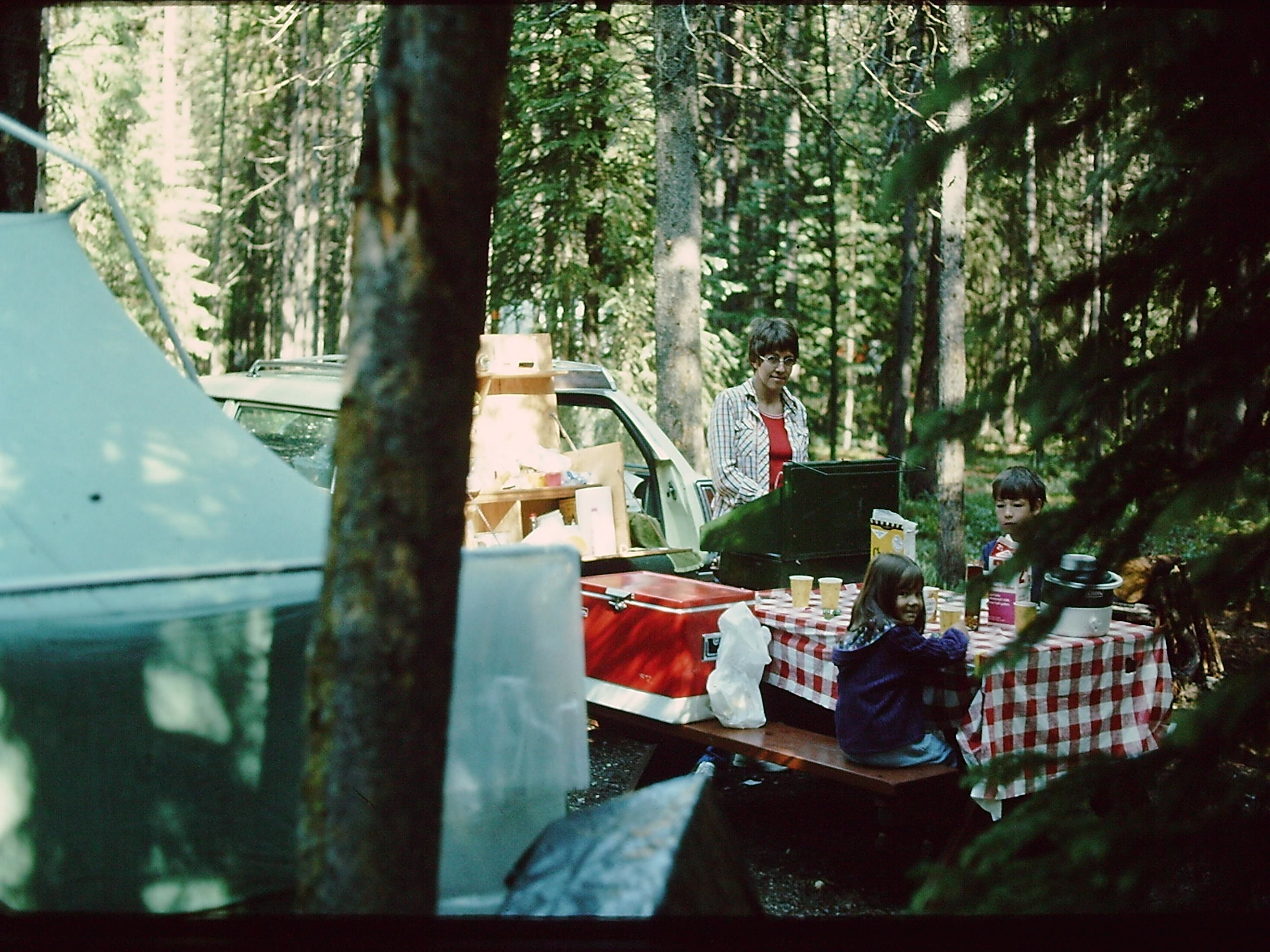
My parents were both teachers, which meant summers offered more time than money. Flying from Michigan to visit relatives on the West Coast wasn’t in the budget, so each summer we packed up our wood-paneled station wagon and hit the road for about six weeks.

I was prone to carsickness, so there were just two ways I rode in the car: sprawled asleep across the backseat or awake and perched dead center, leaning forward until I was almost as much in the front seat with my parents as I was in the back. Luckily, my big brother was never the sort to draw a line down the middle of the seat and enforce it with punches or pinches. Besides, I think he was happy to let me chatter away to my parents, leaving him in relative peace with his books.

The ultimate destinations we drove toward—a visit with our grandparents in L.A. or our favorite cousins in Portland, a week spent hiking in Glacier National Park, or a few days exploring San Francisco—were well-worth the 5,000-or-so miles we covered each summer. But so many days were devoted to just getting there, driving through endless-seeming states like Nebraska or North Dakota, only stopping for gas, bathroom breaks, and to eat the sandwiches Mom had made at the campground that morning.

After a full day of driving, as the sun was lowering in the sky and Mom’s voice was hoarse from reading aloud Little House on the Prairie books, we pulled out a thick campground guide and chose a place to stay—with a pool, if my brother and I were lucky. At the campground, Mom pulled out the camp stove and started dinner while the rest of us got to work setting up the tent and filling it with sleeping bags and pillows. The next morning it all came down again, was packed back into the car, and we drove some more—to the next place we would call “home” for a night.

*  *  *  *  *

Now, when I think about where I come from, I still envision that ever-present grey-blue house, first. I am very much a small-town Michigan girl. But it occurs to me that my rootedness in that place has always been filtered through an understanding of other places—of treeless plains and impressive peaks, of rugged beaches with magical tide pools, and of Chinatowns and subways, operas and contemporary art. I knew where I was back home in Michigan because I also knew where I wasn’t.

And in that sense, I come from places that protected me as well as places that exposed me—from a small Michigan town and big Montana mountains; from the inside of a station wagon, where my entire family was always close enough to touch, to a crowded San Francisco sidewalk where strangers pressed in as I absorbed glimpses of the world.

stationwagonPhotographs by William E. Tennant


Where I Am: Twenty Minutes from Alaska

“[‘Nature’] always happens in a place, and generally, whatever you see and learn, you do so in a small place…So why not look around and see where you are?”    – Gary Snyder, The Etiquette of Freedom


My sons’ mother and I had barely pulled into town in August 2003 when longtime residents informed us, “Alaska is twenty minutes outside Anchorage.” The fact that our newly adopted city wasn’t in league with the Truly Wild and Last Frontier initially struck me as unfortunate and disheartening. I’d held higher hopes for the place in which we’d soon start raising a family.

Still, it was helpful to learn that sage little chestnut. It alleviated some of my bewilderment towards the city we had – albeit, a little impulsively – elected to call home for the next couple years (which has since become ten, though that’s a different story).

Only days earlier, after nearly two weeks spent road tripping from my city of origin, Philadelphia, and through some of the most scenic and jaw-dropping wilderness areas in North America, I pulled into Anchorage feeling just a little duped, appearing to have landed…in South Jersey?

To the new arrival – especially one from a major metropolitan area relocating to Alaska’s largest city – Anchorage looks less like the Metropolis of the North than a complex and intricately woven web of strip-malls, each of which rests couched in the massive, sprawling lots that contain them.

And for the first few years that we lived here, that’s all I could see. It ate at me constantly: Never mind brown bears and wolverines! How have you people survived such garish aesthetics? You’re an architect? Can’t you do something about all this?

So, while we were married, the kids’ mom and I thrilled in every possible opportunity to peel past the city limits, beyond the gaudy shopping centers and stop-and-go traffic, spilling headlong into the jaw dropping landscapes always twenty minutes or more beyond Anchorage. And in that way, yes, we’re very spoiled here. I won’t pretend otherwise: It’s incredible. It is Alaska out there. With camping gear and rations packed, the grand SUV of fat-tired strollers in the trunk, and a Baby Bjorn strapped to one of our chests, we were often wilderness bound, city-free, and soon romping around in a real-life postcard in no time.

However, when I became a single dad to my two boys a couple years ago, those postcard-romps became a little more difficult to achieve. Not impossible, but a whole lot tougher to pull off single-handedly, much less with anything remotely resembling frequency, or urgency, or – more recently – even energy and drive.

Between parenting, domestic duties, juggling a couple jobs, and moonlighting as a musician, nothing seems more adventurous or wild in my mind many nights than a solid, single night’s sleep.

Nowadays, I’m happy to let the John Krakauers reveal their life-altering Into the Wild and Into Thin Air adventures (and misadventures), if only because I’m trying to conquer the Mount McKinley of laundry piles preventing me from freely collapsing to my bed, or couch, or both. By day’s end, a few meals worth of dishes in the sink, and a minefield of the boys’ most sinister, microscopic Legos embedded in the carpet – brilliant for late night, barefoot walks across the living room – the only adventure you stand to sell me features red wine and my guitar.

The Baroness, the apartment complex in which I reside and spend part of each week with my sons, is nothing to look at. In fact, let’s disregard the building. If you visit, I’ll want to turn your attention the other direction. From our second floor balcony, turn your gaze towards the Chugach Mountains strung along the horizon line, the not too distant range resting there, cradling our funky and flawed effort at a ready-made city, oblivious to our mess. We witness the moon’s cycles, sunrises, and sunsets from this same landing, too. In recent years, even despite the nearby city lights, I’ve somehow seen a handful of aurora displays dance across the winter’s night sky from our building’s front yard.

There’s a creek a short walk away from the apartment, running along a trail network that winds the length of the city. These days it strikes me as only regrettable that during all the years we were firing up the Forester and blowing out of town towards postcard-worthy locations, I never acknowledged or considered this minor-miracle trail network for the nearby wonder it today, time and again proves to be for me. Could I have survived my failed marriage without this stretch of winding path, without the creek’s song singing me through any number of the soul’s dark spells all those long nights a couple years ago?

Sure, the creek is frequently littered with empty cigarette cartons, Wal-Mart bags, and spent liquor and beer bottles. But in recent years I’ve come to adore and rely on how the sun’s light hits the water and trees lining its banks a million different ways in every day. The creek, too, runs in every season, even under the ice that will soon cover it. And its song never changes. I’ve only recently begun to hear that song, and it seems a timeless one, moving to some universal heart’s rhythm, a lulling song that – if it used words – might croon,

“Here You Are,

Here You Are…

And Here You Are…”

Chester Creek, AK


Where I Am: Grumpy Cat

Forgive me if I’m behind the times but I just heard the term “Grumpy Cat.”

It was comically used in reference to Jerome, the guy that is known for translating the Bible back in 420 AD. I guess iGrumpy Catn addition to being a big-deal Scripture scholar, he was also a “Grumpy Cat.” That’s comforting somehow–he is remembered as holy, and he didn’t exercise perfect joy at every moment. That’s “good news” because I’m a bit of a Grumpy Cat myself these days.
Far too often, I lapse into curmudgeonly monologues about my life, inadequacies, and surroundings. Take, for instance, the 12-minute drive that I make every day. A description of my day, accompanied by my inner grumble, goes a little something like this:

If I make it safely onto the street, having navigated the curved blind driveway of my basement apartment, I hit the gas for a few moments of  sheer speed. Using the force of the windshield wipers and momentum, I rid myself of the leaves that have stuck to my car, sending them aerodynamically flying over the windshield and onto the road which is perpetually under construction.  Stupid leaves!  Terrible road!

I’ve already gotten three parking tickets this semester so the question of parking is a serious one: “Will it be the unspoken agreement with the lot down the hill or should I push my luck with the nearby ancient meters?” I walk from my car past trim and polished people, feeling neither trim nor polished, and head into the building that houses my graduate program. Darn parking meters! Uggh, fashion trends!

On the return trip home, I often forget to swerve to miss the grand-daddy pothole that gets bigger by the week. When I forget—or when swerving would mean an unfortunate incident—my car drops into the pit, making a wretched noise and losing traction for a brief moment. Stupid pothole! Forgetful Mary!

I pull into the driveway, where the grass is always too long and dampens the hem of my plain black slacks, and lug everything to the doorstep. There I do the “door dance” with my housemate’s three dogs, letting myself in while preventing them from coming out. The dogs want to impress upon me that they are ready for loving and do so by a prolonged greeting of shrill barks that cannot be comforted. Awkward door! Hush dogs!

But, all of that is really just Grumpy Cat speak for, “I haven’t found a sense of place here yet.”

I’ve been here a little over a year and it’s true, this place hasn’t nestled itself into my heart yet. But, in committing to this blog, I’ve committed to looking for place, a place that I love—here, now, with these people who surround me. For starters, I need to get out and experience the unique treasures of this city this year. I mean, I’m in DC for goodness sake! Hold me to those adventures!

If only I could whisk away my inner grump the way I whisk away the fallen leaves from the hood of my car! But kicking out the inner grump requires attunement and awareness of beauty, which requires a contemplative heart. And so, below the inner grumble, I try to quiet my heart and attune myself to beauty. The color of turning leaves is gorgeous; I’m surrounded by lovely people. I am so blessed to have a cute, safe car to get me from place to place and enough money to stay within the socially-acceptable fashion range. And those high-pitched dogs are great for the occasional snuggle…in fact, their eagerness to love and be loved has been known to chase Grumpy Cat away!

Where I Am: Under a Dallas Sky

The slight fall of morning light slipping through the cracks of my window wakes me from my restless sleep to the crude demands of the morning. I roll out of bed into the shame of being unprepared: my clothes are not laid out, which means I will wake my roommate as I dig blindly through my very wrinkled dress shirts, my lunch is not made so once again I will go lunch-less, and I have a pile of ungraded math homework still waiting for me when I arrive at school. While I go about my early morning routine, all of these shames cluster in the blackness below my waking mind.

I enter the kitchen of my ancient apartment and hurriedly turn on the lights. My eyes dance from the floor to the refrigerator hoping to avoid catching a glimpse of the inevitable running of the roaches occurring below me as they scurry from the presence of light as if their very lives were deemed too sinister for life in the light. In the refrigerator, I find the needed caffeine rush in the form of canned bubbling chemicals. Desperately trying to escape considering anything above the automatic, I dress, brush my teeth, and hurry to my car in a matter of ten minutes.

“Get me out of this morning and on to bigger things” is all I can muster in a hurried prayer as I begin driving.

**************

The car ride to where I work in West Dallas as an 8th grade math and science teacher carries me across several layers of Dallas. When I was growing up in North Dallas, I never made this drive, nor did I know anything about the totally different cultures of South and West Dallas, much less the many surrounding suburbs which make up what we simply call the Metroplex. My total lack of knowledge about the city I have called home for over twenty years struck me last year when I was on jury duty with a large group of South Dallas residents. Their conversations about local politics, churches, and socio-economic problems were so foreign and curious to me. Their concerns and perspectives were utterly different than what I was used to hearing in North Dallas, and I had never seen many of the places they referenced.

Beyond simply being geographically fragmented, Dallas has no discernible cohesive culture. The only thing everyone seems to agree on is an affinity for football and a hatred of Jerry Jones. Dallas’ cultural conglomeration is like a kid’s stick glued art project all jaggedly matched together and glittered with silver and blue sparkles. Dallas imports and slaps together all kinds of cultures stolen from other places like Austin’s hipster vibe, LA’s glam and glitz, the Deep South’s style and sense of class, and the cowboy swagger of West Texas with brief cases replacing the revolver in Dallas. None of it seems to be authentic, and if you went looking for Dallas’ soul, you would get lost somewhere between the Northpark Mall, Fair Park, and the Bishop Arts District.

**************

As I drive, I go under the North Dallas Tollway, by the Salvation Army on old Harry Hines, and finally under I35, the great heartland highway which splits Texas into two discernable halves, before I reach the one unpopulated portion of my drive over the Trinity River and its surrounding flood plains.

When I cross the bridge just northwest of downtown Dallas, I look back to my left to catch the sunrise from the southeast behind the Dallas skyline. This morning the river is shrouded in a snake of smoky fog clinging to the water and walled by big pecan trees. The skyline is tinged in amber by the sun rising directly behind it, and above it all, the Dallas sky, which is bigger, wider, and higher than even the “everything is bigger in Texas” slogan lets on, is shaded orange, purple, and blue. When I arrive at school just on the other side of the bridge, I get out of the car and turn once again to face the amber beauty of this Texas sunrise. I give thanks for the sky, and as my mind stills and relinquishes some of its shame and anxiety in this moment of delight and thanksgiving, I am reminded of a prayer I wrote two years ago when I first started teaching:

Draw me to the present, the work of today

I repent of rejecting the meager means

Help me to embrace these trickles of You


Here, under the Dallas sky which I have seen lit up in a thousand different ways over 21 of my 27 years, I live.

11141702075_e48b5a0943


Where I Am: Good in the Hood

I live in Mr. Rogers’ neighborhood, and no, I don’t mean that metaphorically.

Mr. Fred Rogers and I shared the same zip code from the summer of 1999 until his death in 2003. Sadly, we never met, but his legacy follows me nonetheless.

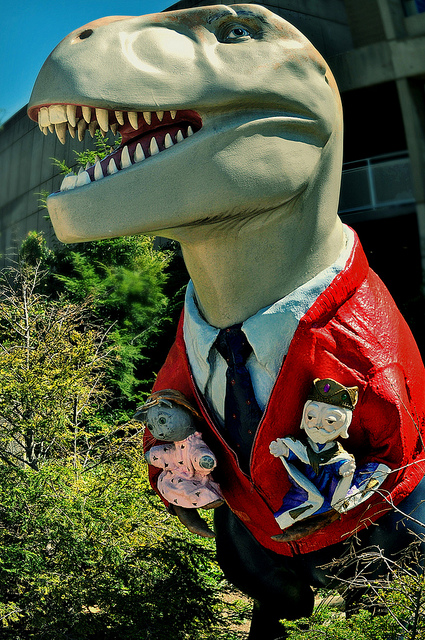
I went to grad school at the seminary where he became a pastor, and my daughters attended the preschool where he did his student teaching.  When I dropped them off in the morning, I often paused at a black and white photo of Fred Rogers (not yet “Mr.”) introducing King Friday to a group of 1960’s-era preschoolers.  There are more photographs in the cafeteria of the Children’s Museum, and a larger than life statue downtown. There even used to be a slightly disturbing Mr. Rogers dinosaur (complete with red sweater and puppets) planted in the shrubbery outside his former office.

dinosaur

Really, the man is everywhere.

Now.  I hear some of you snickering, and you’re not laughing at the dinosaur. You’re remembering “Mr. Robinson’s Neighborhood“, the SNL parody in which Eddie Murphy portrays a slightly less… ah hmm… virtuous version of the man in the sweater, teaching children words like “Scumbucket” and receiving visits from “Mr. Speedy” the drug dealer. It’s cynical, offensive and hilarious; and its gritty realism seems the very antithesis of Mr. Rogers’ measured kindness.

Or so it would appear.

The thing is that Fred Rogers wasn’t as saccharine and naive as his caricature, and his legacy in Pittsburgh can’t be reduced to make believe.  Journalist Tim Madigan wrote:

In my opinion, ‘Mr. Rogers’ Neighborhood’ revealed only a fraction of his human greatness.  Knowing him from television alone, it is tempting to see him as a man who might actually live in his Neighborhood of Make Believe… but he was also a man fully of this world, deeply aware of and engaged in its difficulties, speaking often of death, disease, divorce, addiction, and cruelty and the agonies those things wrought on people he loved.

Mr. Rogers lived in Mr. Robinson’s neighborhood, and I do too.

Where am I? I am in a place where drug deals go down, where bullets ‘solve’ arguments, and where sirens wail at all hours of night and day. I live in a place with trash in the streets and hulking abandoned steel mills along the river. I live in a place where children can be cruel, teenagers intimidate, and racial and economic segregation are real.

And.  Also.

I live in a place where Mr. Rogers once said, “Love isn’t a state of perfect caring. It is an active noun like struggle.”

I live in a place where people are struggling to love.

I see it at my kindergartner’s school where the children of refugees learn alongside the children of visiting university scholars. In the cafeteria I count nationalities: Somalian, Mexican, Iranian, Chinese, Malaysian, Haitian, and Congolese. “Miss Jen, can you please get me a spoon?!?” I lose count of countries, and then I see the principal opening somebody’s milk carton and think, “Mr. Rogers would be proud.”

I see it in the work of organizations in my neighborhood. Open Hand ministries, run by a guy who lives in the next block, renovates homes with volunteers and builds long-term relationships with low-income homeowners. Garfield Community Farm, just up the hill, is transforming abandoned city lots (we have a lot of these) into a neighborhood food source. They sell organic produce cheaply at a farm stand, supplement my church’s food bank, and teach school groups about sustainable farming.

The more I look, the more I see. This is a small city after all.  In Pittsburgh, you run into friends at the grocery store, shovel your neighbors’ sidewalk, and bang pots and pans on the porch when the Steelers win a playoff game. We are a city of neighborhoods. And neighbors.

Last week, in my neighborhood, I walked to work.  Just across the street from my house, I stopped to tease the man who is always fixing somebody’s car.

“D.J., haven’t you fixed all the cars in Pittsburgh already?”

“You’d think so, Jenny, you’d think so.”

“Well, at least it’s a beautiful day.”

And it is.

Where I Am: Four Houses, Four Turning Points

I live in Urbana, Illinois, a city I didn’t want to move to in the first place. My opinion on the matter was weakly based on the handful of times I had driven by the Champaign-Urbana exit on Interstate 57. From that vantage point it was just another flat, cornfield-edged town with predictable, treeless suburbs and chain restaurants.

But in 2001, when my youngest daughter was still in diapers and I was finally admitting to myself that my marriage was falling apart, it felt like God was urging us to move. More precisely, I thought that moving—and my husband’s new job—would somehow save our marriage.

In the 13 years since moving to Urbana, four houses have been home. I don’t know if it’s by design or coincidence, but it seems that each significant Act in my life here has demanded a new stage, as if the inner transitions couldn’t be complete without the leaving of one tangible place and the arrival at another.

*  *  *  *  *

Our first Urbana house caught my eye because—if you could see beyond the birdhouse and ivy wallpaper—it reminded me of the beloved house we sold in Michigan before moving here. Both were 1920s-era Mission style, with sturdy stucco exteriors, generous wood mouldings inside, and plenty of tall windows paned with thick, wavy, antique glass that creates mottled patterns of light when the sun shines through.

During the three years we lived in that house, our toddler and pre-school-aged daughters were at that kill-you-with-cuteness stage of life, busy choreographing dances, creating elaborate plastic feasts in their play kitchen, and layering on the most unlikely costume combinations.

But in spite of those bright moments, I think of that first house the House of Pain. Yes, I know it’s overly dramatic (and also the name of a nineties hip-hop band), but for me, the house was the scene of much yelling and crying and despair. Ultimately, it was the place where I gave up—not just on marriage, but also on my long-held childhood belief that God had plans to prosper me, not to harm me.

*  *  *  *  *

If I was drawn to my first Urbana house because it reminded me of a house in my past, I was drawn to the second Urbana house for the opposite reason: It was nothing like the House of Pain. It was one-story not two; 1960s not 1920s; brick not stucco; and straight-forward, not “full of charm and character.” Most importantly, I was bound to it only by a 12-month lease, not a mortgage. I signed the lease after my divorce was final—after the House of Pain was sold and our marital collections of books, CDs, artwork, and kitchen appliances had undergone a necessary but unnatural process of division.

This second home can best be described as the House of Rebellion (clearly a perfect name for an angry metal band). Just like music that serves to numb the mind, the House of Rebellion provided an escape hatch from the life my ex-husband and I had shared. It played into my desire to be tied to nothing: not a marriage certificate, a church membership, or a mortgage. I devoted myself to my daughters when they were with me, and on the weekends they weren’t, I did whatever I pleased.

Like many rebellions, however, this one led to rock bottom, not freedom or enlightenment. One day about a year after moving into the rental, I knew it was time to stop feeling sorry for myself and start claiming my place. Maybe if I chose to live here—decided to put down roots on my own, in a house of my own—that whole sob story about “following my husband to save a marriage that couldn’t be saved” would lose its power over me.

*  *  *  *  *

Buying house number three happened amidst a flurry of change: I ended a bad relationship, decided to try church again, went to a new counselor, and generally began figuring out who I really was.

This was my House of Healing (yep, cue the cheesy eighties CCM band). It’s the house where I learned to sit and just be in the moment, and where I learned that God wants me to find myself, not fix myself.

I worked in my garden, pulling out weeds with deep roots and planting perennials, and I invited new friends to sit around my table and share the meals I cooked. My daughters grew in those sunny rooms, writing stories, learning to play my grandmother’s piano, and forging great “wilderness” adventures with friends in our large, tree-filled yard. Along the way, as I mowed, painted, baked, and parented, I recognized this truth: I have more power to shape my place than it has to shape me.

And then I met Jason. We eventually got married, blending our families in that House of Healing, all five of us crowded in, watching and learning in awe (or at least the grownups were in awe) as redemption was worked out in one surprising way after another.

*  *  *  *  *

Finally, last spring, as our three girls (and their groups of friends) grew bigger, Jason and I sold “my” house and bought “our” house: The House of Hope (or Truth)? The House of Second (and Third and Fourth) Chances? The House of New Creations? I’m not quite sure yet, but that’s OK—I don’t feel the need to pin down the life that’s unfolding here or the God who works in so many places, in so many ways.

Where I Am: My Graceland

My son and I are sitting on a stone bench situated high on a bluff in Memphis, Tennessee overlooking the Mississippi River, the mighty river that pens its meandering signature from northern Minnesota to the Gulf of Mexico. I love to come here. The river gives me an encore of a show I have seen many times. I gasp and exclaim at the beauty of its ever-moving sameness.

The early afternoon sun is bright. I raise a hand over my eyes, squinting to watch a barge heavy with cargo move slowly down-river. From my balcony seat, the water’s surface appears lazy and smooth, but the current beneath runs deep, swift, and true.

“Let’s get with it, Mom,” says my son, K.T.

He and I left work (my husband is our benevolent employer) to head down to the river for an impromptu photo shoot. I need an up-to-date picture of myself. Last year I lost my hair as a result of the chemotherapy I received for breast cancer. The swift and terrible current of the cancer did not pull me under (or should I say put me under—six feet under). I am here. I have hair.

“Mom, turn your head a little to the right,” K.T. commands. “To the right, Mom. To the right.”

The river has ruined me. I don’t know my left from my right.

“Okay. These shots are fine, and it’s hot as Hades out here,” moans my 23- year- old photographer. But, he humors me and agrees to see if we can do better on Beale Street.

We travel a short distance east of the river to stroll along the three blocks of Beale Street barricaded for foot traffic. In the evening, the street is ablaze with neon signs beckoning tourists and locals to come in and sit a spell, drink a Memphis brew, and listen to the bluesy rock and soul music.

 The crowd is light this afternoon. The street seems to be snoozing, but it is awake, bleary-eyed after hosting a fine party. The easy, soulful sound of a saxophone wafts into the street like the aroma of Memphis barbecue slow-cooking over a fire.

K.T. puts his hand on my shoulder to gently push me along. The souvenir shops are open, and I slow down when I see swivel-hipped Elvis dolls, Graceland snow globes (even though snow is a rarity in Memphis ), pot holders, lunch boxes, and gold-studded jackets shining through a window. A kingdom of Elvis kitsch.

Elvis may have “left the building” thirty-seven years ago, but in the words of singer-songwriters Over the Rhine, “The King Knows How.”  He still knows how to call his lovers to Memphis.

We walk on through a back-alley to get to our car. K.T. holds the door open for me as I slide into my seat.

“Thank you for today,” I say. “No problem,” he replies.

I take the camera and scroll through the pictures until I come to one I like. The river is my backdrop, and there I am, alive and well.

Welcome: We’re Glad You’re Here

“Seeing your photographs last night reminded me of home,” I stammered, shifting my weight to balance my cafeteria tray. I didn’t want to inconvenience the famous man who stood before me, but I needed to say thank you. He smiled graciously. “We come from the same kind of place then,” he agreed. “Yes,” I said, glancing at the steam rising from his clumpy yellow eggs, “and thank you.”

As we nodded and smiled and walked off to our respective tables, I thought about his photographs–photos that saw light in the crumbling walls, vacant houses, and highway overpasses of urban Cincinnati. It was strange how these images of rust-belt decay sparked a kind of nostalgia for my own city of Pittsburgh.

I sat to eat, looking out over the high desert of Santa Fe. “And we are so far away from home,” I said quietly, my mind stretching over the unfamiliar landscape and gathering myself and mr. famous photographer together under this one thought.

****

It was August, and I was in Santa Fe for the Glen West conference, a week bringing together artists who desire to integrate faith with art. We were a motley and spirited crew—writers, musicians, painters, poets, and photographers from zip codes across the U.S. and beyond. We were old and young. Some of us were well-established in our fields, others were just beginning to explore, and many of us were somewhere in-between.

We were, in so many ways, from all over the place.

The larger crowd was divided into groups, according to our workshops. On the first morning I entered my class and met a group of writers. We were all working on creative non-fiction, and most of us were just-a-little-bit nervous. We settled in as we introduced ourselves around the table.

Among our class of fourteen: Sam from Dallas. I would later call him “my first friend from Texas” and liked him all the more when I saw a Flannery O’Conner book tucked between the seats of his SUV. Kristin from Urbana, Illinios. At first her writing talent and experience intimidated the heck out of me, but when we discovered mutual friends I found a kindred spirit. Mary, living between D.C. and Arizona. Her gentle demeanor hid her radical convictions and extensive background in non-profit leadership. As soon as she introduced herself I was determined to get to know her. And finally Lisa from Memphis, whose enthusiastic southern drawl spilled from her mouth and charmed the whole class, “Y’all, I am so thrilled to be here.”

I did not know it at the time, but these four people would become not only friends, but co-conspirators.

****

Our conspiracy was born at a museum cafe over too-sweet Chai milkshakes and green bottles of Perrier. We were talking about blogging, and then we were talking about our frustrations with blogging: It could be lonely. It felt like a popularity contest. It was a lot of weight for one person to carry. It was hard to stay motivated. It was like writing into a void instead of having a conversation.

And I remember when Kristin asked it:

What if we were to blog together?  

Our eyes lit up, and ideas spilled out as naturally as Lisa’s southern drawl. A map began to form in our collective imagination, with little push-pins sticking up from Memphis, Dallas, Pittsburgh, D.C. and Urbana. We could write from our particular places on common themes. We could tell stories. We could respond to one another. We could discover shared threads while digging into our own spots on the map.

IMG_0511

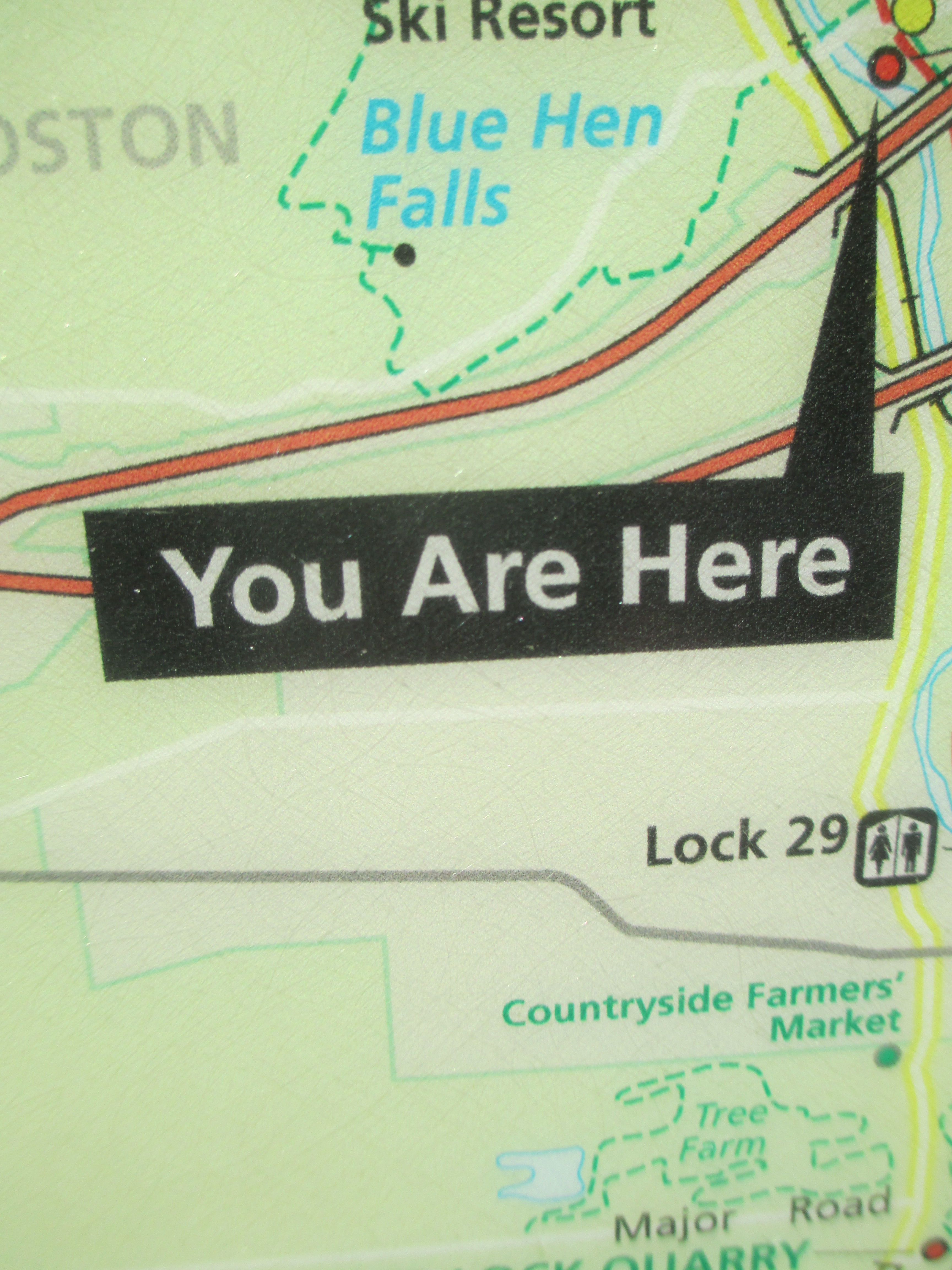
We could call it, “You are here.”

“And”, (this was Kristin again) “I know this guy.  Well, I don’t exactly know his name because he never wears his nametag, but I’ve had two conversations with him, and he’s a writer from Alaska.  He strikes me as someone who might be a good fit.”

We nodded, and agreed that Kristin could approach “Alaska-guy.”

Jonathan

His name is Jonathan, and he said yes (with only minor coercion).

In October we’ll begin by introducing ourselves and our places, posting about “Where We Are” and “Where We Came From.”  November will be about food, and in December we’ll talk about what it means to be “Out of Place.” Look for several posts every week from a group of writers who are quickly becoming some of my favorite people across four time zones.

And so for Mary from D.C., Kristin from Urbana, Sam from Dallas, Lisa from Memphis, and Jonathan from Anchorage; and for myself, Jen from Pittsburgh, I would just like to say: 

We are here.  You are here.  And here we go.