True love travels

My take on “true love” is this: You can’t be sure it’s true until you’ve traveled together.

When Jason and I were planning our honeymoon, months before we even got on the plane, I knew the two of us made a great match.

For instance, there was no argument about what should be our top priority in deciding which country to go to. Of course it would be cuisine.

After running a variety of potential honeymoon locations through the cuisine filter, we began discussing what we might want to do with our time besides cook and eat (and, um, sleep). Our second priority, we agreed, was being in a place where we could simultaneously relax and absorb culture. We wouldn’t have to leave a resort or cruise ship to go off in search of whatever it was that might make the place “ethnic” and unique. There wouldn’t be a checklist of “must-sees” to work through—no posing for pictures by each iconic sight to prove we had indeed been there. We wanted to simply be—to do everyday things we love to do at home, like read, sit outside at cafes and talk, cook together, take walks at sunset—but in a completely different place.

With healthy doses of self-control, that type of travel experience can be had just about anywhere, but we wanted to go someplace where we wouldn’t even feel lured into a trap of tourist rushing and doing, checking train schedules, packing our bags and moving from one hotel to another in an attempt to “see it all.” Our choice would completely eliminate the possibility of people later saying, “You went to [fill in the country] and you didn’t go see [fill in the artwork, cathedral, city, castle, etc.]???”
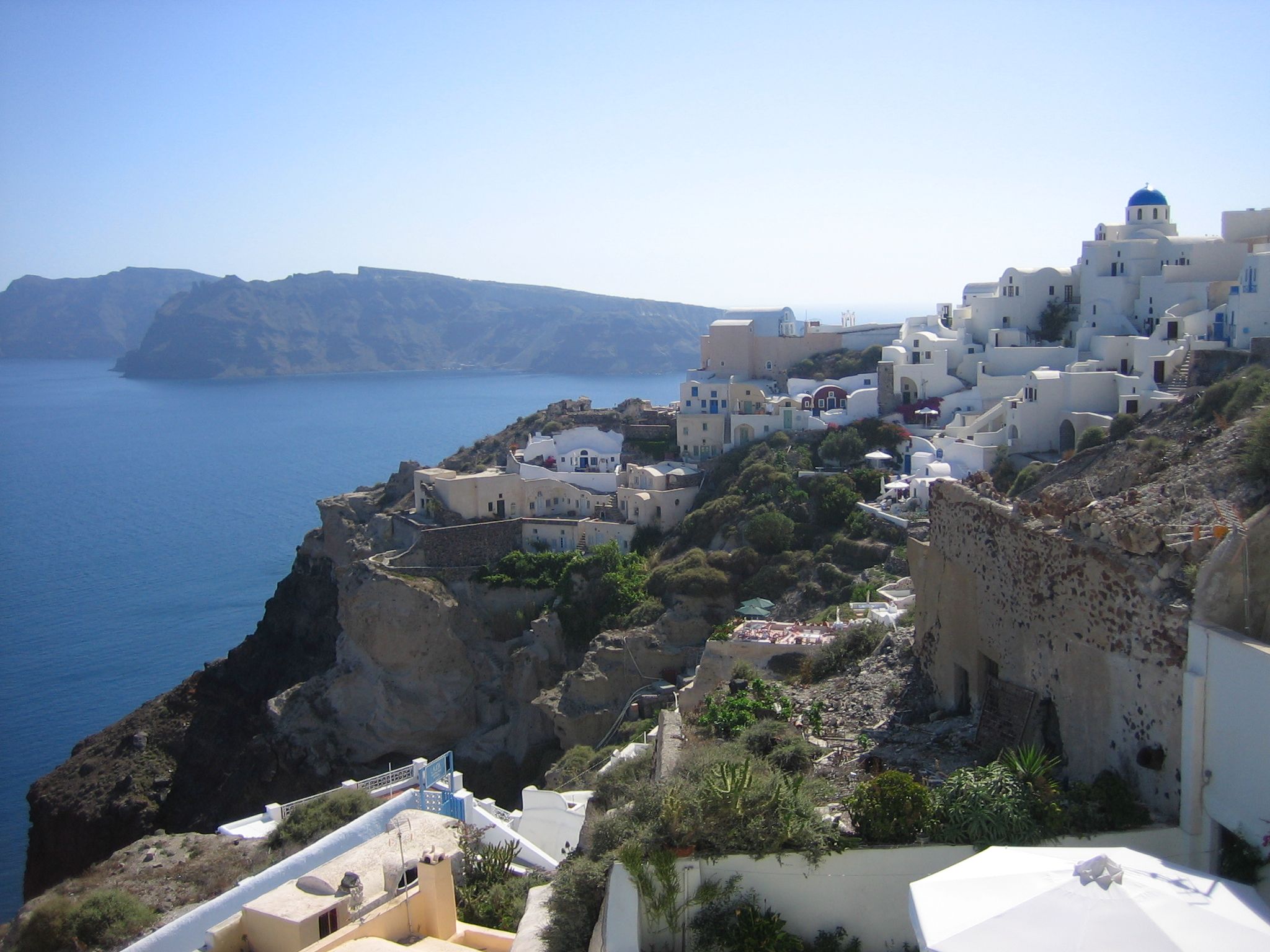
OiaviewClearly, that narrowed our list down to a very easy choice: to honeymoon on a small Greek island.

And on that small island, we chose a town high up on the cliffs—one without a port large enough to handle passing cruise ships, or roads wide enough for tourist buses.

And in that small town, we chose to stay in a small, kitchen-equipped apartment carved right into those cliffs (locally known as “cave houses”).

And there, in and around our small cave, overlooking the Caldera and the sea, we went about our everyday lives in a completely new way.
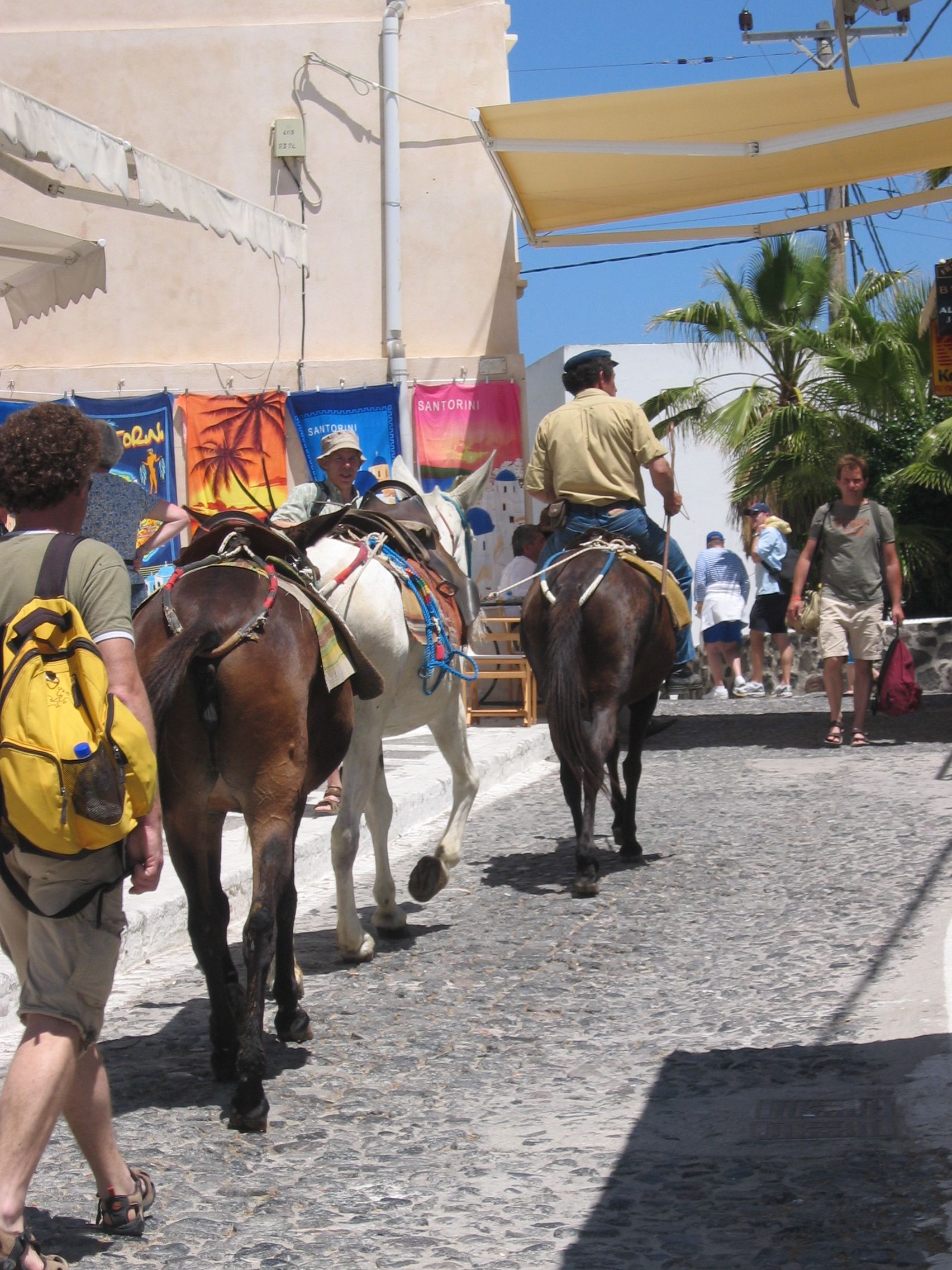
donkeysOia (pronounced ee-ah) on the island Santorini has the perfect mix of everything and nothing: winding, narrow lanes and walks with room only for pedestrians and the donkeys that transport loads too heavy for people; local craftspeople and shops, complete with the town’s collection of sweet stray dogs napping in the sun; markets selling local yogurt, figs, wine, honey, eggs, cheese, and olives; and views of the sea and sunsets that take your breath away.

What Oia doesn’t have was just as important to our experience there. It doesn’t have room for motor vehicles of any kind beyond the town perimeter—certainly not for any loud construction vehicles (which means there are no large hotels or multi-storied buildings). It didn’t (in 2007, at least) have wireless Internet (and the cell phones we had at the time were useless there). And it doesn’t have a list of must-see sights (unless you count the sun setting over the Caldera).

It was quiet. It was gorgeous. We could be at home there, yet it was very different from home.

kitchenetteIn the mornings we drank coffee and ate farm eggs, or yogurt and figs on our porch, still in our pajamas, idly talking about what we might want to do that day, if anything.

Later, we strolled through town, trying a local restaurant for lunch when our stomachs began to grumble, followed by, perhaps, a longer walk into the countryside, or time with books, coffee and sweets on the terrace. Often we napped in the cool, dimness of our honeymoon cave.
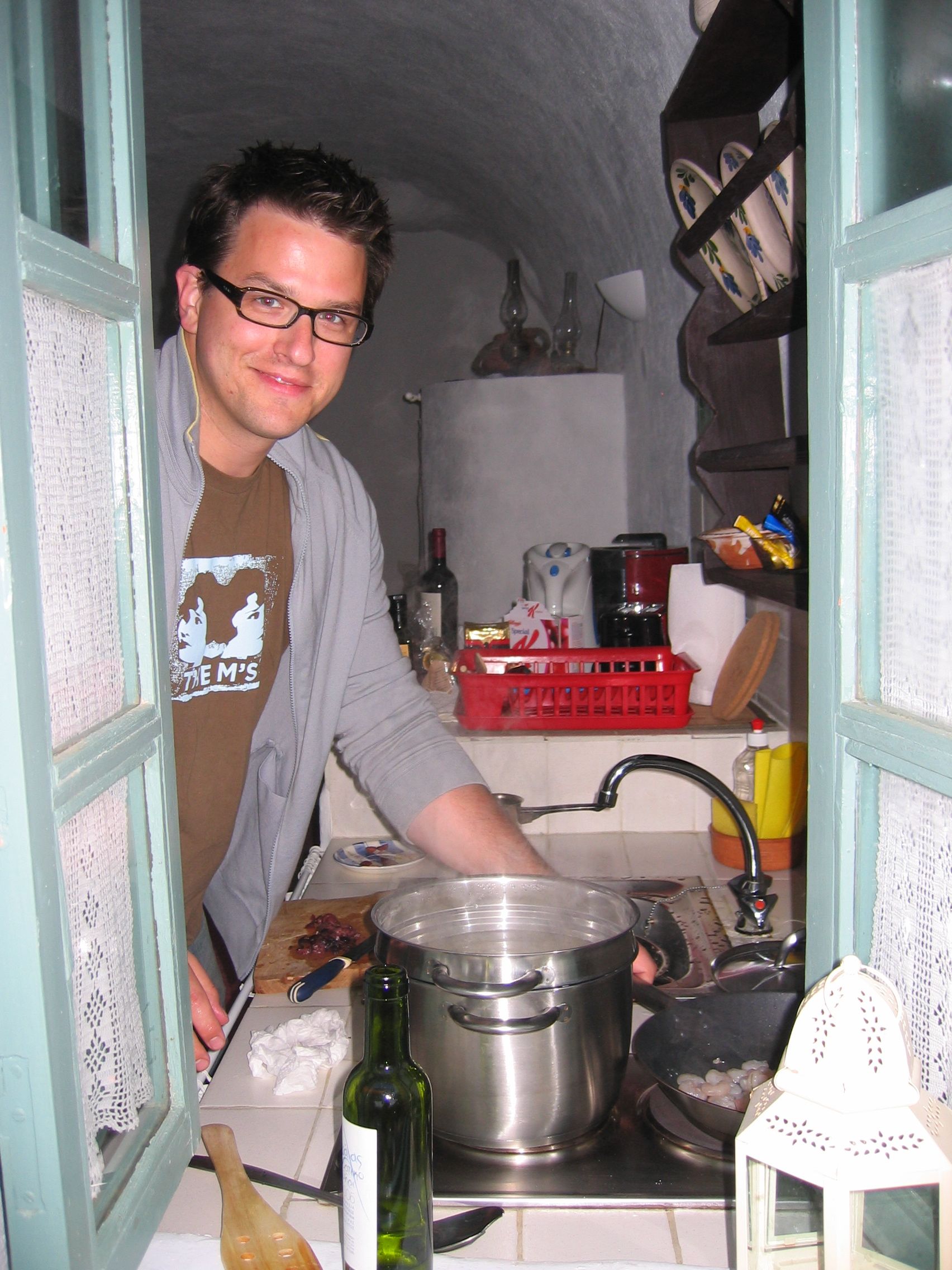
cookingdinnerThe only rule that seemed to guide us was more like an anti-rule: an unspoken agreement that we would make things up as we went along. Sometimes a trip to the market would inspire a dinner made in our kitchenette. Other times a restaurant we had discovered on a walk earlier that day would be tempting us by evening. Dinners were long and leisurely, and each day ended the same way: with the setting of the sun and the rising of the moon.

We have since taken other trips together—including some less leisurely and more scripted than our trip to Santorini. But the ease by which we plan and embark on travels together has continued to be a hallmark of the compatibility in our marriage—one that not only allows us to bond and feel refreshed by our travel experiences, but also spills over into how we travel together through life.


kiss

Mi Tierra

After nearly 24 hours, we finally landed in Havana. It was May of 1998, the summer after I’d completed my sophomore year in college, when I accompanied my mother back to her homeland, an island she hadn’t seen since 1971 when she boarded a plane as part of the Freedom Flight program. Our multi-stop journey — Los Angeles to Houston to Cancun to Havana — was made with each of us wearing several layers of clothing, all of which we would leave behind. That’s what you did when you visited family in Cuba.

Exhausted, we stood before an inspector who began to pick apart our luggage, item by item, all of which Mom had carefully selected and weighed, because the rule was if you were over the weight allotment, they would require some kind of remittance. Knowing this, Mom slipped our inspector a twenty dollar bill, and just like that, we were allowed to move forward.

Just on the other side of the makeshift cordoned off area for those waiting, was our family—the real people whose names and faces I’d only known through photographs and stories that occasionally worked themselves from my mother’s memory. After a round of hearty hugs, Mom and I were ushered into a relic of a car and off to her cousin’s apartment. With the windows down (the AC had long since stopped working), we drove through the damp Caribbean air under a silken evening sky. I found it hard to believe we were actually here; we were in Cuba, finally. It wasn’t a mythical land about which was sung to me through lyrics from my mother’s albums. This place was in fact real. I let my head lean against the doorframe and listened to the salty waves crashing against the stone walls along the famous stretch of Malecon that held up this crumbling city.

We spent two weeks in Cuba, visiting with family and taking in as much as we could. I got to see the elementary school Mom attended, and the apartment where she had lived with her own mother. Everywhere we went we were treated like royalty—brought to tables bowing under the weight of feasts prepared. Someone had gotten wind that I loved mangoes, so at every stop there was always plenty of fresh mango, the flesh of the bright orange fruit so sweet that it could have only ripened under an island sun. We walked through abandoned sugar factories, gnawing on the raw cane. There were trips to swimming pools, and dinner dances at rooftop bars. Music and laughter was never far from our ears and lips, and someone was always telling me a story of when my mother was a little girl. This woman I had only ever known as my mother, a figure I often worked hard to steer against as a teenager, took on a new light. She had a history that was all her own, one apart from mine. For the first time I saw her as an individual.

My favorite memory rests with the particular leg of the trip that took us to Camaguey, the town from which Mom came. We were sitting in the backyard of someone’s house, most of the women busying themselves with putting the meal together, while the men were planted in a circle, passing around the two bottles of rum we had purchased with our American dollars at the local store. There was the sound of glass clinking as someone poured himself another swig, callused farm-worked hands rubbing scruffy cheeks, and laughter. There was so much laughter. At some point someone arrived with an accordion, and the group broke into a spontaneous rendition of Guantanamera. I know the lyrics because I grew up with them, Mom singing the song at parties, or turning up the stereo if the track came through the speakers. I knew Guantanamera, and I felt part of these people, this island, this place. I sang with them, our arms interlocking with one another, feet tapping in rhythm, the accordion scissoring its soulful notes through the heavy afternoon air.

The toothy smiles, the plumes of dust kicked up by our dancing heels in the backyard of our cousin’s house, the smell of stewing goat meat on the open fire in a makeshift shack of a kitchen. That scene has been stitched into my history and I often wonder what will happen to our connection with Cuba when my mother is gone. She is the last true link to the island, and all the history that lies with those people, the ones with whom we danced and sang.

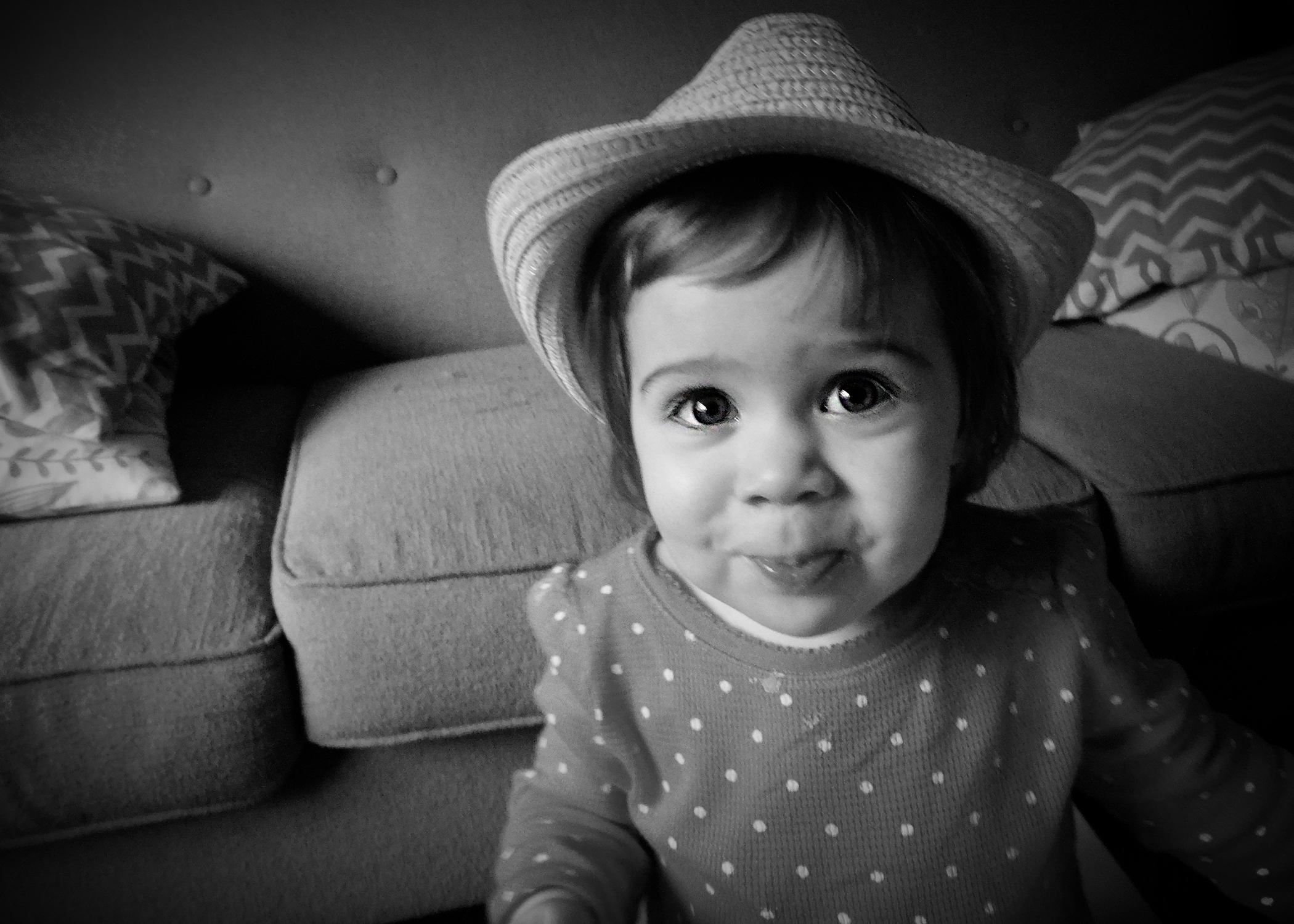
DSC01229My own daughter, Lucille, was born in October of 2013. Weeks into her new life, my rawness into Motherhood, I discovered that if I wore her strapped to my chest and played music, her screams would calm as she became lulled by the rhythm of my dancing body. Often, the music I played  was Cuban. I recently posted a picture of my daughter wearing a woven fedora. The caption read, Ella no nacio en Cuba, pero la isla vive en su corazon. Translation: She wasn’t born in Cuba, but the island lives in her heart. It’s in her smile — the one I gave her —the food I make, the music we listen to, and the intangible way my mother has taught me to live life. And now this breathes in Lucy, stitched in the fabric of her flesh, in all the ways that can be seen and unseen.

We are always there.

*    *    *    *    *

3_9_14 (25 of 27)“Mi Tierra” was written by Ilene Marshall. Ilene resides in Pittsburgh, PA, with her husband and daughter. When she’s not documenting her life through photography, she attempts to capture some of it in writing. She has been a teacher for 11 years, but finds that often times, the biggest lessons aren’t found in books. Ilene blogs atThese Marmalade Skies,” and her photography can be seen at Ilene Marshall Photography.

Moments from The Open Road

“Mind if I add deer meat to the burger?”

Sitting out on the porch overlooking the large garden and the stunning Appalachian Mountains, I didn’t mind at all. I rocked back and forth absorbing the beauty of the life my friends had created. Their 7-year old entertained me with a story about a box car race which she had recently won. A large piece of metal sculpture fashioned by the artistic hands of her dad was just on the edge of my vision.  The clouds and the mountains and the storm and the trees created a ever-changing, ever-the-same view.

From the mushrooms they planted in a stack of wood to the tractor seat that served as the swing set, I soaked in their life. We chatted with joy about the little one who was growing, still hidden in mommy’s tummy, and looked with reverence at the small momentos that give witness to the little ones they had lost along the way.

After dinner, we pulled the bed out of the sleeper sofa and knelt by the edge of their children’s bunkbed to say prayers. The cool mountain air coming in the window and the house creaking with quiet noises, I settled in to the peace of their small mountain home. In the morning, the sound of bread-making roused me from restful sleep.

A loving whisper gently filled the silence, “It’s time to get ready for school, sweetheart.”


I folded two dollar bills and slipped them into the tip can. “Can you do Danny’s Song?,” I asked. Just in case, I sang my favorite line at full voice, “Even though we ain’t got money…” He had a startled look for a moment, probably not a typical request.

“Yah.  Absolutely.” He fiddled with a gadget, something that provided the words and the chords.

I had spent the afternoon rambling through Savannah, exploring and snapping photos of interesting patterns and angles. Where the strap met my sweaty skin, my sandals had  rubbed large raw spots across the top of my feet. Every step was painful.
Hot, sweaty, and footsore, I became attuned to the couples. They were everywhere. I slipped into a mini-funk, a grumpster state. Sitting on a bench, I fiddled with my phone, not ready to go back to my hotel room but unable to keep walking. Nobody answered.

Casually dressed and with tousled hair, he was singing and playing guitar at the bar & grill on the corner of the square. It was the perfect blend of country and folk and soulful melodies. I sat and listened for over an hour, my heart slowly lulled into a happier state. Eventually, I mustered the courage to go and sit at a table. And with dinner ordered and a beer drank, I mustered the courage to make a song request.

You bring a tear of joy to my eye and tell me everything is gonna be alright.

When he sang the chorus, big, inexplicable tears rolled down my check.  They were the tears of a beautiful moment, part of which I had created and part of which I had been given.  Tears of gratitude and heartache, of goodness and beauty.

My heart, long asleep, stirred.


Although suffering the effects of a rotten cold, my joyful friend greeted the day with her typical morning vibrance, “DisneyWorld, here we come!”

I drug myself out of morning fog and with the enthusiasm that I could muster in the morning, replied, “Whoo-hoo!”

As I thought about completion of graduate school, I had gotten it my head that I wanted to see the Magic Kingdom on my way home. Florida is not really on the way to Arizona but I didn’t care. When we realized that she would be in Florida for a graduation, it sealed the deal. By temperament, she’s a planner and so, we made plans months in advance. I messed it up and arrived a day early. Whoops.

It could have been weird. I was on the pull-out couch in a large hotel room with my long-time friend and her newly-wed husband. But, it wasn’t. I was tempted to be weirded out by the the lack of weirdness but instead, accepted it in gratitude. As the two had become one at the altar, I had gained a new friend.

We arrived at the theme park, googling “How to Use a Fast Pass” as we made our way to the entrance. With cold symptoms at their peak, we knew we only had a few hours before exhaustion won out. We tapped into the efficiency skills at hand and came up with a plan. In between the plan, we had spontaneous moments, ducking into the less thrilling attractions which were flooded with childhood memories and children.

It was an easy day. A day of innocent entertainment, deep friendships, and celebration of happy things. A day where goodness triumphed.

My melancholic soul was light-hearted and unafraid.


I’m not sure the attraction of a rambling solo road trip but it definitely calls to me. Whenever I can, I choose the smaller scenic roads, marked by a dotted line on the old-school atlas lodged between the seats of my car. I would rather go slow and be bathed in nature–the Shenandoah Valley, the Ozarks, the open sky of my beloved Southwest.  Or, go out of my way to have a quick visit with a friend.

The stretches of open road and the moments in between teach me. Home. Beauty. Lightness. On the road, there is just enough going on that you can be in your head without focusing on being in your head.  You can look back on moments and see their depth. That’s a sweet spot for me.

Days ago, my road trip ended as I drove up the dirt driveway of my childhood place–the home that my father built around us as we grew. Now, in the rhythm of regular life, I am trying to build new habits, to remember new ways. I have returned home

…at least until another road opens up in front of me.11078154_10153371527107943_3090907364091819517_n

In Defense of Wanderlust

Standing at the peak, the wind whipping my hair across my cheeks, I close my eyes and tilt my face to the sun. I stretch out my arms and turn up my palms and breathe. I open my eyes and try to absorb the techni-colored panorama of jagged, white mountain peaks, emerald pastures and shimmering diamond lakes reflecting back the exact impossible blue of the New Zealand sky and I think, Heaven looks like this.

I sit on the back of a scooter, hands gripping the waist of the twelve-year-old boy who is my driver as we zip down the jungle roads to a breakfast of green leaf pancakes with palm sugar. We dodge a rooster strutting cockily across the road and I can’t stop smiling from ear to ear because heaven feels like the wind blowing past my face as we bump over potholes, winding our way through the Balinese jungle.

In Canterbury Cathedral I kneel, dappled by colored light from the stained glass windows and thinking about Augustine and about Thomas Becket, crouching on these very stones, heart pounding as he waits, pleading with God to spare his life. I inhale and imagine Becket in heaven, smelling the aroma of this same sweet incense in the throne room of the Most High God.

On a mountain in Peru a whole village of Quechuan people, dressed in layers of wool in all the colors of the rainbow, sing a song about their beloved mountain, Huascaran. They sing in high-pitched nasal tones a song that sounds like some combination of zydeco and a tribal wail. The sound is harsh and grating to my ears and yet I can’t help thinking that this is what heaven sounds like – a great cacophony of sound.

In an old Communist youth camp beside the mighty Volga River hours north of Moscow, I tuck a room full of 9-year-old orphan boys into bed. I hug Dema’s freckly face to my chest and kiss the top of his head and think, The kingdom of heaven belongs to such as these. “Spokie-Nokie,” I say, and turn out the light.

* * * * *

Once, a few years into our marriage, my husband and I had an argument about travel. We had hoped to take a trip, but car problems and taxes and medical bills had strained our very limited resources. It seemed like a trip was out of the question and I was profoundly disappointed. At some point during the conversation Jonathan said to me, “I know you’re disappointed, but there will be other opportunities in the future. I don’t understand why you are so incredibly upset.”

And I said (as dramatically as it sounds), “Because this is the purpose of my life!”

And he said, “You can’t be serious. You basically just told me your life’s purpose is to take vacations.”

What I couldn’t articulate in that moment was that traveling is a deeply spiritual experience for me. Traveling moves me to worship in a way that nothing else does.

What does it mean that the mountains melt like wax in the presence of the Lord until you’ve stood at the top of a great and glorious mountain?

What does it mean that all of man’s accomplishments are like filthy rags beside God’s splendor until you’ve seen the Sistine Chapel or stood on the Great Wall of China?

Why does it matter that God is a father to the fatherless if you’ve never known the orphan?

How can you understand what it means that God holds the whole world in the span of his hand if you’ve never been outside your hometown?

What does it mean that heaven is filled with people from every tribe and tongue and nation if you’ve only known people from your own?

“The whole earth is filled with His glory,” cry the angels. I want my life to be about seeing and spreading that glory, even to the ends of the Earth.

new-zealand

* * * * *

Bio PictureAuthor Bio: “In Defense of Wanderlust” was written by Lily Ellyn Dunn. Lily was born and raised in South Louisiana, went to college in Illinois, started working in North Carolina, and currently lives with her husband in South Korea where she is a teacher by day, a writer by night, and an ice cream connoisseur all the time. Lily blogs about life, faith, and everyday grace at http://lilyellyn.com. Find her on Twitter @lilyellyn

New Zealand photo credit to Jonathan Dunn


Mama, Pause.

“Go where they can’t find you,” she charged, and I fled to the cover of pine forest. Head down, heart pounding, I parted from the others and passed groups of children–the buzz of their giggling mixing with the light rain. I looked up briefly to scan faces. My own girls were not present, thank God. That would have been the end of this experiment in solitude. “Mama!” they would call. “Mama!!” more insistent if I did not answer the first time. “Mama!!!!” and I would once again be swept up into my routines of responding, all the constant demands, the pressure, the noise.

10415878565_3e40478198_oTwenty minutes. I just needed twenty minutes away.

I scanned the edges of the path and saw a row of faded red cabins stationed along the tree line. Here? Or should I keep going? These were unfamiliar woods and I didn’t know where everyone else was headed. But what if there were people staying in these cabins? No, they looked empty, alone like I longed to be. I just needed to decide quickly–already I could hear the crunch of gravel, moving in my direction. Just decide. Decide.

Slipping off the path, I  jogged to the backside of a particularly abandoned-looking structure and crouched on the porch behind a low wall. Voices swept down the path I had just left, and I wondered if someone would make a turn for the woods and see me there, hiding. I pressed myself into the corner, back against the wall, and felt dampness seep through my jeans. Darnit. I was sitting in wet pine needles, but there was nowhere else to go. I closed my eyes, wishing them all away.

* * * * *

We were in the woods for a church retreat, the first retreat my small urban church has taken in the ten years I’ve been there. I was surprised by how many people signed up–when retreats had been proposed in the past they were quickly shot down with protests:

Nuh huh, I do not do spiders.

Do you really want to get eaten by some bear?

And my personal favorite:

Don’t you know there are crazy people in those woods? And no one, I mean No One, will even hear you scream.

But by some miracle there were seventy of us gathered for this weekend away. Granted, the hotel-like lodge and cottages represented the near-opposite of roughing it. The buildings were clean and new with sparkling bathrooms and spacious common areas.

The problem (for me) was that they were also full of people, and because the dorms were single-sex, I had the girls on my own. On the drive to camp, I had tried to explain my unease to my husband.

“I don’t want to do this,” I said, and he looked at me, confused. “Do what?” I stared hard at the highway, groping for the right words. “People,” I tried, “I can’t take this many people right now. Meals in the dining hall. Sleeping in dorms. Large group gatherings. Small group discussions. I, I… I just don’t want to be here. I’m not sure I can do this.”

It was mid-May, and the month had been full of marathons, figurative and literal. The school year was almost over, and every moment away from the kids was filled with summer preparations and other responsibilities. I was on overload–a lot had taken place, but I hadn’t had time to process it all. This combination is difficult for anyone, but murder for an introvert like me.

It’s like this: imagine my introverted brain as a water pipe building up internal layers of calcification. Any kind of stimulus–people, events, emotions–are the calcium deposits. As long as I have time to deal with them as they come–silence, journaling, walking, prayer–they don’t build up. But if I don’t, if they just keep coming, then the pipe gets clogged.

And when the pipe gets clogged I can’t think anymore. Or make good decisions. Or live with seventy other people and my kids in dorms, and discuss God or church or each other’s lives or whatever it was we were going to talk about all weekend.

However.

When you’re driving to camp with a trunk packed full of sleeping bags and two excited children jabbering away in the back seat, what you think you can do is no longer terribly relevant.

* * * * *

When our speaker introduced the weekend’s theme I didn’t know whether to laugh or to cry. “This weekend,” she said, “we are going to talk about solitude.”

Pulling out a book by one of my favorite writers, Henri Nouwen, she defined solitude as being alone with God and hearing that you are loved. If we didn’t take this time, she warned, we would try to find affirmation in the shifting sands of human relationships. If we didn’t begin with solitude, we could never find authentic community because we would always be trying to find our identity in other people. You need to get away, she said, and listen to the voice that has been speaking to you all along.

“So go”, she said, “Twenty minutes of solitude. Go where they can’t find you.” And she released us into the woods.

There at my faded red cabin, back pressed up against the low wall, it took a long time for my heart to stop thump-thumping in my chest. It took longer for my breathing to slow, and it took longer still for my thoughts to settle. By now I was crying, all the emotion of the month pushing out of me slowly. My mind was churning, but I didn’t have the energy to fight it anymore. I just sat and stared into the woods.

After a long time I noticed the swamp cabbage lining the creek bed. The leaves looked over-sized, like a prehistoric display in a museum. Suddenly, a bird chittered ten feet above my head. I laughed with surprise. The smell of the wet pine needles lifted up on a small breeze, and I breathed in a deep draught of humid air.

1114159624_705676c9a9_oThe pipe was beginning to clear; there was room now to take it all in. There was room now to let some things go.

I remembered our speaker’s words: Solitude is being alone with God and hearing that you are loved. I grinned and spoke to the sky, “You have anything you want to say?”

There was no response, but that was okay. I already knew.


Photos by Ed Suominen and Sharon Mollerus

Alone in Central Park

New York City has iconic buildings. Movies and television shows are set there. It’s a magnet for business and the arts and everything in between. Who wouldn’t want to live there?

I had been to the city a few times. I had ridden the subway, wandered through FAO Schwartz, and even watched from along the route of the Macy’s Thanksgiving Day Parade. So, I was comfortable with New York or at least felt confident I would be sooner rather than later.

I waved good-bye to my brother as he drove back to Philadelphia. I was in my new home, in Fort Greene, Brooklyn. Yes, it was actually a dormitory, and it was for graduate school, but I was living there. It was my new place.

The weather that first Sunday in September was storybook perfect. Blue skies, light breezes, and deep greens. I wanted to be in Central Park. I packed some reading material, found the subway stop and hopped the ‘B’ train. As the train rumbled along, my stomach churned with anticipation. Each subway stop was destination to be studied and stored in my memory. The reading material would have to wait.

Finally, Central Park.

NYC-Central-Park-from-abovIt oozed vitality. Baseball games, picnics, concerts, and walking tours. Each step further into the park revealed more. Where would the next winding path leave me off?

While more an observer than a participant in this exotic landscape, it was part of my home. And I was determined to know all I could about my new home.

A huge line of people was formed. Curious, I struck up a conversation with a girl with a pretty smile, “What are you waiting for?”

“For Shakespeare tickets.”

“Oh.”

“Shakespeare in the Park tickets.”

“All these people are here for that?”

“Tonight’s the last night, and it’s supposed to be great.”

“Which play?”

“The Tempest with Patrick Stewart. You haven’t heard about it?”

“I’m not from around here.”

We talked a while. She was cute and friendly. Her boyfriend seemed to like her too. “Hey, do you mind saving our spot for a little while? We’ve been here awhile and want to go for a walk.”

“I don’t mind.” And I didn’t. Waiting in line for Shakespeare tickets – did it get any more New York? With the couple gone, I took out my book and read the Fitzgerald novel I had in my bag while I noshed on my bagel. I couldn’t focus. The humanity overwhelmed me.

But I knew no one. And no one knew me.

When the couple came back twenty minutes later, I was happy to see them. Their arrival meant my departure. After a, “sure, no problem,” I walked away and left the park.


A few days later, school began. Despite my desire to go back to Central Park, I was too busy settling into my classes and all the responsibilities that entailed.

Then one night, news came of a woman attacked in Central Park. The woman had been jogging on East Drive near the Lasker Rink at 103d Street. Police had a number of details: dragged down a 20-foot embankment, killer apparently tried to rape her, violent struggle, and body found sprawled by stream under a stone bridge.

She had been dead three hours when another jogger found her. Despite all the details, police could not identify the victim, and they asked for help. Finally, her identity was discovered. She was from Brazil and was described as living a solitary life. The murder dominated headlines for weeks. The police were stumped.

Had I been there? Was this where I was walking just a few weeks back? Was I in a dangerous place? Should I have been more careful? Did the woman jog past me on an earlier run?

I was fascinated over her and the story. How could someone live in such a big city and have so few connections? How could someone be murdered in this city of constant activity, and no one see the gruesome act?


On a trip back home, my parents asked, “So, what do you think about living in New York?”

My answer wasn’t simple. The same thing that I love about New York was the thing I hated about it. I could go anywhere and know no one. The ability to be anonymous was freeing and exciting. Trappings of expectations were gone. However, despite being surrounded by hordes of people wherever I went, I was alone. All I saw was a faceless throng.

And I wondered, “Did anyone see me?

ME (1)Larry Bernstein is a freelance writer, blogger, and educator. He and his family live in North Jersey. He writes about education and religion as well as business profiles. Really, he just likes to tell stories – both his and others. He blogs at http://larrydbernstein.com/me-myself-and-kids/ and is on Facebook at https://www.facebook.com/Writings.of.Larry.Bernstein.


To see what I could see

I had travelled more than a thousand miles to be surrounded by people, yet there I was, alone on a hard red-dirt trail in the Santa Fe National Forest.

To be clear, I was “alone on purpose,” as Nicole Morgan so deftly phrased it in her recent guest post. But following through on this intentional aloneness had taken great willpower. By choosing to set off solo on a hike that afternoon I was voluntarily leaving behind the potential of great conversations and new friendships—the very experiences I had in mind when I devoted a week of time and a sum of money to attend a Glen West writing workshop.

Many people at the Glen arrive in search of space and time to think and write, but as a full-time solitary writer who longs throughout the year for “colleagues,” I went to the Glen to fill that space and time with people. I needed a break from being alone with my thoughts and words, and during my first three days there I had accomplished just that. The mornings’ inspiring conversations in my non-fiction writing workshop transitioned into lunch hours sitting with authors I’ve long admired. Afternoons spent around courtyard tables, hearing about writing projects others were working on, gave way to more conversations over dinner, followed by engaging author and artist talks. Each night found me fighting the need for sleep as the extroverts and night owls gathered for more talk and laughter over whisky or wine, late into the night.

By that Thursday afternoon I had reached a state of “satisfyingly full” and knew some solitude (beyond the fast-asleep kind) would be good for me. It was one of those moments of awareness that separates childhood from adulthood: when you know that something—maybe eating those greens or getting up early to exercise—is important for your wellbeing, so you do it even though you don’t really want to.

I didn’t really want to be alone, but I knew it would be good for me, so I set out on the nearby Atalaya Trail to see what gift Aloneness might have for me in the midst of so much togetherness.

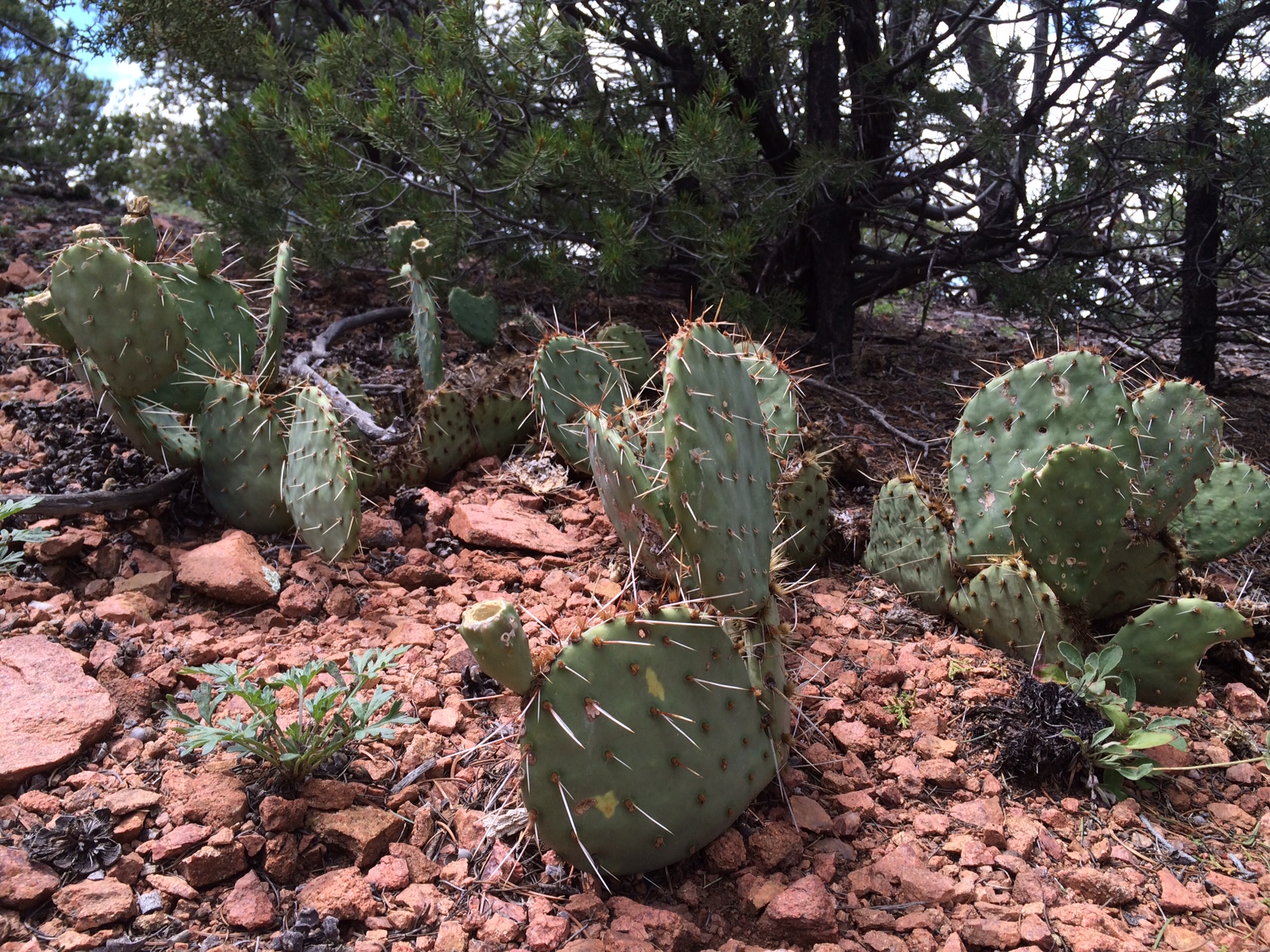
photo (9)The hard-packed ground was dry and gravelly, a shade of burnt, orangey-red that might as well be called New Mexico Red. I passed by Juniper and piñon, cacti, yuccas, and sagebrush, breathing in a heavenly-yet-foreign blend of scents that added a new layer to my aloneness: I was alone in an unfamiliar land.

As I continued walking, I began to wonder what range of unfamiliar creatures might call this arid region home (rattlesnakes? scorpions?). Then I recalled the coyotes whose sparring the night before had awoken me in my narrow dorm room bed, the windows open to the cool night air. Suddenly, alone took on multiple layers of meaning: I was not only by myself, far from others, but I was 7,000 feet above sea level in a foreign land, surrounded by potential dangers. The cell phone in my pocket didn’t even have service. I began anxiously singing, for company:

The bear went over the mountain,
the bear went over the mountain,
the bear went over the mountain—
to see what it could see.

I couldn’t remember what the bear saw, so I stopped singing and walking to just breathe—to calm the tinge of fear I felt and focus my mind on the quiet and the beauty that was all around me.

After walking a bit further, I reached a trio of wooden plank steps that carried the trail up and over a gravel road. Turning around, I lowered myself onto one of the steps, opening my water bottle and taking in the view below, the path I had just walked. The college campus, where all of those conversations and friendships had taken root the days before, looked small, but there it was, waiting.

I pulled my journal out of my backpack, turning to a page where I had taken a few notes while the poet Scott Cairns had read to us an evening or two before. A line from his poem “Draw Near” had especially captivated me:

For near is where you’ll meet what you have wandered far to find.

I had traveled all the way to New Mexico to be with other writers and artists—I needed new conversations and different perspectives to help reframe the story within me. Then I had traveled up this mountain for time and space alone, in a land so different from the one I know that I couldn’t help but be aware, notice, and respond—not intellectually but viscerally. And all of those miles, all of that wandering both with others and alone, had helped me meet what is very near, in my heart.

photo (8)

Somewhere Else

The red numbers on the digital clock switched to 4:55 as I entered through the bank of glass doors, stepping from fading daylight into a fluorescent glow. A few yards down the hallway, I found an empty space of wall to lean against. I tried to exude an air of contentment and assurance as I avoided the eyes of others trying to do the same.

The heavy drone of exhaust fans and clanking of dishes rose above the silence. The aromas of greasy pizza, chicken nuggets, and french fries were already permeating my clothes and hair.

As the minutes ticked by we slowly converged to form a line at the register. Coming together, but all still alone, like beads strung on a necklace.

When the clock finally read 5:00, my nonchalance turned to hustle. It was easier to eat before the cafeteria got busy.

It hurts more to be lonely in a crowd.

After swiping my card, I strode as fast as I could to pick up my silverware and tray, all the while scanning for which food line would be the shortest.

Salad again.

Once my plate was heaped with greens I walked swiftly toward an out of the way table—three from the back next to the windows overlooking the softball field. The table I chose everyday.

The table where I hid—hoping no one would notice me, praying someone would see me.

The three empty chairs at my four-person table formed a fortress between me and everyone else. I could restaurant-690951_640watch them—filling their plates, joining friends in laughter, or trying to hide behind their books—from my rectangular island of neutral laminate.

We were all students at the same college. We were there for a similar purpose and supposedly held similar values.

But I didn’t belong.

As I quickly ate my spinach leaves, the clamor continued to rise. The line at the register had shifted from sporadic individuals arriving early to avoid the crowds to the crowds themselves—chatting groups of friends, sports teams, entire dorm floors.

The tables started filling up, my sign to get going. I rushed to finish my meal before the groups looking for somewhere to sit started looking my way, eyeing me reproachfully for occupying a space for four.

I resented everything about the cafeteria. The cacophony of laughter and conversations highlighted the connection I was missing, while the greasy food smells clung to me as a reminder. The people went about their lives as if I wasn’t even there.

I blamed them for my loneliness.

And I blamed myself for not being acceptable. For not being lovable.

Everyday I sat at that table counting down the days until I could be somewhere else. A place where people were kinder. A place where I was worthy of love and belonging. A place where I could be the person I wanted to be.

I sat and watched my peers, but I didn’t really see them. I was so focused on being somewhere else that I didn’t see where I was.

College had promised a fresh start somewhere new.  But instead, I found myself biding my time until I could graduate and move on. Even after I had the diploma in my hand, I carried with me the expectation my next job, home, or friend would bring contentment. No matter where I was, I looked ahead to the next place.

A decade later, a simple phrase in a sermon challenged my perspective.

Invest where you are.

As God told the Israelites when they were exiled in Babylon, don’t hold yourself aloof waiting to be rescued. Don’t while away your time believing you’ll soon be somewhere that really matters. Don’t just survive the place where you find yourself. Invest in the place of your exile and build a home where you can flourish and help others thrive. Whether you’re here for a moment or a lifetime, this time and place matter. These people matter. You matter.

My cafeteria table didn’t have to be a place of exile.

I can’t go back and change my experience, but I can invest where I am today. When I feel unnoticed I try to remember to look around for others praying to be seen and invite them to the table.

I don’t know where I’ll be tomorrow, but today I want to pull up a chair, grab a slice of pizza, and join the conversation right here.

Will you join me?


JohannaSchram (1)
Johanna Schram feels most comfortable in places that are cozy and most alive in places that are spacious. Though the city changes, Wisconsin has always been the state she calls home. Johanna is learning to value wrestling with the questions over having all the answers. She craves community and believes in the connecting power of story. Johanna writes to help others know themselves and find freedom from the “shoulds” keeping them from a joyful, fulfilling life at joRuth. She can be found on Twitter @joRuthS.

Island, Dharma, Cup

“It was a bad breakup that brought me to the dharma,” a teacher once told me. The dharma — and whether or not I’ve been brought to it — is an open question yet. But it was surely a bad breakup that brought me to the island. And the island that made me whole — not just once but twice, so far. It’s good knowing there’s a place that heals heartbreak, because life can be generous with the heartbreak sometimes.

I first found the island in the pages of a catalog. I was just twenty years old, stuck in a humid, landlocked city and itching to get free of a relationship that was hurting. I felt bound to my lover by the delicacy of her mental health; if I went for a long walk to look at the magnolias, I might come home to find her in the bathtub, bloody from a half-hearted suicide attempt. I couldn’t even get to the “bad breakup” stage until I got her some Prozac or something, but that was easier said than done. Going away to college seemed like it might let her down gently. So I looked for the furthest college I could find and found it: a bare refuge of a school, small, out of the way, on the northern ocean’s edge. A place I could start again.

When I told my lover what I hoped to do, she applied and got accepted herself. So my triumphant ride to freedom was on a Greyhound, half the country over with a woman who, by the end, would barely speak to me. That was a pretty bad breakup.

Halfway UpWe went such different ways that few would believe we’d ever known one another. Free, finally, to take long walks without having to worry what sadness might be waiting for me on my return, I fell hard in love with that island. I got a bike and rode it off roads and on, deep into woods bringing nothing with me but my thirst; and I drank from dripping rocks and soaked moss and boughs laced with fog. I would throw my bike into the brush at the base of a mountain trail and climb over red rocks up into a sky that fell over ocean and pine. Until I was finally strong enough to leave.

And it would be there, to that island, that I would drive almost 20 years later, having learned that marriage can be a multiplier of loneliness. That your heart can break with longing for love, despite the ring on your finger and the child you created together out of your two bodies.

I found myself, once again, climbing those rocks up into the sky, this time with a daredevil child in tow and an old dog that preferred the gentler trails. We climbed higher than the vultures and watched their finger-wings glide below us. We’d walk out like dancers on bits of board into a swamp and sit quiet to hear the peepers. I carried my daughter on my back when she got weary, pulled ticks off the dog and I woke early, to see the sun purple the nearest hillside before anyone stirred. And my heart knit itself back together in the astonishing, delicious aloneness.

I wasn’t lonely there, until a few years passed and brought me into love again — unexpected, unsought — and yet there it came, just as thunderous as heartbreak, just as undeniable as the ocean. And I mourned to leave the island, but love rendered it the wrong place to be; if I stayed, I stayed alone, with my love far from me. So I followed love, back to the mainland and away. It nearly broke my heart to do.

It’s been five years now and I haven’t been back since. And I haven’t really needed to.

There’s a story about a teacher who describes the dharma by holding up his teacup. “This is my favorite cup,” he says, “I love it in every way. And I consider it broken already.”

I like tea and I like teacups and I first heard this story as a caution against getting too attached to things. I could also hear it fatalistically: nothing lasts forever, so be ready. But the first part of the story is essential, I think, the part about loving something in every way. Because one of the ways things can be is broken — and hurt, diseased, suffering. What kind of love encompasses even what our hearts rebel against?

On the island, I can be alone and whole, not aching for any place but where I am. But I’m not from there, I’m from away. From the places where I’m broken already, and learning to love, with this heart I have, in every way.

*   *   *   *   *

Alison on a rock“Island, Dharma, Cup” is by Alison Coluccio. Alison lives with her partner and teenaged daughter in Ithaca, New York, in an urban eco-village, where she loves gardening to build bird habitat and fun food. In her not-spare time, she studies plant genetics at Cornell in a USDA lab. She’s worked with people and plants in Togo, West Africa and Irapuato, Mexico, and her writing on seeds and spirituality has appeared in Parabola. (Landscape vista photo, above, taken by Caitlin Regan.)


Alone in the City Again

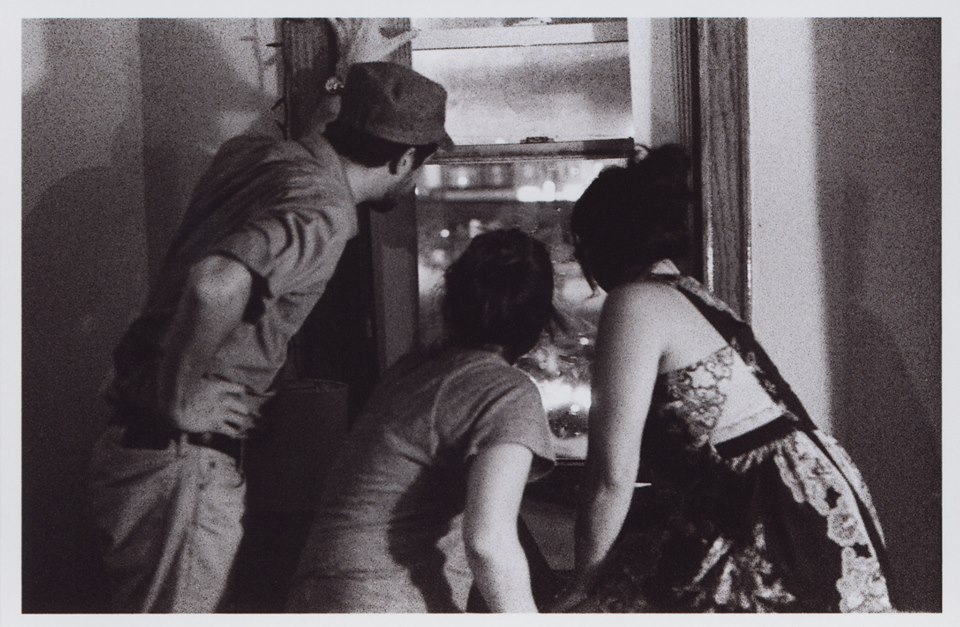
In one of the final moments my Chicago community gathered together, I knelt on a swiveling armchair and squeezed my shoulders in next to Caitlyn and Ben’s.  We peered out the window in the boys’ Logan Square apartment; its angle pointed to the intersection of Kedzie and Schubert Ave where rain fell on the aftermath of a car crash.

Alone in the City AgainThe crash had thrown a cooler from the back of a truck, and now, the contents of a summer picnic spilled on the pavement. The doors of the truck remained open, the driver long since run away.

As sirens bent around buildings toward the scene, the sky opened to sheets of water and timpani thunder. Spectators hurried inside, looking back over their shoulders, hoping to catch a last glimpse of the action. Maybe like me, they found it easier to look on the wreckage of someone else’s life than to face their own.

Lord, I don’t want to be alone in the city again.

There were eight of us, expatriates of our college suburb in some stopgap Alone in the City Again 2time between college and the rest of life: six boys who lived together in Logan Square, their around the block neighbor Caitlyn, and myself.

My first year in Chicago, I fell into the trap of urban loneliness; it is easy to remain anonymous in a city—wake up, go to work, return to your little compartment, and shut the door behind you, waiting for an invitation to join the bustle. I was a first year teacher, falling asleep to episodes of “Mad Men” at 7:30 p.m., clinging to perceptions that I could not “fit in” with the cool kids.

By my second year in the city, my unhappiness persuaded me to try something different; I resolved to fashion Chicago into a home. I began to invite people over, rationalizing that perhaps others wanted someone to organize togetherness as much as I did.

With fluttering heart beats and shallow breath, I pushed all the chairs in my apartment into the living room and rigged up a digital antenna to broadcast the 2012 summer Olympics. Amidst my good intentions were less noble feelings of desperation: “like me,” “love me,” “stay with me.”

Talking myself into courage, I clung to a Field Of Dreams like promise that if I built the parties, meals, and traditions, the community would gather. And it did.

In summer, friends propped themselves on pillows that leaned against the rails of the back porch. We watched movies on a wobbly projector screen, and I served bowls filled with stove-popped popcorn drizzled with browned butter and rosemary. The boys came over to my apartment with ravenous appetites and cases of PBR. They recited compliments and “mmmms” around the table, sons of polite mothers.

We lived a sitcom city life, but I soon realized I had built a foundation of cement for a shantytown. The others talked about leaving, about futures beyond the walls of the city. I began to panic. What was wrong with Chicago? What was wrong with me?

On one afternoon, we draped a picnic blanket over the boys’ front steps. I sliced Brie and apples, arranging them on a plate to eat with a baguette and glasses of red wine. The conversation drifted towards careers and futures. Tim mentioned moving to Denver and my heart lurched.

Caitlyn suggested an exodus to her home state of California. Ben proposed working in his cousin’s bookstore in Portland. I tried not to scream, “Why not here?” Instead, I cried on the car ride home.

I felt like a little girl begging her parents not to leave her with a babysitter; if I could have clung to their legs as they tried to drag their feet out of the city, I would have.

At one of our three 1920s parties, I hung my head back, warm with gin, and listened to the lullaby of our conversation. Marty argued with another friend about the Meyers Briggs of Jesus, and Caitlyn and Andrew made the floor moan and creak with their dancing. I knew that we had become something together. With such bounty, maybe no one would ever leave.

Please God, let no one ever leave.

But tonight with the news that Tim had an interview in Washington D.C., I finally gave myself permission to take inventory of our dwindling social circle. Tonight we were together for Caitlyn’s farewell. Andrew left in May for another continent, and Ben would leave by the end of the month for Grand Rapids. Others cast their lines towards new horizons, waiting for any tug towards something different. Already there had been garage sales and exchanges of items that couldn’t fit in moving trucks.

I strung my problems together, making them into one giant demon that tormented me with questions and fears. Suddenly the boys leaving meant I shouldn’t take risks, that all my prospects for marriage would be over, that I could not discern the whispers of God’s will, that I had proved unworthy of love and ended up a failure. I grafted each of these things to the paths my friends took away from the city, away from me.

Daniel played Beethoven’s seventh symphony as two tow trucks pulled the wreckage of the crash away in different directions. The thunderstorm, the car crash, and then a silent ride home with Tim—signs and wonders denoting the end. I wanted the city to swallow me into its dark belly.

I forgot how lonely the city could feel at night.

*****

Meredith Bazzoli“Alone in the City Again” was written by Meredith Bazzoli. Meredith has spent her whole life orbiting around Chicago and its suburbs. She currently resides just west of the city with her husband Drew, who grew up a hoosier. She never thought she could marry one of those. Meredith writes, performs improv comedy, and teaches in West Garfield Park (all stories for another day). She seeks to start conversations about the life we stuff under the bed and keep off our Instagram feeds.

You can connect with her at www.veryrevealing.com

Black and white photos from the night in the essay by Daniel Saunders.