In the Crook of His Arm

In the world of fundraising, it’s called “Prospect Research.” As a leader of a mid-sized non-profit, I was pretty good at it. In the online world, the same set of skills is called “creeping.”

A few days ago, in a moment of weakness, I went “creeping” after an ex-boyfriend. (Don’t go judging on me…someone told me that research says that 80% of social media users are regular creepers. So it’s got to be true.)

Because I have mad skills, I soon found a photo of him…and his new wife.Lightning_bolt

Bzzzttt. (That’s the sound of sheer electrical current that passed into my heart when I saw the photo.)

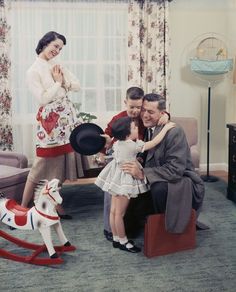
Stunned, I looked at the shot.There, in the crook of his arm–the place that used to be mine–was a new girl. He looks the same. She is lovely. They were grinning, joy on their faces.

This shouldn’t have been as surprising as it was. Our ways have been parted for a quite awhile and I had reason to think he had married. Nevertheless, it stung a bitter sting. He is in love and I’m watching old seasons of television shows. It sent me backwards, into a few days of re-grieving the loss of his place in my life.

Dating is a funny process, but “not funny ha-ha” as a friend of mine would say. I have yet to experience anything “casual” about it, much to the chagrin of my sister and her loving advice. Rather, it is an emotional sequence of longing and wondering, evaluating and being evaluated, hoping and fearing. If you happen to experience any type of mutual intrigue (cue heavenly choirs), then a whole new adventure begins. Starting to think in terms of “we” and then, navigating the questions associated with being a “we” is an awkward dance where toes are in frequent danger of being stepped on. Getting to the part where you actually rest into each others company takes a while–and admittedly, it is precious when it happens. And, giving the other your heart–that’s the good stuff. Sheer risk and sheer joy.

Having returned to the world of online dating (pardon me while I gag!), I am actively prying my heart open.  I mentally repeat the encouragement whenever I log-in, “Be open; be open; be open; be open.”  I should change my password to “openness” or “unguarded” or “savemefromthistorture.” Typically, after three days of active use, I must take a break and allow the disquiet that it produces in this good-hearted, average-looking, 30something girl to settle. But, it’s how dating is done these days and so, I keep trying.  Unlike some of the profiles that I look at, I’m not creepy…just occasionally a creeper.

On Sunday, the priest celebrating Mass looked eerily like my ex. It was a cosmic message of “off limits,”  a visual verification of what I already knew.  Okay God, I get it. Two messages in one week.  Moving forward.  Logging back on.  In the sacred space of my little heart, in the quiet of that church, I crawled into the crook of His arm, a little child needing to be soothed and reminded to hope. And, for a moment, I was aware of being loved.

Like Shards of Shattered Stained Glass

Desire itself is movement

Not in itself desirable

Love is itself unmoving

Only the cause and end of movement,

Timeless…

        ~ T.S. Eliot, Four Quartets

This is my third year teaching at an inner city middle school. My common refrain when asked what it’s like to teach is it’s exhausting but never boring. I often tell others the most overwhelming challenge I have faced in life is the emotions of a middle school girl. I previously had no categories for the appropriate responses to their occasionally incongruous behaviors. This has led me to be uncomfortable, anxious, and downright turned about at times in my role as a teacher, authority figure, and role model.

When I started teaching I had no notion or intention beyond the present need to have a job and hopefully do something which gave me some purpose. The long term desire was always to do something grander- namely go back to school and do something more than just teach 8th grade math and science. This was the desire of my heart.

I have enjoyed teaching and the relationships I have formed, but what has always made me uncomfortable about my job is disciplining students. I often enter into it with fear and anxiety. My thoughts run like this: “You are disrupting my class and wrecking any peace we (I) might have enjoyed here. I need to stop this.” What follows, almost invariably, is a classic mistake of teachers. We do not realize how well students can read our emotions. In these cases the student either reciprocates my fear or anxiety with his own or simply shuts down and detaches. Even if the behavior is corrected through coercion, there is no ground gained in character or relationship, and we percolate along in our functions without growing. There is intrinsically within the personal desire to regain control a tyranny of the moment which gets in the way of transcendent change.

In the previous two years I had taught 6th through 8th grade math, but this year I only teach 8th grade math and science. This has created the chance for me to teach the same 20 kids all day, students who I have taught for going on three years. By now they know my middle name, my pet peeves, and just about every emotional expression I have. They are hyper aware of even the slightest change in my temperament. Also, the way I relate to them personally has changed almost without me realizing it. There is more than simply a nice hope that they might improve or grow. The welfare of my students has grown over my own personal desires. I only realize this and act on it in broken flashes like the shimmer of light off the jagged cut of shattered stained glass.

Two weeks ago one of my students had an emotional reaction to something she was asked to do and stormed angrily out of my class. This was a reaction characteristic of her strong-willed, vitally independent personhood which has shown up in sporadic, irrational outbreaks of defiance that are shattering to my classroom’s peace and also harmful to herself in the form of ensuing consequences. These incidents have occurred over a three year period with me, and as a result of disciplining of her, I have grown a strong bond with her. This time, in the moment of her explosion, I did not feel the usual anxiety and fear which generally accompanies her outbreaks, instead I felt only heaviness. I felt sorrow.

When I spoke to her later my words felt thick, my eyes began to water, and the thought dominating my heart was a worry for her: she was self-destructing in these meltdowns and the continuance of them would not only hurt her relations with others but also her chances of pushing beyond the boundaries of poverty around her. The initial and usual response of defiance in her eyes faded into a reciprocated sadness. In front of me was a lost child. She was aware of the deeper emotion in my eyes of sorrow over her brokenness. I have known this in the eyes of others looking at me when I was so far gone I thought I could not be rescued, and here I was with my eyes full of the same emotions with a girl so different than me yet so much like me.

The reflection in her eyes stirred something beyond my present volatile and inconstant desires. The timelessness of love momentarily overwhelmed my temporal desires. I spoke as honestly and deeply as I have ever spoken to a student.

The truth is I don’t really love people. I am often affectionate, kind, and even generous towards others  but rarely without an ulterior motive. I have not cared for anyone in my life with the charity of God which the puritans described as “benevolent indifference.” But in this moment, I felt the stillness of indifferent love.

Near the end of the school day, after I had meted out the discipline for her actions, she stopped me as I walked by her in study hall. I sat down next to her. She immediately apologized to me with sincerity for her actions. I choked up, hardly able to say anything in response. As I walked back to my room tired and at peace, I was reminded that in our broken friction, in the destructive collision of our obese, selfish desires, we are vulnerable to the entrance of timeless, co-inhering love. Into our time-filled world, in these messy moments enters the God who is pursuing us.

We like the shards of shattered stained glass are brought back together, one crude edge fitting the next, to form the reflection of our Pursuer. He, who in his love let us shatter ourselves and sustained us in our wrecked state, weaves us back together one to another into the unity of a living body, organic in its diverse, messy flesh, and glorified in the binding coinherence of love that threads us to a living-in-love triune God.

My role in this world, however shoddily I accomplish it, is to reflect this all encompassing, pursuing love. I uncover this only in gasps and stabs.

My Life as a Failed Fifties Housewife

From the beginning, there were no illusions of my culinary domesticity. We met, he cooked, and I fell in love.

At the time, I was working in campus ministry, which meant: one, I was not wealthy, but two, I had a generous expense account. With it, I took students out for dinner and ate lovely balanced meals. I always ordered meat, because restaurant meat was the only animal protein I was getting at the time. I always ordered fresh vegetables, because vegetables are expensive when they don’t come in a can.

At home, I ate things from cans. And Zatarain’s. Lots of Zatarain’s.

zatarain's

There is no shame in eating red beans and rice from a box. And my to-be husband was happy to cook. He loves to cook, and most people love to eat what he cooks. I was content to do the shopping and dishes, and to set the table with candles and cloth napkins.

I’m not completely undomesticated.

Our system worked well until children came into the picture. For a variety of reasons, and against both of our good judgments, I became a mostly stay-at-home mom, though I tried to be not-at-home as much as possible.

I spent a lot of time pushing strollers around museums, frequented the library, and mapped the location of every bathroom at the zoo. I leaned up against piles of laundry and read theology during naptime. I planned playdates with people I liked, and refused to give up coffeeshops.

This was my survival strategy, and everything (apart from diapers, inexplicable crying and constant fatigue) was fine and dandy. Until about five-thirty.

“Honey, I’m home!”

dad

And almost every day, when my husband walked through the front door, I experienced two emotions simultaneously. One was relief, “Oh-thank-you-Jesus-it’s-another-grown-up,” and the other, a daily dose of magnified guilt about dinner. It felt like June Cleaver was slapping me across the face with her perfectly manicured hand. Dinner. He had just worked all day long, and I was at the museum, and now I expected him to make dinner.

Housewife fail.

Now, nevermind that my husband likes to cook and that it helps him unwind from the day (I do not understand this, but he swears that it is true). Nevermind that it gives him a free pass from kid responsibility for another hour. Nevermind that he whips up amazing meals from random things he finds in the fridge, and I can cook spaghetti into the shape of a ball. “Excuses, excuses,” scolds the well-pressed superwoman in my head, “what kind of wife and mother are you?”

In my better moments, I am astounded that I give this scolding superwoman the time of day. It’s 2015 for goodness sake, and set gender roles have shifted, at least in part. My husband likes to cook, and he’s good at it. This is his role in our family, and he accepts it. So why do I experience this nagging pressure? What’s next? Am I going to start questioning my right to vote?

But all of this is more complicated than a caricature.

I have these female friends, and they are not caricatures. They are accomplished, dynamic women, and I have a lot of respect for them. A few years ago they started doing things like family meal planning, and as far as I can tell, family meal planning involves not only planning (which is bad enough) but also cooking(!) from scratch(!!). They bookmark food blogs, research chef knives, and collect healthy recipes on Pintrest. They make brownies with hidden spinach. They buy Brussels sprouts at the Farmer’s Market and prepare them in a way that their kids will eat.

Imagine.

2477919111_be53c60743_z

And they don’t do all of this as superwomen, or because they are trying to squeeze themselves into some predetermined role. They care about nutrition, and they care about their families. And so they are working on new habits, in fits and starts, according to their schedules and situations.

And because I know my friends, I can’t dismiss them as I would a caricature of a “fifties housewife,” just as I can’t hide behind my caricature of a “liberated woman” or even “hopeless cook.” My husband is our family’s 9-5 worker in this season of our lives, and we need to eat, and eat well.

Maybe there is a part I can play.

I’m not saying anything revolutionary here, just that I’d like to take meal preparation a bit more seriously. I’d like to explore a role that I have largely rejected-not because I have to, but because it would be beneficial for the people I love. I won’t do all the cooking (oh perish the thought), but I could do more, and I’m sure that it won’t be a complete disaster.

Maybe I’ll begin with a big pot of homemade beans and rice. I don’t want my daughters to think that only men can cook.


Photo by Peter Grevstad

Never a Bridesmaid

I crouched in the grass, twisting at an unnatural angle. I was trying to capture the texture of the line of bridesmaid dresses up close. I looked up for a moment, taking in the bridesmaids’ up-dos and powdered cheeks. Their eyes were on the main photographer Vanessa, who I spent three summers shooting weddings alongside. She told prospective brides that we were a good team because she saw the big picture and I focused on the details.

I’ve always loved weddings. In middle and high school, I was the pseudo little sister to several newly affianced women. I attended cake tastings, and helped pick out (and assemble) invitations.

Later, when my friends started getting married, I made sure to insert myself into the conversations early, sometimes bearing bridal magazines. Although I’d never have admitted it, I wanted to be a bridesmaid. I wanted a central role at a wedding, one where I was chosen.

Actually, I was a bridesmaid once. My mom’s birth-dad married his third wife and they chose their grandchildren for attendants. At 13, I was the oldest member of the bridal party, yet my title was Junior Bridesmaid. I was greatly disturbed by the “Junior.”

My dress was periwinkle blue with cap sleeves, and I wore ivory shoes with little pearl beads on the velcro buckles. On the day of the wedding, we all went to get our hair done. It was the first time I had been in a salon. My feet swung high above the floor in the stylist’s chair. She began to curl my hair in ringlets, as if I were getting ready for a dance recital. I wondered if the burning sensation at the top of my head was normal. The stylist was chatting with my grandmother-ish-to-be as she worked her way across my head.

At last, I couldn’t stand the pain any more. “Excuse me,” I said in a small voice. “I think I’m burning.”

“Oh no,” she said, quickly uncurling her iron. I began to feel relief, along with a dull throbbing, but I couldn’t quite relax into that chair again.

The centerpiece of that wedding was a sort-of-cousin who delighted the congregation by performing an interpretive dance during the ceremony.

Many years have passed between that little girl in the periwinkle dress and the person I am today. Still, it’s the only bridesmaid dress I’ve ever worn. It’s still the closest I’ve been to a wedding.

As I got older, I found that weddings turned from a day of gaiety and celebration, to one of pressure and stress. I began to accept invitations based on the presence of an open bar. I learned to dread the secret looks between the members of the wedding party, and between the bride and groom. It was as if I was always just on the outside of a secret intimacy, regardless of my closeness to the bride or groom in other circumstances.

243954_1367100715543_4777805_oSo I put a camera between myself and the action. With my credentials as a second photographer, I could roam the wedding at will. I was there during the tearful champagne toast just before the bride climbed into her dress. I was there the first time a proud father saw his grown up daughter as a bride. I caught the maid of honor as she squeezed the bride’s hand, and watched the groomsmen take shots of tequila before the ceremony.

No one batted an eye as I sidled up to the cake, taking in its layers and leaning in for a close-up. No one challenged me as I climbed to a high balcony to better capture the first kiss. It could have been my wedding uniform: I always wore black, on duty. But I prefer to think that I had achieved my goal at last. I no longer stuck out. I belonged.

 *   *   *   *   *

Strickland“Never a Bridesmaid” was written by Cara Strickland. Cara has lived in San Diego, California, London, England, and Upland, Indiana. Once, in college, she wrote an essay saying that she was from Narnia. She currently lives in Spokane, WA, where she is a writer, blogger, editor, and food critic. She almost always finds a way to write about food.

I am Mama, hear me roar

I’ll never forget my very first Mama Roar—how it erupted spontaneously from deep within me (my loins, perhaps?) before I even had a moment to process and filter what emerged.

My firstborn, Q, who was just barely one, was on her maiden voyage at the mall play area. The fantastical space was breakfast-themed: populated with a huge fried egg (complete with a fun bouncy yolk), a banana to slide down, and a wavy piece of bacon to navigate. Q and I had sat and watched the kids there several times before, but that February day, after almost two months of practicing her walking skills, she was ready to join the fun.

I watched from a bench along the perimeter as Q bravely toddled into the fray of darting and screeching preschoolers. The term “helicopter parent” hadn’t yet been coined, but I had already determined I wouldn’t be one. If Q needed my reassurance or help, I would be close by. As I watched her bravely move farther away from me, her diaper-bum adorably donned in navy-and-lime-striped leggings, I mentally congratulated myself, randomly taking credit (as new parents do) for the fearlessness of my little girl.

Suddenly, BAM! A burly (at least relative to Q) preschooler ran by, deliberately shoving Q flat on her face. I jumped up, my heart pounding, then saw that Q was stunned, but not crying. She stood up, looking around her to gain her bearings, then started again to toddle toward her original destination: an enormous waffle topped with a pillow-sized pat of butter. I took a deep breath, commending myself for my restraint, before noticing that same boy was making another round through the oversized breakfast fare.

BAM! Down Q went again. And Mama Bear leapt into action. In a bound I was at Q’s side, picking her up in a protective hug. Then, as the boy sped back in our direction I reached out and grabbed his arm, stopping him in mid-flight.

“YOU. Need. To. SLOW. DOWN.” I uttered as he squirmed against my grip. “There are very small children here—you’re going to hurt someone!”

Where is this boy’s parent? I wondered as I released my grip, looking around to see the mom or dad who would be surely walking toward us to offer an apology. What I saw instead was a woman who couldn’t bother to stand up, calling to me, “Is there a problem?” When I walked over to tell her that her son had deliberately knocked down my toddler twice, she laughed, saying, “Boys will be boys.”

“Only if you let them,” I seethed, turning away to buckle a stunned Q into her stroller and roll her back to the safety of our den.

 *   *   *   *   *

Indignation was no stranger to me. Even as a kid, I had an aptitude for speaking my mind, especially when faced with an injustice of some sort (whether real or conflated by my teenage brain). In high school, I was famous for pointing out to teachers why a “wrong” test answer was technically also right, and why those of us who had been marked down should get credit. More often than not, voicing my logic paid off. When my brother left for college, and I suddenly was called on to do the dishes every evening rather than every other evening, I argued it wasn’t my fault that I was born second and had no younger sibling to share the work with. (In this case, my argument fell flat.)

4765579640_89fc950de4_zBut even acting on a full range of indignation over the years did not prepare me for becoming a Mama Bear. Those pre-parent experiences had been merely exercises in logic and persuasion—hypothetical practice for the debate team I was never on. This—this was different. It was not a cunning game. It was the waking of a beast that had been hibernating within me, feeding on the hormones released by pregnancy, childbirth, and breastfeeding. By the time Q and I visited the play area at the mall that winter day, the beast was well-rested and fattened, ready to bare her teeth.

As my two daughters have grown, I’ve become accustomed to my Mama Bear sidekick; sadly, we’ve had plenty of experiences that have called for her services. But knowing how and when to tame her has been an ever-changing challenge that shifts with each setting and stage my daughters go through. When do they really need me to intervene—to demonstrate the importance and art of standing up for beliefs and rights, and especially for others? And when do they need to learn about disappointment and the “life-isn’t-fair” state of the world? When should they be left to decide for themselves if an injustice is real or perceived? When do I need to advocate—ideally with much grace—and when should I demonstrate how to retreat with grace?

Because Mama Bear isn’t necessarily rational. She doesn’t always see the big picture. What Mama Bear does see, with laser vision, is the child. She sees the child for who she is—both the strengths and weaknesses, the abundance of potential that’s inevitably tinged with fear of how the world might respond. And the Mama Bear loves the child so much that she can’t help but ache for that child’s best. It’s a love that emerges from her very being, coursing through every vein and seeping from every pore.

In fact, if you could infuse that Mama-Bear-love with a whole lot of grace and a much longer view, it just might be a taste of the love God has for his children. With that in mind, I’ve decided to start thinking of the Serenity Prayer as the Mama Bear prayer:

God, grant me the serenity to accept the things I cannot change,
The courage to change the things I can,
And the wisdom to know the difference.
(Grrrrrr…I mean, Amen.)

 *   *   *   *   *

(The Mama Bear and cub photo used above is by xinem.)

What to wear to the mall

Moving South is unbecoming on me. Or it is my becoming. I’m not sure. For the first time in my life, I care about what I wear to the mall. I make sure to wear matching socks. I make sure I wear make-up. I make sure I have something not too wrinkled on. Sometimes. Most of the time.

I hate the mall.

Or I hate that the people at the mall from whom I am trying to buy goods treat me like I am from the wrong side of the tracks who has no business being in their shiny, ridiculously expensive store filled with things from origins unknown and created by unknown people. What factory did that sweater originate from? Asia? Central America? Do you think it came overseas on a ship and airplane, on a semi? Hello, salesperson, don’t ignore me! Oh, there she goes. She is ignoring me, again.

I live in Durham, North Carolina. It’s quirky, retro, and trying to relive the 90’s in hipster style. Think: the more tattoos and mohawks and vintage clothing the better. Local artisans, food trucks, and community gardens are where Durham pours its resources. It’s hip, it’s entrepreneurial, it’s grungy.

And I fit in. In fact, I’ve mastered the hipster grunge look. I am a mom of two young kids, so I’ve haven’t slept in five years. You might think the “she looks like she just got out of bed” was on purpose, but no. I probably forgot to brush my hair because I had to chase my daughter around the house in order to brush hers. Except when I go to the super suburban, high end shopping mall twenty minutes south of the gritty, brick, tobacco warehouses called Downtown Durham, then I try to brush my hair, brush my teeth, and wear my Sunday best.

I grew up outside the Washington, DC area where BRAINS were what always mattered, not whether you wore Lululemon or Kate Spade or Tory Burch. Growing up, I was told, “who you are” is more important than what you look like. And so I cower, when women at the make-up counter with flawless but obviously overdone makeup say things like,”I treat anybody who comes in here the same. No matter what they look like.”

IMG_3197Are you talking to me? What are you talking to me about? What impression am I giving you as I try to keep my four year old from trying on every single lip-gloss? Do I look like a strange hobo? Is there a reason you are pointing out your graciousness? Do I look that bad? I did not try on purpose. Honest. Umm, here, please take my hard earned money, and give me some tinted moisturizer for sensitive skin. Hush. Please don’t talk anymore. You are giving me a complex, over-dressed salesperson.

The mall makes me vain. It makes me feel inferior. Perhaps that is the marketing strategy: Make people feel so unfabulous that they have to buy fabulous, unnecessary objects to make them feel better. Except, I just I feel unworthy. The mall has become a place where I feel my unworthiness. And it’s unbecoming on me. I turn into a grouch, my neuroses and angst come out, then in defense I become a snob. They judge, so I judge. It’s a terrible game.

So I am here, on the border of the conservative south, where the mall is located, and a liberal academic town, where my favorite coffee shops, farmer’s markets, and community spaces are. In one, I am secure and know myself. In the other, I am puzzled by my insecurities and apparent weakness for vanity.

And then there is God.

I hear Him and his strong sturdy voice, reminding me He is the God of every place. He speaks, almost with a chuckle, “Child, you are my child. Let those microaggressions roll off your back. The mall is not my kingdom. It does not recognize you as I recognize you. I am the source of all you need. The mall, the mall is mammon. You don’t need to worship at its throne. Durham, Durham has it flaws, too. You know that. You know that the world is filled with people in need…of Me.”

And later, on the car ride home with my bags of materialistic items from China, Mexico and Haiti, I realize that it’s okay to feel uncomfortable at the mall. I should feel different. I should feel like an outsider and befuddled and an imposter. Because that is what I am. I was not made for that world—I don’t want it to “become me.”  And I don’t want Durham to “become me,” either.

I want something else to become me.

I want grace to become me. I want God’s grace to become me. I want to wear that no matter where I am, whether I am enjoying a beer with tatted friends or buying a pair shoes with people decked out in Burberry. God is the God of Comfort and Discomfort, and the power of His grace is found in the tension between them.

*   *   *   *   *
Photo on 4-19-14 at 3.52 PM“What to Wear to the Mall” was written by Sarah Hudspeth. Sarah is a mom of two kids full of life and mischief, a wife of a grad student, and a middle school math teacher to students with learning needs. Coffee is her favorite, as are books, Twitter, and any day spent outside. Sarah lives in Durham, North Carolina, and eats extremely well due to food trucks, her garden, and the eat-everything-local movement.

At Home in a House?

back yard

In a couple weeks I’ll turn 43, and I can honestly say that until four months ago, it never occurred to me to want a house. Scouts honor: Until the past autumn, I never remotely considered joining the American “Homeowner” mafia. It’s not that I’ve been stubbornly opposed to the idea, so much as that my lifestyle has never afforded me conditions for seriously considering the possibility.

I spent my young adulthood in a state of perpetual motion, travel, and transit – mostly between states, and occasionally between countries. These experiences were collected in the name of the book I wasn’t and am only sort-of-now writing. These adventures were regularly accompanied by short stints in contemplative communities, during which periods I’d pause, catch my breath, and ponder the possibility of an intentional spiritual or monastic path. While many of my friends and loved ones grew their 401K’s, smartly invested in future “equity,” and touted the good news of duplex-ownership, I fantasized about the conversation that may have occurred between Thomas Merton and the young Dalai Lama. When, at another in the long string of housewarming parties, you would drop “mortgage” and “new countertops” into the conversation, my thoughts drifted to the Alice Munro story I finished before heading to the potluck. Over drinks, you talk about the mold in your basement, dry rot or asbestos in the ceiling, and I’ll nod sympathetically while actually worrying over the lyrics for a song I was working on in my apartment before we met up. sam piano

Maybe it’s that recently the kids’ Legos have become to our two-bedroom apartment what bacteria is in preschool and daycare, accumulating at such an alarming rate that I’d swear these bricks should come packaged with the same rules that applied to Spielberg’s “Gremlins” – particularly that one about not adding water.

Then, too, I suddenly find myself in the company of an 11 year-old, Sam, who recently began requiring “Privacy” in our bathroom. (The humor is not lost on me, as I am afforded exactly 0% privacy in any room comprising our shrinking living space.) Perhaps you, too, would question anew these admittedly creature-comforted, still-privileged circumstances if you watched your six-year-old pound on the bathroom door, followed by his brother shouting he’s “busy,” after which you hear yourself offer the small boy a mason jar. Refusing that option, I recently told Matt, “Well, then you’ll need to wait. Or, there’s the woods? There! Those trees just past the parking lot?”

* * *

yard

It would have been impossible not to see the house. Resting at the bottom of the hill on the curve that leads to our apartment building, it’s actually a wonder the “For Sale” sign is still standing, that no one making the turn this icy winter has clipped it or smashed into it.

And while I initially spotted the sign, I didn’t make anything of it until a week or two later when, while driving the kids home from school, Sam asked if we could look at it.

He just wanted to look at the house, I told myself. It was in walking distance of our apartment building, and looking at a house didn’t mean I had to suddenly unearth the money to buy it. Or did the kids imagine that acquiring a house was a lot like purchasing the newest Avengers Lego set?

The woman who met us that Saturday morning told us it needed work, and she was selling it for her parents and they wanted it off their hands sooner and so some things were negotiable. “Which is still really no matter,” I thought, running the numbers through my head, “because 0 divided or multiplied by 0 is still 0.”

However, I’m puzzling now about what happened the moments after she showed me the faded, dried up remains of the summer’s strawberry and raspberry patches. And then, too, when Sam reached for the sturdiest, lowest hanging branch on the crab apple tree out front. Soon, the kids were running through the large yard out back and I was suddenly watching a story play out in my mind that I’d never until then mildly entertained. Exactly where had this story been hiding, I wanted to know? The one where the kids run laughing through the wide open yard – not a stone’s throw from the garden – and I then drift from my spot by the woodstove, out to the back deck with a beer in hand and cheerily call, “Alright you knuckleheads! C’mon – it’s dinner time!”

At one point, as the kids rolled around the large, empty living room, wrestling and doing somersaults and cartwheels, I looked out the wide, surrounding picture windows – each of them desperately in need of a lot of work – and I saw the room filled for a house concert featuring a friend’s solo act or one of the many local bands regularly staging intimate, unplugged house concerts around Alaska. Around then, deep in the throes of their play, Sam stopped suddenly, shot a glance my direction, and asked, “Can we buy it, Pop?”

I stammered and sighed. The owner’s daughter laughed, told me she had a couple kids of her own and understood, while I grit my teeth and told Sam we’d think about it.

“But I like it! I want that bedroom!” he announced pointing down the hall.

bird houseWe didn’t buy that house. There are a few reasons why. Money is one, of course, but so was the basement, which yanked me out of my fantasizing and only called to mind The Silence of the Lambs.
And I have yet to buy a house, still, though I’m thinking about it with a bit more conscious intention and thought now. I guess, until that Saturday a few months ago, every other house I’ve stepped into seemed only a house shaped collection of rooms. For whatever reason – the berry patches, the woodstove, the three bathrooms, or maybe the kids running with abandon through a yard, I can’t say exactly – one autumn Saturday afternoon, I somehow found myself plumb in the middle of a possibility called home.

bedroom view

The Pantry Club

“You aren’t going to blog about this are you?!?!?”

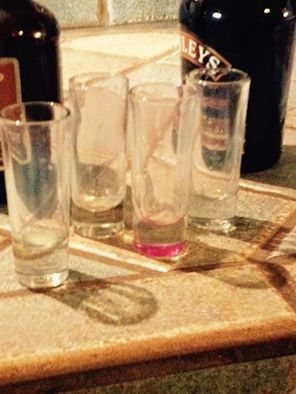
While my brother-in-law was playfully enquiring about my future posts, my mom was carefully pouring alcohol into shot glasses, trying to create a layered effect. shots

As a send-off at the end of my Christmas break, my family did a round of shots.

Lest anyone worry, my mom described them as “wussy shots” –something with an embarrassing name and an alcohol that doesn’t burn.

And my pregnant sister abstained.

We toasted to another semester, to family and “To The Pantry Club!” and swallowed the creamy drink.


In my childhood home, the pantry is a 15 x 8 foot hallway, flanked by floor-to-ceiling shelves. It has some creepy corners where a flashlight would be useful if one was to explore. The spare keys hang on the flat side of an outer shelf and on another, the board is marked with short lines and dates, designating our heights at different ages.

The pantry holds Christmas decorations, a fruit dehydrator, catering apparatus, and a respectable collection of glass jars. There is a supply of water, a deep freezer, the pet food, and a complicated trash system to accommodate recycling.  My cousin once spent 45 sweaty minutes in one of those empty trash cans during an epic game of Hide-and-Seek-in-the-Dark.

It has party supplies, canning supplies, baking supplies, and emergency supplies. A few shelves are dedicated to spices and dry goods and canned food. And in the corner, the stash of alcohol hides.

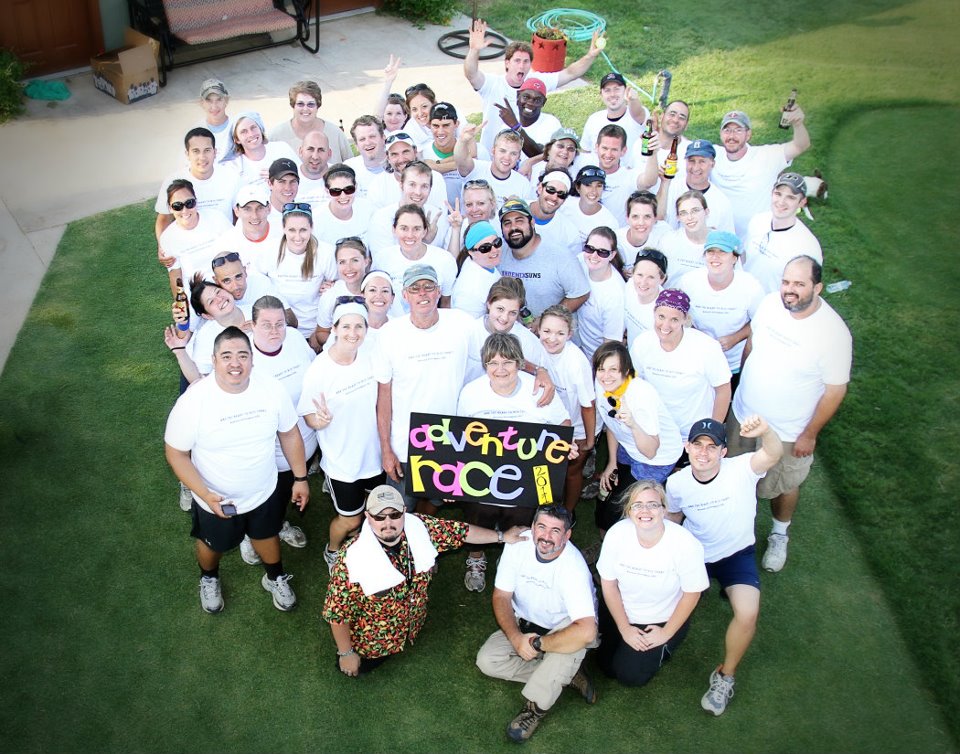
adventure raceAs a Labor Day tradition, my parents have for many years hosted an annual Adventure Extravaganza Weekend. The weekend might involve all sorts of activities: a bike ride, shooting, a poker tournament, backyard parties, a yard games contest, and outings into town. People camp in the yard or find a couch to claim; everyone takes turns prepping meals. The centerpiece of the weekend is a team event called the “Adventure Race” which is a series of competitive activities that are limited only by my parents creativity and my moms fear of people getting hurt.

As “the regulars” have gotten older, the weekend has included more babies and less beer. But, in its early years, there were no babies. It was in that time that “The Pantry Club” was born. The red curtain separating the pantry from the kitchen would be drawn and toasts and cheers would heard from the small gathering hiding in a certain corner of the pantry.

Thus, for me as well as many of those whom I love, the pantry speaks of the Peterson house.

It speaks of the hospitality of my parents and the adventures that many associate with the house.

It speaks of my mom, her presence palpable in so many of the treasures hidden on the top shelves that she insists on keeping.

It speaks of my childhood, noted in the red and blue lines on the marked board and captured in the memories veiled in the stuff.

It speaks of friends and food and fun.

It speaks of home.

And so, join me in a toast: To The Pantry Club!


Pioneer Blood

Home was dusty. Home smelled like cows. Home was New Mexico.

I grew up in one of those small towns where everybody knows your name. Several generations of my family have called this area in the middle of nowhere “home,” even back when it was just a train stop in the desert. I’ve been enthusiastically greeted by people who have known not only me, but my mom since she was in diapers. Six degrees of separation? No one needs that many to find someone you grew up with, dated or are related to. There is a tangible connection between neighbors when anything exciting happens: a new restaurant opens, someone famous wanders through or a school board meeting takes a dramatic turn. There is a sense of unity as we participate in the same traditions as our parents and grandparents and great-grandparents before us, even rituals as simple as dressing in purple to support high school sports every game day.

sunThere’s nothing quite like the community of a small town to build a runway for a dreamer to fly, however. Like my pioneer ancestors before me, I heard the call of the unknown and unexplored. Home was far too confining. I ached with it.

Home then became Baylor, a Baptist university in the middle of Texas. Home was green and gold. Home was red brick and late nights and racing to beat newspaper deadlines.

At this Christian journalism school, I learned to investigate everything. My identity. My relationships. My world. My Bible. If faith is a prism, college threw the light in a different way. I learned a group of people can become your family and then, when their season is done, leave you haunted by their impact. I learned healing can come through quick prayer, but it can also come through years of pain and doctors and hard-earned revelations. I learned a home you choose, even a temporary one, can be a sanctuary. I learned running away from home doesn’t mean your problems stay behind. I discovered belonging and calling and true freedom that isn’t tied to a place, but a Truth.

But college was a training ground, a preparation for the next season yet to come, and in the middle of all this searching for both freedom and belonging, I stumbled upon still another home. I studied abroad at Oxford and found England to feel more home-like than anything I knew. I had studied their history, their culture and the great literature of this little island. Walking down those ancient streets and experiencing Britain for myself was like falling in love – terrifying in its vast newness while welcoming me in as if I had always belonged there. A completely foreign place and culture, and yet, I fit. A puzzle piece snapping into place. It was like nowhere else in my life of traveling and exploring. The loneliness of being far away was nothing new – in fact, it was far sweeter – because I have known the loneliness of being out of place in the midst of familiarity. Out of the two, I’d take the loneliness of adventure any day.

But I wasn’t meant to stay in Britain, not just now anyway, though I’ve been back and will always keep returning, no matter how short the stay.

So now home is a busy suburb in Alabama. Home is a church in a warehouse. Home is mixing up the words “friends” and “family” because here, all are welcome.

Home is a quiet apartment, where the clock can sometimes tick loud in the dark and the battle for joy is tangibly present. But I’ve long since found home to be unrestrained to a physical location. Home is a journey, a path that meanders and crisscrosses and exists in several places at once. A hometown, a homecoming, a home-like feeling, a home address… all of these are simultaneous and equally valid, though still ultimately lacking.

I never really understood this enduring homesickness until I read it described by C.S. Lewis:

“If we find ourselves with a desire that nothing in this world can satisfy, the most probable explanation is that we were made for another world.”

Though I cannot see it yet, I know the reason I’ll always be searching, a wanderlust girl with pioneer blood. I have yet to make it Home.

*   *   *   *   *   

jenna“Pioneer Blood” was written by Jenna DeWitt. Jenna is the managing editor of MORF Magazine, a resource for youth ministers, mentors and parents of teenagers. She has a bachelor’s in journalism from Baylor University, where she edited a bunch of student publications, became a fan of C.S. Lewis and drank Dr Pepper floats with Blue Bell ice cream like a true Texan. She currently lives in Birmingham, Alabama, though if you ask her where home is, she will tell you “it’s complicated.” You can find her on Twitter @jenna_dewitt and on Tumblr at jennadewitt.tumblr.com.


Home Plate

I am fond of irrationally loving things. I get a little too giddy about game 121 of a long baseball season. You would have no idea it was a game that hardly mattered by the way I am yelling obscenities at a single missed strike call by an umpire who is deciding within fractions of an inch whether the little white ball flying in at 90 MPH went over the plate or not. I cannot rationally defend why I love baseball or college football or Texas or Dr. Pepper, but I will fight with every breath in me to love them all the same. There is something in me which desperately needs the rousing breath of unreasoned, childlike passions.

I was at a baseball game a few years ago with my dad. We were sitting in the third deck in the midst of one those late summer Texas evenings where cirrus clouds hang high like streaks of vanilla in an otherwise sherbet colored sky. You can put on Explosions in the Sky and get a feeling of how I feel about these kinds of evenings. Next to us was a father with his 5 year old son. The son was falling in love with the game; the father was there to watch.  The son knew the players, he knew the rules, and he knew that the only way to watch the game was standing up on the tip of his toes leaning against the rail ready for the suddenness of something grand in the midst of the mundane rituals of a summertime game.

Irrational passions like baseball fandom demand our hearts be ready to be broken and spoken to in a way completely counter to most realities in our lives. Life tends towards the typical, but our hearts restlessly ask to be reconciled to and even wrecked upon something more. One of my favorite quotes about baseball from one of its great living chroniclers, Joe Posnanski, reminds me of this: “I never argue with people who say that baseball is boring, because baseball is boring. And then, suddenly, it isn’t. And that’s what makes it great.”

The boy waited on his tiptoes. He was calling out the players’ names as they ran out onto the field. His favorite player was every boy’s favorite. His activities were the accents of love as love. He could not explain why the game grabbed him, but it did. At some point I loved the game the same way. We have videos of me with a bat bigger than me swinging and hitting whiffle balls at the age of three. I’ll never forget the triple play I made in tee ball, or the perfect game I went to at the Ballpark in Arlington when I was in first grade. Those were moments of magic. When I was a teenager, the magic died. I felt nothing when I watched the game.

In the recent movie Boyhood the most poignant scene of the movie for me comes when an adolescent boy asks his vagabond father:

“Dad, there’s no real magic in the world, right?”

Right. We all answer the question the same way at some point. There is a death for all our irrational loves. A death held in their inability to sustain against the pervasive banality of our lives.

When I came home for the summer in 2008 after a very bad year in college, I decided to start going back to a few Texas Rangers games. There was some hope that year for the team I grew up loving more than any other team. The Rangers had just traded for this guy named Josh Hamilton. He was a drug addict who had just made it back to baseball the year before after a 5 year hiatus, and he was looking for a second chance at the game. The probability of Hamilton picking up a bat after five years and hitting a baseball well was very low, much less so because he had spent those five years blowing almost 2 million dollars on drugs. But something truly magical happened that year. Within the first month, it became evident that Hamilton was a player with transcendent talent. I went to one game after another and by the All-Star break I had attended over 20 games, more than I had gone to in the previous five years combined.

The crescendo of the year came when Hamilton hit in the Home Run Derby at the Mecca of baseball, old Yankee Stadium. His first trip to the plate in the derby was the most extraordinary display of baseball prowess I have ever witnessed. He hit 28 home runs, and at one point, he hit 14 in a row without recording an out. Each home run seemed to go farther than the last until he was hitting 500 ft home runs like they were routine. His performance was so remarkable that the usually surly New York faithful rained down a chant which I still get chills recalling in my head: “Hamilton! Hamilton! Hamilton! Hamilton.” There was magic in the air that night in New York, and baseball had romanced my heart once again.

The truth is there was always magic in the game, magic in the rituals of the game, in the batters’ gimmicks, pitchers’ grimaces, summer evening skies, and well broken leather. I don’t always catch it, but after losing and re-finding my love for baseball, I find a fullness in even the smallest of details. It’s something like finding life in the breaking of bread and forgiveness in the bitterness of wine.

When the fifth inning of the game came, the boy’s focus suddenly shifted towards his father. And with the absolute confidence of a child he said: “Fifth inning is ice cream inning!”

Dutifully, the father took his son down the aisle and out to the concessions while I sat there grinning like I had not grinned in a long time.